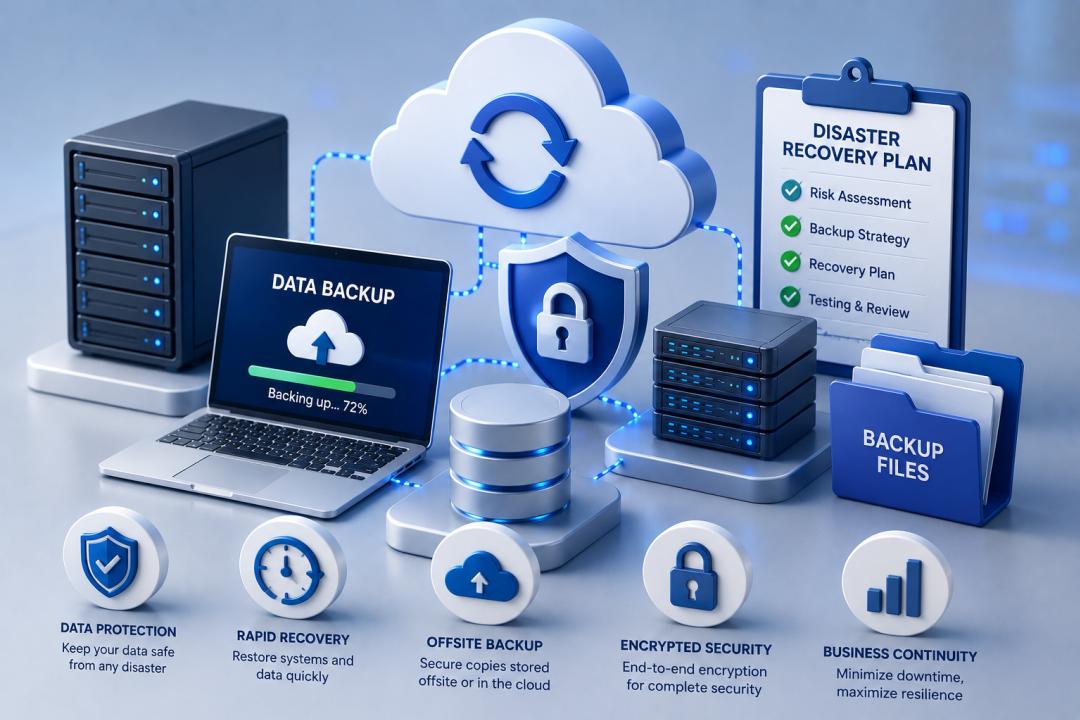
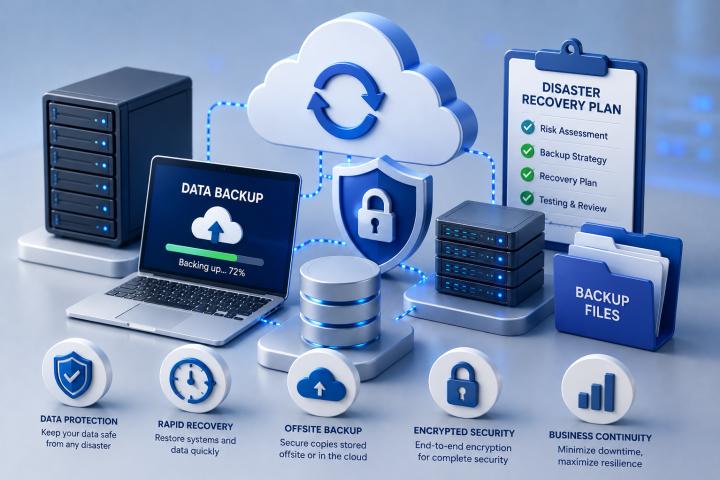
Data is one of the most valuable assets for modern organizations. From customer information and financial records to operational systems and intellectual property, businesses rely heavily on digital data to function effectively. Unexpected events such as cyberattacks, hardware failures, natural disasters, and human errors can disrupt operations and lead to significant losses. This is why Disaster Recovery & Data Backup planning has become a critical component of every organization's risk management strategy.
A well-structured recovery framework helps businesses maintain continuity, reduce downtime, and protect sensitive information. By implementing reliable backup solutions and recovery procedures, organizations can minimize disruptions and recover quickly when unexpected incidents occur.
Why Data Protection Is Essential for Business Continuity
Organizations face a wide range of threats that can compromise critical information and business operations.
Common risks include:
- Ransomware attacks
- Hardware and server failures
- Accidental data deletion
- Power outages
- Network disruptions
- Natural disasters
Without a comprehensive recovery strategy, these incidents can result in financial losses, reputational damage, and regulatory challenges. Effective planning ensures businesses can continue operating even when unexpected events occur.
Disaster Recovery & Data Backup Best Practices
Disaster Recovery & Data Backup strategies should focus on prevention, preparedness, and rapid restoration.
Implement the 3-2-1 Backup Rule
One of the most widely recommended practices is maintaining:
- Three copies of data
- Two different storage media
- One offsite or cloud-based backup
This approach reduces the risk of data loss from a single point of failure.
Automate Backup Processes
Automated backups help ensure critical data is consistently protected without relying on manual intervention. Scheduled backups reduce the likelihood of missed updates and improve recovery readiness.
Test Recovery Procedures Regularly
Backup systems are only effective if recovery processes work as expected. Routine testing verifies that data can be restored quickly and accurately when needed.
Organizations that regularly test their recovery plans are better prepared for real-world incidents.
Key Components of a Strong Recovery Strategy
A successful recovery framework involves more than simply storing copies of data.
Recovery Time Objectives (RTO)
RTO defines how quickly systems must be restored following an outage. Shorter recovery times help minimize business disruption.
Recovery Point Objectives (RPO)
RPO determines the acceptable amount of data loss measured by time. Businesses should align recovery goals with operational requirements.
Cloud-Based Recovery Solutions
Cloud infrastructure provides scalable storage, geographic redundancy, and flexible recovery options. Many organizations use cloud platforms to strengthen resilience and simplify recovery management.
Security and Encryption
Backups should be encrypted both during transmission and while stored. Strong security controls help protect sensitive information from unauthorized access.
Benefits of Modern Backup and Recovery Solutions
Businesses that invest in comprehensive protection strategies gain several advantages.
Reduced Downtime
Fast recovery capabilities help restore critical services quickly, minimizing operational disruptions.
Improved Regulatory Compliance
Industries such as healthcare, finance, and eCommerce often require strict data retention and protection standards. Recovery solutions support compliance efforts through secure storage and audit-ready reporting.
Enhanced Cyber Resilience
Modern recovery systems help organizations recover from ransomware attacks and other cybersecurity incidents without paying costly ransoms.
Greater Customer Trust
Reliable data protection demonstrates a commitment to security and business continuity, helping strengthen customer confidence.
Many technology experts, including teams at Noob Toys, emphasize that recovery planning should be treated as a business priority rather than a purely technical task.
Building a Future-Ready Recovery Framework
As organizations adopt cloud technologies, remote work environments, and digital-first operations, recovery planning must evolve accordingly.
Successful organizations focus on:
- Risk assessments and business impact analysis
- Multi-location backup storage
- Automated monitoring and alerts
- Employee training and awareness
- Continuous review of recovery policies
These practices help businesses remain resilient in an increasingly complex threat landscape.
Expert Buying Tips
When evaluating backup and recovery solutions, consider the following:
- Verify recovery speed and restoration capabilities.
- Ensure support for cloud, hybrid, and on-premises environments.
- Evaluate security features such as encryption and access controls.
- Look for automated backup scheduling.
- Confirm scalability to support future growth.
- Review vendor support and disaster response services.
Choosing the right solution requires balancing operational requirements, budget considerations, and long-term business goals.
Frequently Asked Questions
What is disaster recovery?
Disaster recovery refers to the processes and technologies used to restore systems, applications, and data after a disruptive event.
Why is data backup important?
Data backups provide recoverable copies of critical information, helping organizations restore operations after data loss incidents.
What is the 3-2-1 backup rule?
The 3-2-1 rule recommends maintaining three copies of data, using two storage types, with one copy stored offsite.
How often should backups be performed?
Backup frequency depends on business requirements, but critical systems are often backed up daily or continuously.
What is the difference between backup and disaster recovery?
Backup focuses on creating copies of data, while disaster recovery includes the complete process of restoring systems, applications, and operations after an incident.
Conclusion
Protecting critical business information requires a proactive and well-planned approach. Disaster Recovery & Data Backup strategies help organizations reduce downtime, safeguard valuable data, and maintain operational continuity during unexpected disruptions. By implementing automated backups, testing recovery plans, and leveraging secure storage solutions, businesses can strengthen resilience against modern threats.