Fire safety planning is a crucial responsibility for residential property owners and managers. While fire alarms, smoke detectors, and suppression systems help detect and control fires, emergency escape routes play an equally important role in protecting occupants. During a fire emergency, safe and accessible escape routes can make the difference between a successful evacuation and a potentially life-threatening situation.
Properly designed and maintained escape routes ensure that residents can exit a building quickly and safely when every second counts.
Why Emergency Escape Routes Matter
In the event of a fire, occupants must be able to leave the building without delay. Smoke, heat, and panic can make evacuation challenging, particularly in multi-story residential buildings and apartment complexes.
Emergency escape routes provide designated pathways that guide residents toward safety. These routes are designed to minimize confusion and help occupants move efficiently away from danger.
Without clearly planned escape routes, evacuation efforts may be delayed, increasing the risk of injury and property loss.
Supporting Safe and Efficient Evacuations
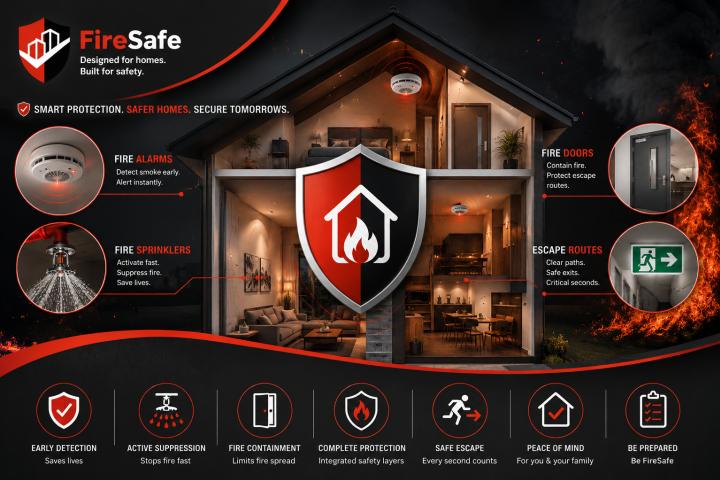
One of the primary purposes of emergency escape routes is to support orderly evacuations. Clearly marked exits, accessible stairwells, and unobstructed corridors help residents leave the building quickly during an emergency.
Effective escape routes should:
- Be clearly identified with visible signage
- Remain free from obstructions
- Provide direct access to safe exit points
- Accommodate all building occupants
- Be regularly inspected and maintained
These measures help reduce evacuation times and improve overall safety.
Protecting Residents During Emergencies
Residential buildings often house people of different ages and mobility levels. Families with children, elderly residents, and individuals with disabilities may require additional time to evacuate safely.
Well-planned emergency escape routes provide a structured path to safety and help prevent bottlenecks that could occur during an emergency. By ensuring that routes remain accessible, property managers can better protect all occupants within the building.
The Role of Emergency Signage and Lighting
Escape routes are most effective when supported by proper emergency signage and lighting systems. During a fire, power failures or heavy smoke can reduce visibility and make navigation difficult.
Emergency lighting helps illuminate pathways, stairwells, and exit doors, while clear signage directs occupants toward safe exits. Together, these systems improve evacuation efficiency and reduce confusion during stressful situations.
Regular testing and maintenance help ensure that emergency lighting and signage remain fully operational.
Preventing Obstructions and Hazards
Escape routes should never be treated as storage areas or blocked by furniture, equipment, or personal belongings. Even minor obstructions can slow evacuation efforts and create dangerous conditions during a fire emergency.
Property managers should conduct routine inspections to identify and remove hazards that may interfere with safe evacuation. Residents should also be encouraged to report blocked exits or damaged safety equipment promptly.
Maintaining clear pathways is one of the simplest yet most effective fire safety measures.
Integrating Escape Routes into Fire Safety Planning
Emergency escape routes should be part of a comprehensive fire safety strategy. Property managers should ensure that evacuation procedures are clearly communicated to residents and that route maps are displayed in communal areas where appropriate.
Regular fire safety reviews can help verify that:
- Escape routes remain accessible
- Exit doors function properly
- Signage is visible and accurate
- Emergency lighting operates correctly
- Evacuation procedures are up to date
A proactive approach helps strengthen emergency preparedness across the entire residential community.
Building Resident Awareness
Even the best-designed escape routes are only effective if residents know how to use them. Providing information about evacuation procedures and emergency exits helps occupants respond more confidently during a fire.
Simple awareness initiatives, such as safety notices and community fire safety briefings, can improve preparedness and encourage residents to take fire safety seriously.
Conclusion
Emergency escape routes are a fundamental component of residential fire safety planning. They provide safe pathways for evacuation, support emergency response efforts, and help protect residents during critical situations.
By maintaining clear escape routes, ensuring proper signage and lighting, and promoting resident awareness, property managers can significantly improve fire safety and create a more secure living environment for everyone in the community.
Original Source : https://articles.abilogic.com/804172/common-fire-safety-risks-residential.html