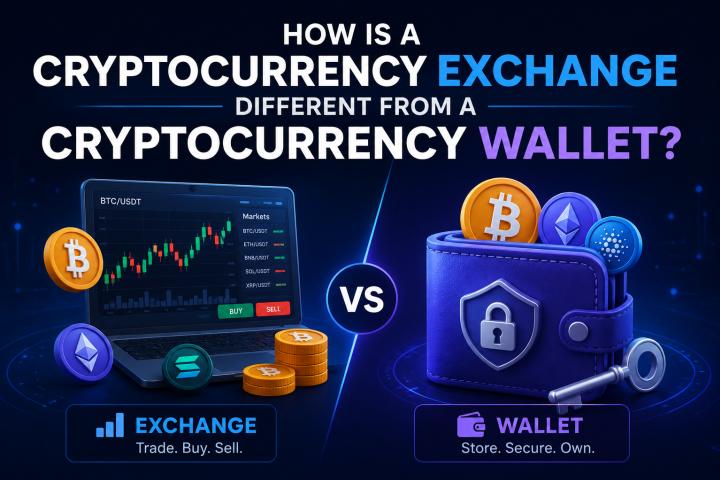
The rapid growth of cryptocurrency and blockchain technology has introduced a wide range of digital financial tools. Among the most important are cryptocurrency exchanges and cryptocurrency wallets. Although these terms are often mentioned together, many people mistakenly believe they serve the same purpose. In reality, they perform completely different functions within the crypto ecosystem.
Understanding the difference between a cryptocurrency exchange and a cryptocurrency wallet is essential for investors, traders, businesses, and anyone looking to participate in the digital asset market.
What Is a Cryptocurrency Exchange?
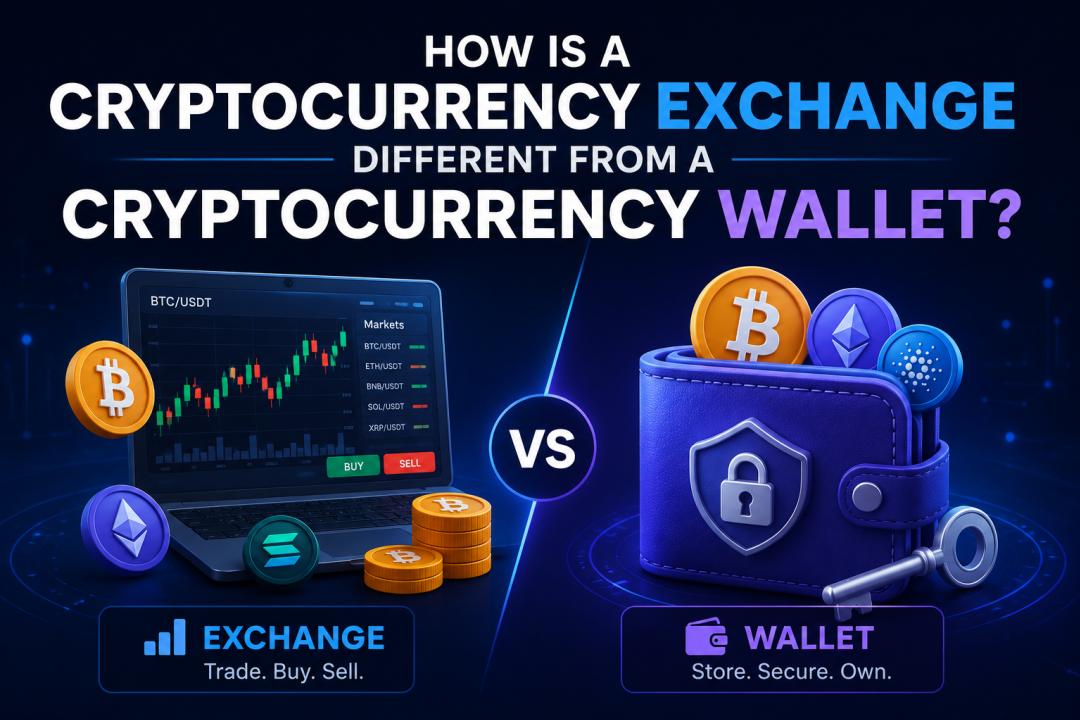
A cryptocurrency exchange is an online platform that allows users to buy, sell, and trade cryptocurrencies. It acts as a marketplace where digital assets can be exchanged for other cryptocurrencies or traditional currencies.
Exchanges provide users with access to market prices, liquidity, trading tools, and various cryptocurrencies. They simplify the process of entering the crypto market and enable users to execute transactions quickly and efficiently.
Some of the common features offered by cryptocurrency exchanges include:
- Cryptocurrency trading
- Market analysis tools
- Trading pairs
- Liquidity management
- Portfolio tracking
- Staking and investment options
For most users, a cryptocurrency exchange is the first step in their crypto journey because it provides easy access to buying and selling digital assets.
What Is a Cryptocurrency Wallet?
A cryptocurrency wallet is a tool designed to store and manage digital assets securely. Unlike an exchange, a wallet does not function as a marketplace. Instead, it provides users with access to their cryptocurrencies through private keys.
Private keys are cryptographic credentials that prove ownership of digital assets on the blockchain. Whoever controls the private keys controls the cryptocurrency.
Cryptocurrency wallets enable users to:
- Store cryptocurrencies securely
- Send and receive digital assets
- Manage private keys
- Access blockchain-based funds
- Monitor wallet balances
Wallets come in various forms, including mobile wallets, desktop wallets, web wallets, and hardware wallets. Each type offers different levels of convenience and security.
Key Differences Between a Cryptocurrency Exchange and a Wallet
The primary difference lies in their purpose.
A cryptocurrency exchange focuses on facilitating transactions and trading activities. It allows users to enter the market, exchange assets, and access liquidity.
A cryptocurrency wallet focuses on asset security and ownership. It helps users maintain control over their funds and protect them from unauthorized access.
Think of it this way:
A cryptocurrency exchange is similar to a financial marketplace where people buy and sell assets.
A cryptocurrency wallet is like a personal vault where those assets are stored securely.
While exchanges provide convenience and market access, wallets provide control and security.
Why Do Most Users Need Both?
Experienced crypto users rarely rely on only one solution. Instead, they use exchanges and wallets together.
A common approach is to purchase cryptocurrencies through an exchange and then transfer them to a secure wallet. This allows users to take advantage of trading opportunities while reducing the risks associated with storing large amounts of cryptocurrency on an exchange.
Using both solutions offers several advantages:
- Easy access to cryptocurrency markets
- Enhanced security for long-term holdings
- Better control over digital assets
- Reduced exposure to exchange-related risks
- Improved asset management
This combination creates a balanced strategy for both active traders and long-term investors.
Importance for Businesses
For businesses entering the blockchain industry, understanding the distinction between exchanges and wallets is crucial. Cryptocurrency exchange development focuses on creating platforms that support secure trading, liquidity management, and user transactions. Cryptocurrency wallet development focuses on protecting digital assets through advanced security features and private key management.
Together, these technologies form the foundation of a successful cryptocurrency ecosystem.
Conclusion
Cryptocurrency exchange and cryptocurrency wallet are both essential components of the blockchain ecosystem, but they serve different purposes. Exchanges enable users to buy, sell, and trade digital assets, while wallets help users securely store and manage their cryptocurrencies.
Understanding how these tools work and when to use them can significantly improve security, convenience, and overall user experience. As cryptocurrency adoption continues to grow, both exchanges and wallets will remain vital technologies driving the future of digital finance.