Your best customers are quietly shopping around. Not because they're unhappy, they just have no real reason to stay loyal when every vendor offers roughly the same pricing, the same payment terms, and the same generic "thanks for your business" email once a year. If you've ever wondered why a client who's bought from you for five years suddenly takes a call from a competitor, the answer usually isn't about price. It's about the absence of a relationship that rewards them for sticking around. This is exactly the gap that B2B loyalty programs are built to close, and understanding how they actually work-not the watered-down version, but the real mechanics-can change how you think about retention entirely.
What Makes B2B Loyalty Different From B2C
Most people picture loyalty programs as punch cards or point systems you'd see at a coffee shop. Buy ten, get one free. That model works fine when you're dealing with individual consumers making impulsive, low-stakes purchases. But business buying decisions look nothing like that.
In a B2B relationship, you're not selling to one person; you're selling to a buying committee. A procurement manager, a finance lead, an end-user team, sometimes an executive sponsor, all weighing in on a single purchase decision. The sales cycle is longer, the order values are bigger, and the relationship often spans years, not minutes.
So a B2B loyalty program isn't really about gamifying small purchases. It's about building a structured approach to recognizing, rewarding, and deepening a relationship that already involves trust, repeated transactions, and mutual dependence. Think less "earn points, get a discount" and more "earn status, get priority access, better terms, and a partner who understands your business."
How B2B Loyalty Programs Actually Work
At their core, these programs rest on a simple premise: the more a business buys from, engages with, or advocates for you, the more value they unlock in return. But the structure underneath that premise tends to involve a few moving parts.
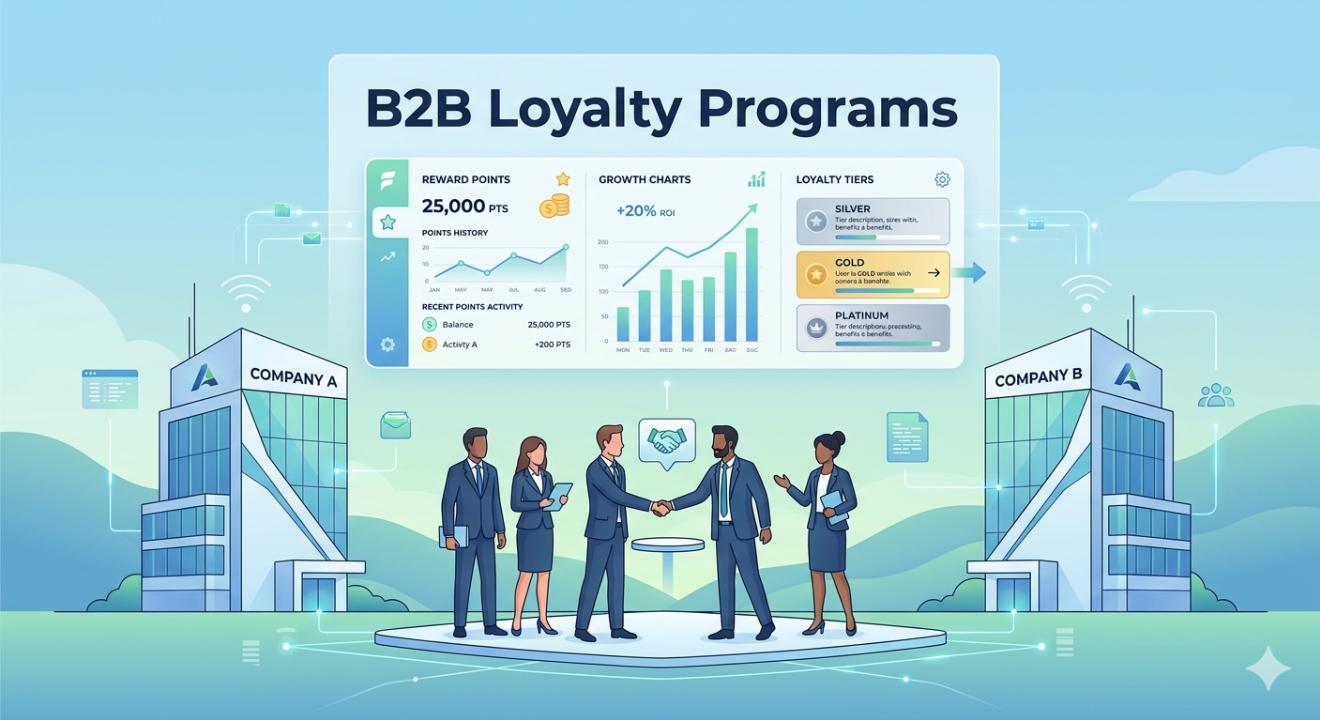
Tiered structures based on volume or spend. Many programs sort partners or clients into tiers-silver, gold, platinum, or whatever naming convention fits- based on purchase volume, contract length, or account value. Higher tiers typically unlock better pricing, dedicated support, or early access to new products.
Points or credits tied to specific actions. Some programs reward more than just purchases. Renewing a contract early, referring a new client, attending a training session, or providing a case study can all earn credits that translate into discounts, service upgrades, or co-marketing support.
Non-monetary perks that actually matter to businesses. This is where B2B diverges sharply from consumer loyalty. Instead of free merchandise, rewards often include things like extended payment terms, dedicated account managers, beta access to new features, joint business planning sessions, or invitations to exclusive industry events.
Partner enablement and co-investment. In channel and reseller relationships, loyalty programs frequently include marketing development funds, training certifications, or technical support tiers, essentially investing in the partner's ability to sell and succeed rather than rewarding them only after the fact.
The mechanics matter less than the intent behind them: making the relationship feel reciprocal instead of transactional.
Why They Matter More Than Most Businesses Realize
It's easy to dismiss loyalty programs as a "nice to have," something you'll build once the budget allows. But there's a real cost to not having one, and it shows up in places that don't always get attributed correctly.
Acquiring a new B2B client is expensive and slow. Between the sales cycle, the onboarding, and the trust-building required before someone signs a meaningful contract, replacing a lost account often costs far more than retaining one. A loyalty structure gives existing clients a tangible reason to stay through the inevitable moments when a competitor comes knocking with a slightly better price.
It creates predictable, recurring revenue. When clients are incentivized to renew, consolidate their spend with you, or expand into new product lines, your revenue forecasting becomes more reliable. That stability matters not just for your finance team but for how confidently you can plan inventory, staffing, and growth.
It turns customers into advocates. B2B purchasing decisions lean heavily on trust signals, case studies, referrals, and peer recommendations. A well-designed loyalty program that rewards advocacy (not just spend) naturally encourages your best clients to talk you up in rooms you're not even in.
It surfaces data you'd otherwise miss. Tracking engagement, purchase patterns, and redemption behavior across a loyalty program gives you a clearer picture of which accounts are genuinely thriving and which are quietly disengaging, often before churn becomes obvious elsewhere.
It differentiates you in commoditized markets. When your product or service is similar to three other vendors in the space, the relationship becomes the differentiator. A thoughtful loyalty structure signals that you see your clients as long-term partners, not recurring invoices.
Common Mistakes That Undermine These Programs
Not every loyalty incentive program delivers on its promise, and the failures tend to follow a pattern. Some businesses copy a B2C points system without adapting it to longer sales cycles or committee-based buying, which makes the rewards feel irrelevant. Others build a program once and never revisit it, so the perks no longer align with what clients actually value as their needs evolve. And a surprising number of programs collapse under their own complexity. If a client needs a manual or a phone call just to understand how to redeem a benefit, the program is working against itself.
The programs that hold up over time tend to be the ones built around genuine listening: asking top accounts what would actually make them feel valued, rather than assuming a generic tier system will do the job.
Bringing It All Together
A loyalty program isn't a replacement for a good product or fair pricing; it's what reinforces the relationship once those fundamentals are already in place. For B2B companies specifically, the opportunity is larger than most realize, simply because so few competitors do it well. While most vendors are still sending generic check-in emails, a business that builds a structured, thoughtful way to recognize its best clients stands out almost by default. The goal isn't to bribe people into staying. It's to make loyalty the natural outcome of a relationship that already feels like a partnership.
Frequently Asked Questions
What's the difference between a B2B loyalty program and a B2C one?
B2B programs are built around longer sales cycles, multiple decision-makers, and higher-value relationships, so rewards typically focus on things like better contract terms, dedicated support, or co-marketing opportunities rather than discounts or freebies.
Do small businesses need a B2B loyalty program, or is it only for large enterprises?
Company size matters less than relationship value. Even a small business with a handful of high-value clients can benefit from a simple, well-thought-out approach to recognizing and retaining them.
What kind of rewards work best in a B2B loyalty program?
The most effective rewards tend to be those that help the client's business operate more effectively, such as extended payment terms, priority support, early product access, or training, rather than generic gifts or discounts.
How do you measure whether a B2B loyalty program is actually working?
Look beyond redemption rates. Track account retention, contract renewal rates, average order value over time, and referral activity to see whether the program is genuinely strengthening relationships.
Can a loyalty program work in a B2B industry with very few repeat purchases?
Yes, though it shifts focus. In industries with infrequent transactions, loyalty programs often emphasize engagement, advocacy, and relationship-building activities rather than purchase frequency alone.