A passport photo may seem like a
small part of the passport application process, but it plays a crucial role in
document verification and identity authentication. Every year, thousands of
passport and visa applications face delays due to incorrect photographs that
fail to meet official requirements.
One common misconception among
applicants is that passport photo dimensions are the same worldwide. In
reality, each country follows its own standards regarding photo size, facial
positioning, background color, image quality, and other specifications.
Understanding the Standard
Passport Size Photo Dimensions in India and Abroad is essential for
travelers, students, professionals, and immigrants who want to avoid
application delays or rejections. While some countries follow similar photo
size requirements, others have distinct guidelines for dimensions, facial
proportions, background color, and image quality. Knowing these differences in
advance can help applicants prepare compliant photographs and ensure a smoother
passport or visa application process.
Why
Passport Photo Dimensions Matter
Passport photographs are used for
biometric identification, security verification, and facial recognition
systems. Even a minor deviation from prescribed standards can result in
application rejection.
Authorities across the world
establish strict photo guidelines to ensure:
- Accurate identification
- Consistent document verification
- Enhanced security measures
- Compatibility with biometric systems
- Prevention of identity fraud
For this reason, applicants should
never assume that a passport photo accepted in one country will automatically
be accepted in another.
Standard
Passport Photo Dimensions in India
India follows specific guidelines
for passport photographs used in various passport-related applications.
Indian
Passport Photo Requirements
Generally, passport photos in India
should meet the following criteria:
- Recent color photograph
- Plain white or light-colored background
- Clear facial visibility
- Neutral facial expression
- No shadows or reflections
- High image quality
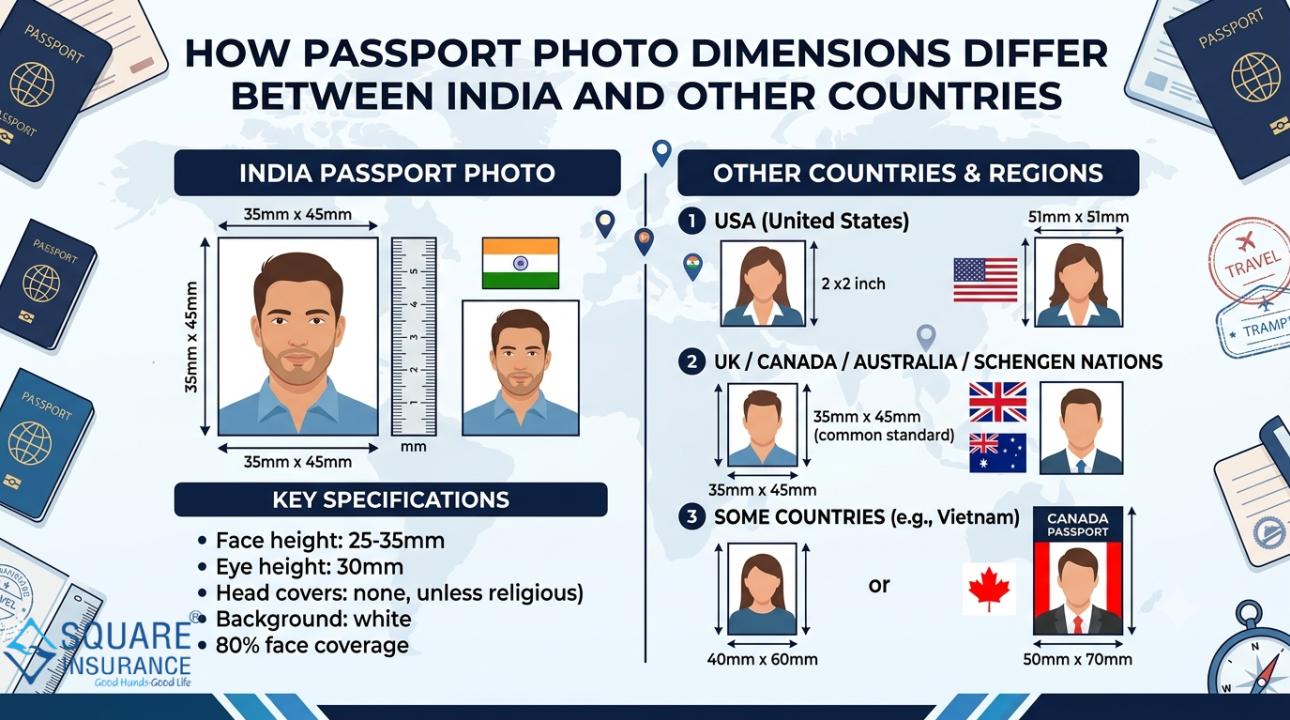
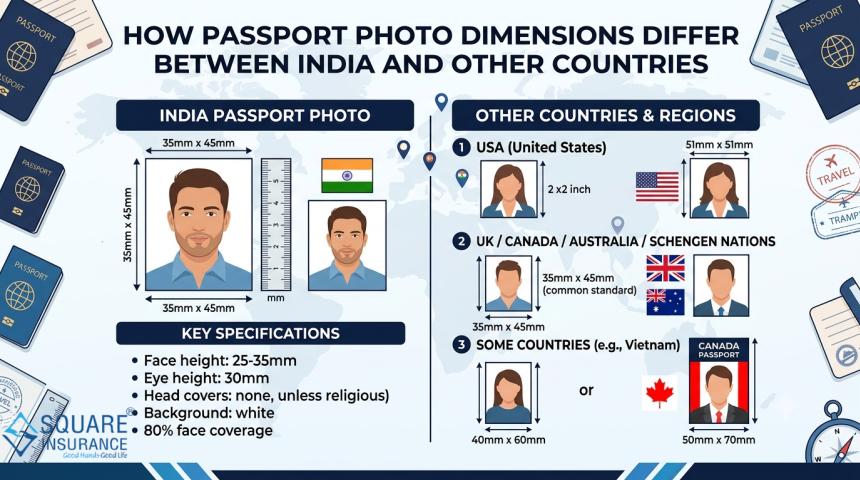
The commonly accepted passport photo
size in India is:
35 mm x 45 mm
The applicant's face should occupy a
significant portion of the image while maintaining proper spacing around the
head and shoulders.
Why
Other Countries Use Different Passport Photo Sizes
Different governments have developed
passport systems independently over time. As a result, photo specifications
vary depending on:
- National security protocols
- Immigration requirements
- Biometric technology standards
- Passport booklet design
- Government regulations
These differences may appear minor
but can significantly affect application acceptance.
Passport
Photo Dimensions in Major Countries
Let's examine how passport photo
dimensions differ across some of the world's most commonly visited
destinations.
United
States
The United States has one of the
most distinctive passport photo requirements.
Standard
Size
- 2 x 2 inches
- Approximately 51 mm x 51 mm
Key
Requirements
- White background
- Direct front-facing position
- Neutral facial expression
- Eyes clearly visible
- No digital alterations
Compared to India, U.S. passport
photos are square-shaped rather than rectangular.
United
Kingdom
The United Kingdom follows a
slightly different standard.
Standard
Size
- 35 mm x 45 mm
Key
Requirements
- Plain light-colored background
- No head tilting
- Neutral expression
- Full visibility of facial features
Interestingly, the UK photo size is
similar to India's dimensions, although specific facial positioning
requirements may vary.
Canada
Canadian passport authorities
maintain detailed photo guidelines.
Standard
Size
- 50 mm x 70 mm
Key
Requirements
- High-resolution image
- Plain white background
- Professional-quality photograph
- Specific head-size measurements
Canadian passport photos are
noticeably larger than Indian passport photos.
Australia
Australia also follows unique
passport photo standards.
Standard
Size
- 35 mm to 40 mm wide
- 45 mm to 50 mm high
Key
Requirements
- Natural skin tones
- Clear image quality
- Neutral expression
- Even lighting conditions
Australia places significant
emphasis on image clarity and biometric compatibility.
Schengen
Countries
Many European nations participating
in the Schengen visa system use similar photo requirements.
Standard
Size
- 35 mm x 45 mm
Key
Requirements
- White or light grey background
- Face centered in frame
- Neutral expression
- Recent photograph
Countries such as Germany, France,
Italy, Spain, and the Netherlands generally follow these standards.
Key
Differences Between India and Other Countries
Although some countries use similar
dimensions, several important differences exist.
1.
Photo Size
The most obvious variation is the
overall photograph size.
Applicants must ensure they select
the correct size for the destination country's requirements.
2.
Head Size Requirements
Many countries specify the exact
percentage of the image that the face should occupy.
For example:
- Canada requires precise head measurements.
- The USA defines strict facial proportions.
- Schengen countries specify exact face positioning.
Indian applications generally focus
more on overall visibility and clarity.
3.
Background Rules
Most countries require white or
light-colored backgrounds, but the acceptable shades may vary.
Some authorities permit:
- Off-white backgrounds
- Light grey backgrounds
- Uniform cream backgrounds
Others insist on pure white
backgrounds only.
4.
Digital Editing Restrictions
Several countries have strengthened
regulations regarding digitally enhanced photographs.
Applicants should avoid:
- Excessive retouching
- Beauty filters
- Artificial skin smoothing
- Background manipulation
These modifications can lead to
application rejection.
5.
Facial Expression Guidelines
While most countries require neutral
expressions, the interpretation varies.
Generally accepted standards
include:
- Mouth closed
- Eyes open
- Looking directly at the camera
- No exaggerated facial expressions
Biometric systems rely on accurate
facial recognition, making these rules increasingly important.
Common
Passport Photo Mistakes
Many passport applications are
delayed due to avoidable photo-related errors.
Common mistakes include:
- Incorrect photo dimensions
- Poor lighting
- Shadows on the face
- Wearing tinted glasses
- Low-resolution images
- Smiling excessively
- Improper background colors
- Cropped head positioning
Reviewing country-specific
requirements before taking a photograph can save both time and money.
Tips
for Getting a Compliant Passport Photo
To improve the chances of
acceptance:
Choose
Professional Photography
Professional studios are often
familiar with international passport standards.
Verify
Country-Specific Guidelines
Always confirm photo requirements
before submitting an application.
Wear
Appropriate Clothing
Avoid clothing that blends into the
background.
Maintain
Neutral Expression
A natural and relaxed expression
works best.
Use
Recent Photographs
Most authorities require photographs
taken within the last six months.
Avoid
Heavy Editing
Keep the image authentic and
natural.
How
Correct Passport Photos Support International Travel
Whether applying for a passport,
student visa, work permit, or immigration program, accurate photographs reduce
the risk of delays and rejections.
As global travel becomes
increasingly digitized, biometric verification systems are becoming more
sophisticated. Complying with photo standards ensures smoother processing and
faster approvals.
Conclusion
Passport photo dimensions may seem
like a minor detail, but they play a critical role in successful passport and
visa applications. While India generally follows a 35 mm x 45 mm format,
countries such as the United States, Canada, Australia, and several European
nations have their own unique specifications regarding photo size, head
positioning, and background requirements.
Understanding these differences can
help travelers avoid costly mistakes and ensure their applications are
processed smoothly. Just as proper documentation is essential for international
travel, having the right financial protection is equally important. At Square
Insurance, individuals can explore travel, health, and life insurance
solutions that provide security and peace of mind during domestic and
international journeys.
Frequently
Asked Questions (FAQs)
1.
What is the standard passport photo size in India?
The commonly accepted passport photo
size in India is 35 mm x 45 mm.
2.
Is the U.S. passport photo size different from India's?
Yes. The United States typically
requires a 2 x 2-inch (51 mm x 51 mm) square photograph.
3.
Which country uses the largest passport photo dimensions?
Among commonly used standards,
Canada requires a larger passport photograph measuring 50 mm x 70 mm.
4.
Can I use the same passport photo for multiple countries?
Not always. Different countries have
unique photo size and formatting requirements.
5.
Are passport photo background requirements the same worldwide?
No. While many countries require
white or light-colored backgrounds, acceptable shades may vary.
6.
Can edited passport photographs be accepted?
Most authorities discourage
significant digital editing or enhancement and may reject altered images.
7.
How recent should a passport photo be?
Most passport and visa authorities
require photographs taken within the previous six months.
8.
Why do passport photo dimensions vary across countries?
Differences arise due to varying
government regulations, biometric standards, immigration requirements, and
security protocols.