The cryptocurrency economy is evolving well beyond simply buying and selling. Today, crypto derivatives trading accounts for a significant portion of global trading volume, attracting retail traders, institutional investors, and businesses alike. As demand for advanced trading products continues to grow, many entrepreneurs are exploring opportunities to launch their own crypto derivatives exchange platforms.
However, before starting the development process, it is essential to understand the different types of crypto derivatives exchanges available in the market. Each exchange model serves a unique purpose, caters to different trading preferences, and requires specific technical and business considerations.
In this guide, we'll explore the major crypto derivatives exchange types and help you determine which model best aligns with your business objectives.
What Is a Crypto Derivatives Exchange?
A crypto derivatives exchange is a trading platform that enables users to trade financial contracts based on the future price movements of cryptocurrencies without owning the underlying digital assets.
Unlike spot exchanges, where traders buy and sell actual cryptocurrencies, derivatives exchanges allow users to speculate on price fluctuations through contracts such as futures, options, and perpetual contracts. These platforms include more advanced trading options such as leverage trading, hedging methods, and risk management tools.
As the crypto ecosystem continues to mature, derivatives exchanges have become a crucial component of the digital asset trading landscape.
Why Understanding Exchange Types Matters Before Development
Many businesses make the mistake of choosing a development approach before fully understanding the type of exchange they want to build. This often leads to increased costs, technical challenges, and mismatched user expectations.
The type of crypto derivatives exchange you choose directly impacts:
Platform functionality
Trading engine requirements
Liquidity needs
User experience
Revenue opportunities
Regulatory considerations
By understanding the available exchange models upfront, businesses can make informed decisions and build platforms that meet market demand effectively.
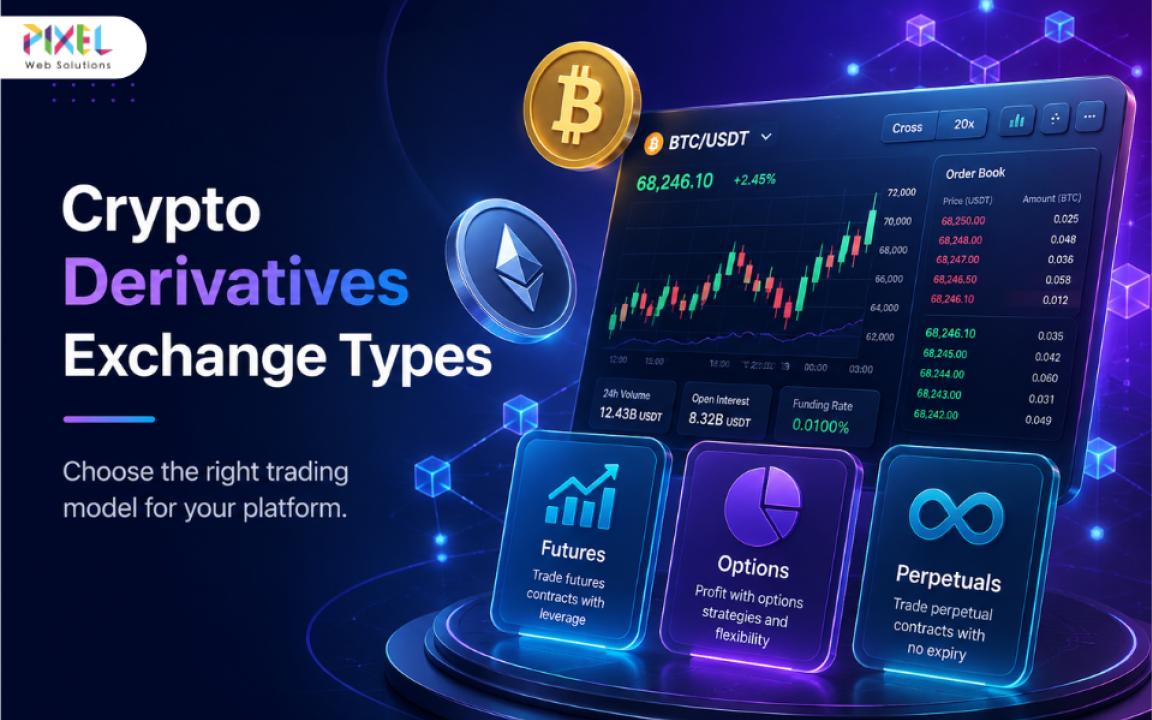
Types of Crypto Derivatives Exchanges
Futures Exchanges
Futures exchanges allow traders to buy or sell contracts that settle at a predetermined price on a future date. These contracts enable traders to speculate on market movements or hedge against potential price risks.
Key Features of Futures Exchanges
Fixed contract expiration dates
Margin trading capabilities
High liquidity potential
Risk management opportunities
Advantages of Futures Exchanges
Futures trading is popular among both retail and professional traders because it provides flexibility and effective hedging mechanisms. Businesses launching futures exchanges can attract a broad user base seeking structured trading opportunities.
Best Use Cases
Futures exchanges are ideal for platforms targeting experienced traders, institutions, and users interested in managing market risk through structured contracts.
Options Exchanges
Options exchanges enable traders to purchase contracts that grant the right, but not the obligation, to buy or sell an asset at a predetermined price before a specified expiration date.
Key Features of Options Exchanges
Call and put options
Premium-based trading
Flexible trading strategies
Advanced risk management
Advantages of Options Exchanges
Options trading provides traders with greater flexibility and controlled risk exposure. Since traders are not obligated to execute contracts, options can be an attractive choice for users seeking sophisticated trading strategies.
Best Use Cases
Options exchanges are well-suited for advanced traders, institutional participants, and users looking to implement strategic market positions while managing downside risk.
Perpetual Exchanges
Perpetual exchanges have become one of the most popular forms of crypto derivatives trading. Unlike futures contracts, perpetual contracts do not have expiration dates, allowing traders to maintain positions indefinitely.
Key Features of Perpetual Exchanges
No contract expiration
Continuous trading opportunities
Funding rate mechanism
High leverage options
Advantages of Perpetual Exchanges
Perpetual contracts closely track spot market prices and offer a seamless trading experience. Their simplicity and flexibility have contributed to widespread adoption among crypto traders worldwide.
Best Use Cases
Perpetual exchanges are ideal for businesses seeking to attract active traders, maximize trading volume, and provide a dynamic trading environment.
Comparison of Crypto Derivatives Exchange Types
Feature | Futures Exchange | Options Exchange | Perpetual Exchange |
Expiration Date | Yes | Yes | No |
Trading Complexity | Medium | High | Medium |
Liquidity Demand | High | Medium | Very High |
Trader Popularity | High | Medium | Very High |
Revenue Potential | High | High | Very High |
Perpetual exchanges often have the biggest trading volume, whereas options exchanges tend to attract more sophisticated traders. Futures exchanges offer a balanced approach between accessibility and advanced trading functionality.
Which Crypto Derivatives Exchange Type Should You Build?
The right exchange model depends on your business strategy and target market.
Choose a Futures Exchange If:
You want to target professional traders.
Risk management and hedging are major selling factors.
You prefer structured contract-based trading.
Choose an Options Exchange If:
Your platform focuses on advanced trading strategies.
You aim to attract institutional investors.
Flexible risk management is a priority.
Choose a Perpetual Exchange If:
You want to maximize user engagement.
High trading volume is a primary objective.
You plan to target a broad crypto trading audience.
Key Considerations Before Building a Crypto Derivatives Exchange
Before moving into Crypto Derivatives Exchange Development, businesses should evaluate several critical factors:
Target Audience
Understand whether your users are retail traders, professional traders, or institutional investors.
Liquidity Requirements
Derivatives platforms rely heavily on liquidity to ensure smooth trading experiences and accurate price discovery.
Security and Risk Management
Implementing robust security measures and risk controls is essential for protecting users and maintaining platform stability.
Regulatory Compliance
Different jurisdictions have varying regulations for derivatives trading, making compliance planning a crucial step.
Development Budget
Each exchange type requires different levels of infrastructure, technical expertise, and ongoing maintenance costs.
Conclusion
Understanding crypto derivatives exchange types is a critical first step before launching a trading platform. Futures exchanges provide structured contract trading, options exchanges offer advanced strategic flexibility, and perpetual exchanges deliver continuous trading opportunities with strong market demand.
Choosing the right model depends on your target audience, business objectives, and long-term growth strategy. By carefully evaluating these factors before development begins, businesses can build platforms that meet user expectations and remain competitive in the rapidly evolving crypto market.
If you're planning to launch a derivatives trading platform, partnering with an experienced Crypto Derivatives Exchange Development company can help transform your vision into a secure, scalable, and high-performing exchange.