
The Digital Transformation of Surgical Environments: Analyzing the U.S. Integrated Operating Rooms Market, Clinical Infrastructure Evolution, and Enterprise Healthcare Strategy
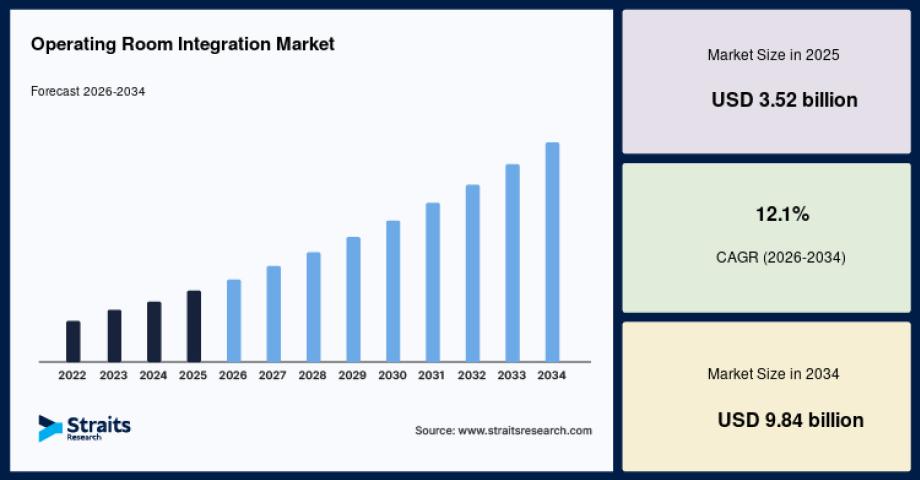
The United States healthcare ecosystem is navigating a profound technological paradigm shift within its acute care environments. The traditional surgical suite, long characterized by stand-alone medical devices, unlinked imaging systems, and dense tangles of floor-level cabling, is rapidly transitioning into a unified, digitally integrated ecosystem. According to an extensive strategic intelligence study published by Maximize Market Research, the U.S. Integrated Operating Rooms Market is undergoing a structural expansion. Driven by a clinical push for enhanced patient safety, the institutional prioritization of intraoperative data liquidity, a sharp macroeconomic migration toward outpatient surgical centers, and the implementation of artificial intelligence at the surgical point of care, the market is scaling toward an unprecedented multi-billion dollar valuation by 2032.
This sustained growth curve represents far more than a routine cycle of hardware procurement. It marks a foundational change in how surgical data is generated, routed, displayed, and archived. As surgical interventions become increasingly complex, relying heavily on minimally invasive techniques, high-definition visualization, and real-time robotic or navigational tracking, the operating room can no longer function as a collection of isolated instruments. Today’s surgical standard requires absolute digital harmony—a unified matrix where video feeds, electronic health records, patient vital telemetry, and advanced medical imaging are synthesized into an accessible, real-time interface for the clinical team.
𝐃𝐨𝐰𝐧𝐥𝐨𝐚𝐝 𝐏𝐃𝐅 𝐁𝐫𝐨𝐜𝐡𝐮𝐫𝐞 @ https://www.maximizemarketresearch.com/request-sample/125924/
The Modern Surgical Dilemma: Overcoming Equipment Fragmentation and Cognitive Overload
To fully comprehend the strategic necessity of surgical integration in the United States, one must look closely at the operational pressures confronting modern surgical teams. Over the past two decades, the volume of technology packed into a standard operating theater has expanded exponentially. A typical specialized suite now routinely contains high-definition laparoscopy towers, intraoperative fluoroscopy systems, surgical robotic control consoles, electrosurgical units, anesthetic delivery grids, and ambient lighting arrays.
When these devices function as distinct, siloed units, they introduce significant inefficiencies. Surgical technicians are forced to manually navigate multiple proprietary user interfaces, clinical cables clutter the physical workspace creating safety hazards, and surgeons experience cognitive fatigue as they try to look across multiple uncoordinated display screens spread throughout the room.
An integrated operating room resolves these systemic bottlenecks by establishing a unified central processing foundation. By linking hardware inputs through standardized fiber-optic or advanced IP-based routing systems, clinical teams can manage all ambient lighting, table orientation, imaging streams, and device configurations from a centralized, sterile touch-screen command panel. This consolidation reduces room turnaround intervals, lowers the likelihood of manual configuration errors, and allows the surgical team to maintain their core focus on patient care.
Macroeconomic Drivers: The Shift to Ambulatory Surgical Centers (ASCs) and Value-Based Care
The expansion of the U.S. integrated operating rooms market is deeply tied to structural payment shifts driven by both commercial insurance payers and the Centers for Medicare & Medicaid Services (CMS). The American healthcare economy is rapidly moving away from traditional fee-for-service payment models, favoring value-based care frameworks that reward clinical safety, lower complication rates, and optimized resource utilization.
This financial shift has triggered a migration of low-to-medium risk surgical procedures out of costly inpatient hospital networks and into independent Ambulatory Surgical Centers (ASCs). ASCs operate on lean, highly optimized business models where profitability depends on maximizing daily procedural throughput, maintaining minimal patient complication rates, and ensuring fast room turnover.
Consequently, enterprise demand for modular, highly efficient integrated operating room solutions within the ASC sector has risen significantly. Integrated suites allow outpatient facilities to execute complex laparoscopic, orthopedic, and cardiovascular interventions safely within a smaller spatial footprint, directly improving institutional profit margins.
Segment Evolution: High-Definition Visualization and Intraoperative Imaging Diagnostics
On a component segmentation basis, high-definition video distribution networks and advanced digital display infrastructure comprise a dominant revenue share of the U.S. marketplace. The widespread adoption of minimally invasive surgery (MIS)—such as advanced endoscopy, arthroscopy, and robotic-assisted resections—means that the modern surgeon operates primarily by viewing a digital screen rather than looking directly into an open incision.
As a result, clinical requirements have moved beyond basic high-definition displays to adopt 4K resolution, 3D visualization, and near-infrared fluorescence imaging. Integration platforms play an indispensable role here by ensuring that these immense, high-bandwidth video files are routed through the room with near-zero latency.
Furthermore, the integration of intraoperative diagnostic imaging systems, including surgical C-arms, mobile CT scanners, and ultrasound systems, allows teams to verify surgical margins and assess implant placement in real time. This immediate validation reduces the need for expensive secondary revision surgeries and lowers post-operative recovery times.
The Rise of Robotic Surgery and the Need for Ecosystem Synchronization
The rapid deployment of surgical robotics across U.S. hospitals represents a key growth driver for advanced operating room integration. Robotic platforms generate massive, highly specialized data streams, including real-time spatial telemetry, mechanical force feedback tracking, and stereo-high-definition video feeds.
An un-integrated operating room cannot easily absorb these data loads. To maximize the significant capital investments required by surgical robotics, hospitals must integrate these platforms into the broader room architecture.
A fully synchronized digital ecosystem routes the robot's high-resolution visual fields directly to ambient wall-mounted displays, lets the surgeon access preoperative diagnostic imaging directly within their console view, and streams the procedural footage live to institutional archives or remote educational centers. This connectivity ensures that the robotic system functions as a core component of the broader clinical infrastructure, rather than an isolated hardware add-on.
Enterprise Security and Interoperability: Navigating Cybersecurity and HIPAA Compliance
As the operating room transitions into a highly networked digital environment, it becomes subject to the strict cybersecurity and data governance requirements governing modern enterprise IT networks. Medical devices are increasingly targeted by sophisticated ransomware attacks, making data security a critical consideration for hospital leadership teams.
Modern operating room integration solutions must feature robust, military-grade encryption protocols to safeguard patient data and protect real-time video streams flowing across the hospital network. Integration platforms must maintain strict compliance with the Health Insurance Portability and Accountability Act (HIPAA), ensuring that any recorded surgical footage or captured patient data is automatically encrypted, stripped of unauthorized identifiers when necessary, and routed securely to the hospital's central Electronic Health Record (EHR) database.
Furthermore, true interoperability requires software platforms to communicate easily across different vendor ecosystems using standardized medical data protocols, preventing hospitals from becoming locked into single-vendor hardware environments.
Overcoming Structural Hurdles: High Capital Requirements and Legacy Infrastructure Retrofits
While the strategic advantages of integrated operating rooms are clear, the U.S. market faces specific operational challenges that require careful navigation:
The primary obstacle to rapid market growth is the significant initial capital expenditure required to design and install a fully integrated suite. Outfitting a single operating room with structural ceiling booms, fiber-optic distribution systems, high-end display arrays, and centralized control software can require hundreds of thousands of dollars. For smaller community hospitals and rural health networks operating on tight margins, these costs can represent a significant barrier to adoption. To address this, forward-thinking integration vendors are shifting away from rigid all-or-nothing purchase models, offering modular, software-defined integration structures that can be scaled up over time as institutional funding becomes available.
Additionally, retrofitting legacy hospital facilities presents significant physical engineering challenges. Older operating suites were not designed to accommodate the complex structural loads of heavy ceiling-mounted equipment booms, nor did they include the extensive internal conduit pathways required for modern high-bandwidth data cabling.
Overcoming these physical limitations requires extensive architectural modification and temporary room closures, which can disrupt hospital schedules and impact near-term surgical revenue. Integration providers who offer minimalist, wireless routing technologies and lightweight structural mounts are well-positioned to help hospitals minimize these installation disruptions.
Forward Directions: Strategic Business Guidance for Healthcare Administrators
To achieve maximum return on investment from operating room integration initiatives over the next decade, healthcare executives and clinical directors should adopt specific, structured strategies:
First, enterprise buyers must prioritize open-architecture software models. Hospital networks change over time, and a system that only connects to devices from a single manufacturer introduces long-term financial risk. By investing exclusively in open, vendor-neutral integration platforms that support universal communication standards, health systems can preserve their freedom to purchase the best surgical equipment available from any vendor in the future, knowing it will connect seamlessly with their existing room architecture.
Second, engineering and facilities management teams should transition toward software-defined video over IP (SDVoE) infrastructure. Traditional hard-wired hardware switchers are expensive, rigid, and prone to technical obsolescence as video resolutions advance. Implementing flexible, software-driven network configurations allows hospitals to update, redirect, and scale their visual distribution setups through simple software updates, avoiding the need for invasive rewiring projects down the line.
Third, clinical leadership teams must use integration data to drive continuous operational improvement. The data generated by integrated operating room platforms—such as exact room preparation times, active surgical durations, and equipment configuration trends—presents a valuable resource for operational analysis. By feeding this data into advanced analytics platforms, hospital administrators can pinpoint specific workflow bottlenecks, optimize staff scheduling, reduce room turnaround intervals, and significantly increase total daily surgical capacity.
Ultimately, the U.S. integrated operating rooms market has shifted from an elective luxury for elite academic research centers into a standard infrastructure requirement for modern, value-based healthcare delivery. Success over the next decade will belong to healthcare networks and technology providers that combine open digital architectures, rigorous security protocols, and data-driven workflow insights to create highly efficient, safe, and collaborative environments for surgical care.
For full access to the comprehensive strategic report, visit: https://www.maximizemarketresearch.com/market-report/u-s-integrated-operating-rooms-market/125924/
About Maximize Market Research
Maximize Market Research publishes sector forecasts, competitive analysis, and consulting insight for teams evaluating demand, competition, pricing, and growth strategy across high-value industries. By delivering comprehensive multi-page market evaluations backed by extensive primary and secondary research initiatives, Maximize Market Research equips corporate decision-makers, global investors, and industrial innovators with the actionable data required to confidently navigate supply chain changes, disruptive technologies, and evolving geopolitical landscapes.
MAXIMIZE MARKET RESEARCH PVT. LTD. 2nd Floor, Navale IT Park Phase 3 Pune Bangalore Highway, Narhe Pune, Maharashtra 411041, India +91 9607365656 sales@maximizemarketresearch.com