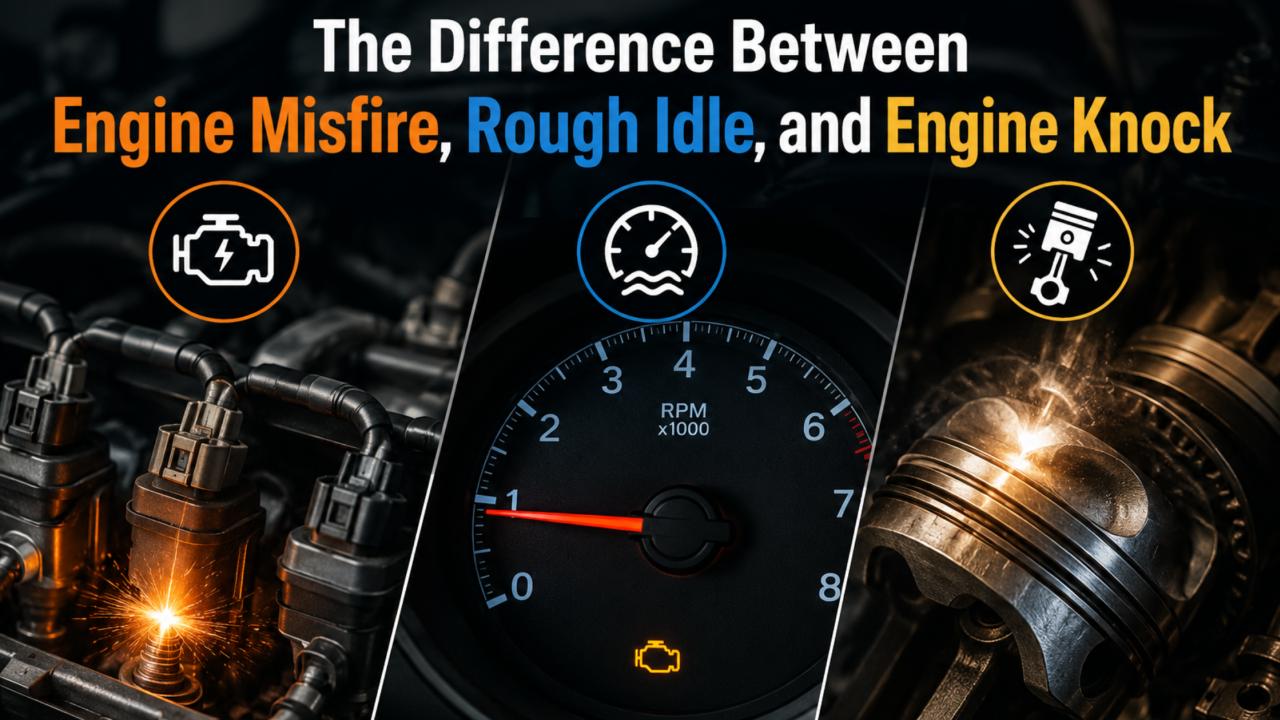
You're merging onto the highway when your engine suddenly hesitates, shakes, and the check engine light begins flashing. Although these symptoms may seem related, they often point to three very different problems: a misfire, a rough idle, or engine knock.
However, each issue has its cause and appropriate solutions. Ignoring those warning signs can result in expensive repairs, especially if you postpone any fuel system services and other necessary procedures. Knowing about such issues will help you detect early warning signs and preserve your engine.
According to the Car Care Council, proper vehicle maintenance increases reliability and reduces unexpected breakdowns, but many drivers postpone routine checks until the problem becomes noticeable. This blog discusses the differences between engine misfire, rough idle, and engine knock, and how to avoid these vehicle issues.
Understanding The Difference: Engine Misfire vs Rough Idle vs Engine Knock
Although these three issues are engine-related, they have different causes. An engine misfire in a vehicle occurs when one or more cylinders fail to fire. A rough idle is a vibration and shaking of the engine while the vehicle is stationary, but it usually stops when you start driving.
An engine knock is an unusual sound caused by an improper combustion process. It might cause serious engine damage if ignored. Detecting the sign first can help technicians easily find the problem.
What Is An Engine Misfire?
A misfire happens when one or more cylinders fail to ignite the air-fuel mixture correctly.
The Most Common Symptoms Of Engine Misfire
Among the most common engine misfire symptoms are:
- Check engine light.
- Increased exhaust emissions.
- Engine hesitation.
- Loss of power.
- Poor fuel economy.
- The vehicle shakes while driving.
Also, you should consider these signs of engine misfire and never ignore them.
What Causes Engine Misfires?
Many mechanical and electrical problems might cause engine misfires. The primary causes of engine misfires are:
- Worn-out spark plugs.
- Faulty ignition coils.
- Spark plug problems.
- Fuel injector problems.
- Ignition system issues.
- Low fuel pressure.
- Vacuum leak.
- Compression troubles.
In case of an engine misfire, it is better to get professional engine diagnostic services, as multiple problems can cause similar symptoms.
What Causes A Rough Idle?
A rough idle appears when the engine cannot maintain its steady speed while the car is standing still. Rather than working properly, it might shake and vibrate. Many drivers feel the engine vibration at idle, especially when stopped in traffic or parked.
Common Causes of a Rough Idle
There are several reasons why the engine is vibrating while idle, such as:
- Worn spark plugs.
- Carbon deposits.
- Blocked air filter.
- Weak ignition coils.
- Defective mass airflow sensor.
- Contaminated fuel injectors.
- Vacuum leak.
- Contaminated throttle body.
Although a rough idle may seem unimportant, it often indicates developing car engine problems that should be checked to avoid further damage.
Understanding Engine Knock
You may notice the knock when merging onto a highway or climbing a steep hill, especially after filling up with lower-octane fuel.
It is very different from a rough idle or engine misfire, as here the problem lies in an abnormal combustion process inside the engine cylinders. You should pay immediate attention to any knocking sound in the engine, as engine damage can be extremely expensive.
Causes Of Engine Knock
Several reasons might cause abnormal engine combustion.
The most common causes of engine knock include:
- Worn-out engine bearings.
- An imbalanced air and fuel mixture.
- Overheating.
- Improper ignition timing.
- Carbon deposits in the combustion chambers.
- Using low-octane fuel.
We've seen knocking develop shortly after switching to a lower-octane fuel than the manufacturer recommended. Using the correct fuel grade usually resolves the issue before permanent damage occurs.
Ignoring the knocks can cause serious damage to pistons, cylinders, or connecting rods.
The Impact Of Those Problems On Engine Performance
All those issues affect your vehicle in different ways.
Engine Misfire
An engine misfire directly reduces engine power because one or more cylinders stop working effectively. Also, your car loses power when starting due to an engine misfire. You will experience:
- Poor acceleration.
- Decreased fuel efficiency.
- Jerking while driving.
- Increasing exhaust emissions.
Rough Idle
Rough idle primarily affects engine performance while the vehicle is stationary. You might experience:
- Vibrating steering wheel.
- Shaking seats.
- Fluctuating engine speed.
- Unstable idle.
Engine Knock
Engine knock becomes dangerous because of abnormal combustion, which creates high cylinder pressure. As a result, you may experience:
- Costly engine repairs.
- Decreased fuel economy.
- Reduced performance.
- Internal engine damage.
Complete engine failure if the problem is ignored.
The Importance of the Check Engine Light
The check engine light is one of the best warning systems in your car. It tells you that something needs to be fixed, but it does not identify the exact problem. This light can appear because of:
- Engine misfires.
- Failure of oxygen sensors.
- Fuel injector problems.
- Ignition troubles.
- Air intake troubles.
- Faults in the emission system.
Driving with the warning light on for long periods can turn minor problems into serious ones. If the check engine light flashes while the vehicle shakes under acceleration, a misfire is far more likely than a rough idle.
The Importance Of Professional Diagnostics
Modern vehicles have many electronic systems controlling almost all aspects of engine operation. Although some YouTube videos might show how to fix a problem easily, replacing random parts can waste your time and money.
Professional engine diagnostic services use advanced equipment to identify the real problem, including;
- Scan tools.
- Pressure testing.
- Electrical testing.
- Performance analysis.
A correct diagnosis saves money and helps restore correct engine performance faster.
Preventive Maintenance Helps Prevent Major Repairs
Most engine problems appear gradually. Proper automotive maintenance decreases the risk of unexpected engine breakdowns.
Useful preventive maintenance practices include:
- Address warning signs immediately.
- Inspection of ignition components.
- Replacement of clogged air filters.
- Quality fuel usage.
- Regular oil changes.
- Fuel injector cleaning.
- Replacement of spark plugs according to the schedule.
Such maintenance is usually cheaper than fixing engine damage later.
When Should You Visit A Professional Auto Repair Shop?
Do not wait until your vehicle becomes difficult to drive. Contact the service if you experience:
- Engine vibration.
- Knocking sounds.
- Acceleration loss.
- Poor fuel economy.
- Rough idling.
- Check engine light flashing.
- Strange sounds from the engine.
Early diagnosis can help prevent more extensive repairs. Experienced specialists can diagnose both electrical and mechanical faults, including automotive electrical repairs, fuel delivery issues, ignition problems, and other hidden engine performance issues.
Protect Your Vehicle Engine and Maintain Optimal Performance With Regular Fuel System Services
Knowing the difference between engine misfire, rough idle, and engine knock allows you to respond quickly to unusual symptoms in your car. Whether your vehicle shows symptoms of an engine misfire, engine knocking, or increasing engine vibration at idle, fixing the problem early can save you from expensive damage and restore performance.
Regular fuel system services, timely inspections, proper automotive maintenance, and professional auto repair services will help to preserve your engine for many years. If you are seeking top-rated auto repair shops Tulsa, selecting professionals will help extend your vehicle's lifespan and improve its performance.