Direct Answer
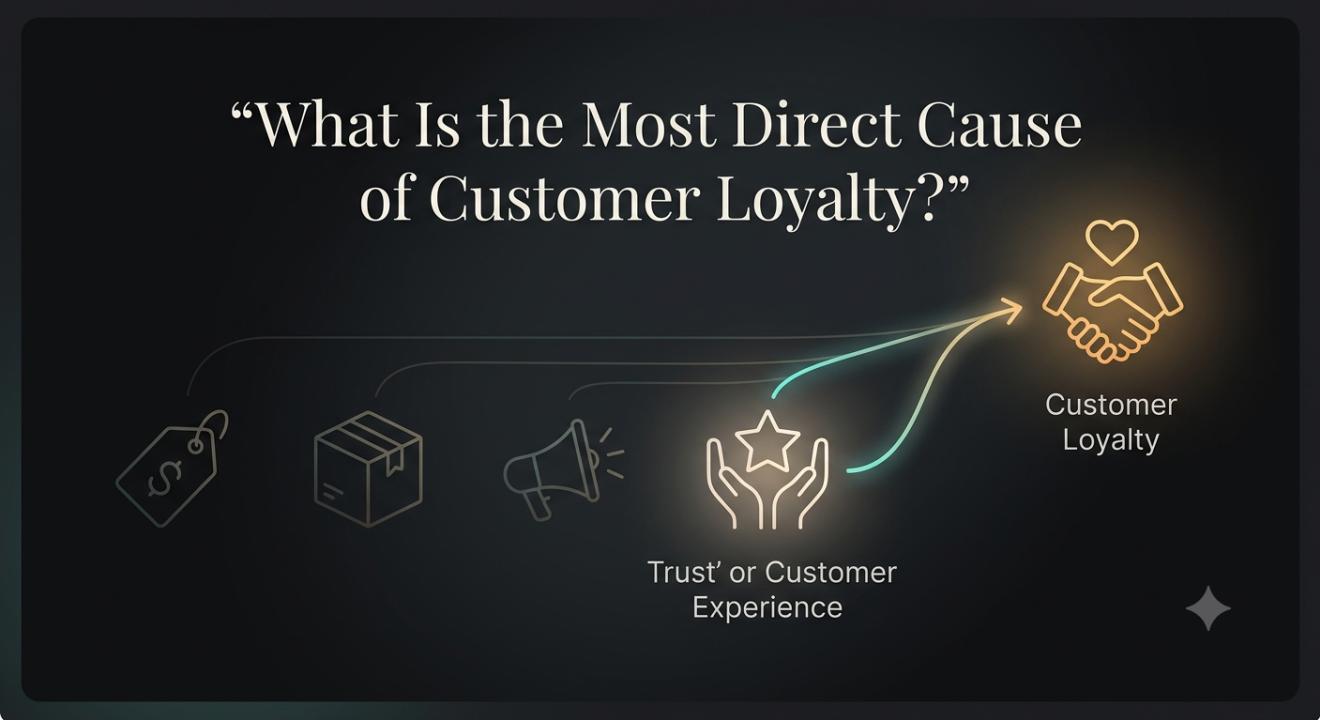
The most direct cause of customer loyalty is a consistent, positive customer experience, specifically, how reliably a brand meets or exceeds expectations at every interaction. When customers repeatedly feel valued, heard, and satisfied, emotional trust forms, and trust is the engine that drives repeat purchases, referrals, and long-term retention.
You've probably heard a hundred theories about what keeps customers coming back: better prices, loyalty points, slick apps. And yet, brands with none of those things build followings that last decades, while competitors with all of them watch their churn rate climb. If you've ever wondered what actually moves the needle on retention, you're not alone, and the answer is simpler and harder than most marketing advice admits.
The Most Direct Cause of Customer Loyalty, In Plain Terms
Customer loyalty is not built in a single moment. But if you had to identify one root cause, the thing that, when present, reliably produces loyal customers is a consistently positive customer experience.
Not an exceptional experience once. Not a viral wow moment. Consistent, reliable, expectation-meeting (and occasionally expectation-exceeding) interactions over time. That consistency is what converts a satisfied customer into a loyal one.
"Customers don't remember the one time you were brilliant. They remember the pattern of how you made them feel."
This is why the most direct cause of customer loyalty lies in the experience layer, not in pricing, product features alone, or discount programs. Those things can attract customers. Experience is what keeps them.
89% of customers switch to a competitor after a poor experience PwC
5–7× more expensive to acquire a new customer than to retain an existing one
77% of customers say they've stayed loyal to a brand for 10+ years Accenture
Why Experience Beats Price Every Time
Price is a rational decision. Experience is an emotional one. And loyalty, by nature, is emotional.
Think about the last brand you stuck with even when a cheaper option was available. Chances are, you trusted them. You knew what to expect. The mental transaction felt safe. That safety and reliability are the byproducts of experience done well, repeatedly.
Research from Harvard Business Review consistently shows that emotionally connected customers are more than twice as valuable as highly satisfied customers. They buy more, visit more often, exhibit less price sensitivity, and refer others more frequently. Satisfaction gets you to "fine." Emotional connection gets you to be loyal.
The Trust Bridge
Experience doesn't create loyalty directly; it works through trust. Here's how the chain runs:
Consistent experience → perceived reliability → emotional trust → loyalty behavior (repeat purchase, referral, advocacy).
Break the experience, and you crack the trust. Crack the trust, and loyalty dissolves faster than it took to build. This is why a single bad customer service interaction can erase years of goodwill; it's not about the incident itself; it's the signal it sends about whether you can still be trusted.
What "Consistent Experience" Actually Means in Practice
This isn't abstract. Consistency shows up in specific, measurable ways that customers notice even when they don't consciously articulate them.
1. Predictable Quality
Customers shouldn't have to wonder if today's interaction will be as good as last month's. Whether it's a product's reliability or a support team's helpfulness, predictability signals competence. Competence builds trust. Trust sustains loyalty.
2. Feeling Genuinely Valued
Customers can tell the difference between being processed and being valued. Personalization, even small things, like remembering a purchase history or addressing a complaint without making them repeat themselves, signals that they matter as individuals. That feeling is deeply tied to the most direct cause of customer loyalty: the emotional residue that experience leaves behind.
3. Easy, Low-Friction Interactions
Effort matters. The Customer Effort Score (CES) is often a stronger predictor of loyalty than satisfaction alone. When customers have to fight to return an item, navigate confusing support, or re-explain their situation three times, they remember the friction, not the resolution. Reduce friction, and you reduce the psychological cost of staying loyal.
4. Responsive Problem Resolution
Problems will happen. What separates loyal-producing brands from churn-producing ones is how they handle those problems. A well-handled complaint can actually increase loyalty compared to customers who never had an issue, a phenomenon called the service recovery paradox. Speed, ownership, and genuine resolution are what trigger it.
What Doesn't Directly Cause Loyalty (But Gets Confused for It)
Worth naming clearly, because a lot of business resources get misallocated here:
Loyalty programs create behavioral incentives, not emotional bonds. A customer who only returns for points will leave the moment a competitor's points are more attractive. Programs can reinforce loyalty; they don't originate from it.
Price attracts, but it doesn't retain. Price-loyal customers are the least loyal segment; they are loyal to the deal, not the brand. Drop your discount, and you lose them.
Product quality alone is necessary but insufficient. If a competitor matches your product quality and offers a warmer, more consistent experience, you'll lose customers who should have stayed.
The Bottom Line
The most direct cause of customer loyalty is the consistent, positive experience a brand delivers across every touchpoint, not once, but reliably, over time. It works because experience builds trust, and trust is the only real foundation on which loyalty can stand.
Loyalty programs, product features, and competitive pricing all have a role to play. But none of them substitute for the basic, repeatable act of making customers feel that choosing you again is a safe and rewarding decision. Get that right consistently, and loyalty follows. Let it slip, and everything else becomes damage control.
Frequently Asked Questions
What is the most direct cause of customer loyalty?
The most direct cause of customer loyalty is a consistent, positive customer experience. When customers reliably receive what they expect, and occasionally more, they develop emotional trust in a brand, which is the primary driver of repeat behavior, referrals, and long-term retention.
Is customer satisfaction the same as customer loyalty?
No, and this distinction matters. Satisfaction is transactional; loyalty is emotional. A satisfied customer had a good experience this time. A loyal customer has developed trust through repeated good experiences and is unlikely to switch even when alternatives are available. Satisfaction is a necessary step, but not a sufficient one.
How does customer experience drive loyalty?
Customer experience drives loyalty by building trust over time. Each interaction either reinforces or erodes a customer's perception of a brand's reliability. When a brand consistently delivers in product quality, service responsiveness, and ease of interaction, customers internalize it as safe and rewarding, leading them to keep returning. Experience → trust → loyalty is the direct chain.
Do loyalty programs actually create customer loyalty?
Loyalty programs reinforce existing loyalty but rarely create it from scratch. Customers who are already emotionally connected to a brand respond well to reward programs. However, customers who are only returning for points tend to have no real brand attachment; they're loyal to the incentive, not the company. Programs amplify loyalty; experience gives rise to it.
What factors most influence customer loyalty in 2025 and beyond?
The core drivers haven't shifted: consistent experience, emotional trust, and low-friction interactions remain the top predictors. What has evolved is that customer expectations for response speed are now the baseline, personalization is expected rather than impressive, and brands that fall short on either lose loyalty faster than ever. Brands that win long-term are those that treat every touchpoint as a trust-building or trust-breaking moment.