You just bought a new laptop, and the box says "Get $150 back with mail-in rebate," so you follow the instructions, mail in the receipt, and then… wait. Three weeks pass. Two months pass. Eventually you forget about it entirely, and that $150 never shows up. Sound familiar? Millions of shoppers lose out on rebate money every year, not because the offer was fake, but because they didn't understand exactly how the rebate process works or what a rebate actually is in the first place.
Quick Answer:
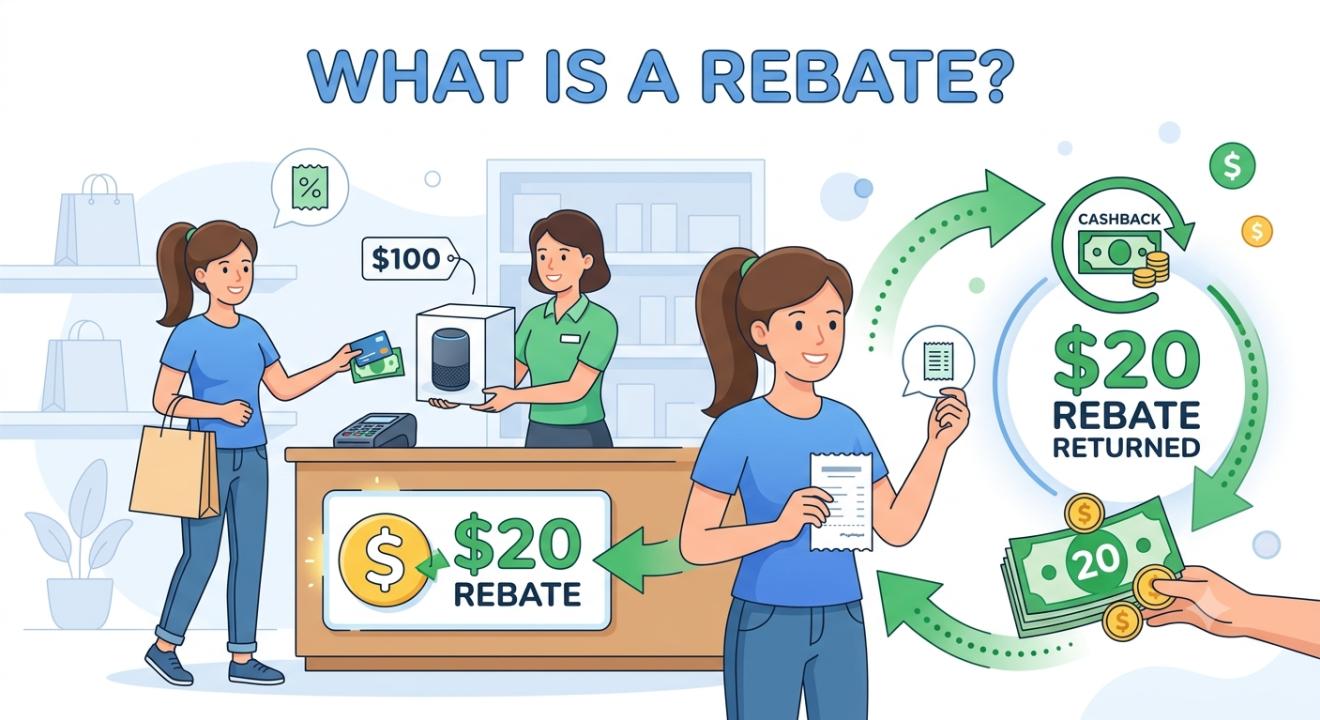
A rebate is a partial refund paid to you after a purchase, usually by the manufacturer rather than the store. You pay full price upfront, then claim the rebate by submitting proof of purchase. If approved, you receive the rebate amount as a check, a prepaid card, or an account credit. It is different from a discount, which reduces the price before you pay.
What Is a Rebate? (And Why It Matters)
A rebate is a retroactive price reduction. You pay the sticker price first, fulfill certain conditions, and then receive money back at a later date. That distinction paying now, getting money back later is the whole game. It's why rebates are sometimes called "delayed discounts."
The reason this definition matters: retailers and manufacturers rely on the time gap between purchase and payout. A percentage of buyers never claim their rebates, so the company keeps the money. Understanding this dynamic puts you in a much stronger position whenever a rebate offer is part of a buying decision.
Key Distinction:
Discount vs. Rebate: A $50 discount reduces a $300 item to $250 at checkout. A $50 rebate means you still pay $300 at checkout and receive $50 back later after meeting the program's requirements.
How Does a Rebate Program Actually Work?
A rebate program is the structured process a company uses to manage, process, and pay out rebate claims. Whether it's a tech manufacturer, an auto dealership, or a utility company offering energy rebates, most programs follow the same basic flow.
You make the qualifying purchase: The rebate is tied to buying a specific product, model, or spending a minimum amount within a specific time window. Missing the window even by one day can disqualify your claim.
You gather documentation: This usually means your original receipt, the UPC barcode from the product packaging, and sometimes a completed rebate form. Losing any one of these is the most common reason claims get rejected.
You submit the claim: Older programs require physical mail. Many modern rebate programs accept online submissions through a dedicated portal. Either way, keep copies of everything you send.
The claim is processed and verified: A third-party rebate processing company typically handles this step on behalf of the brand. Processing can take anywhere from two to twelve weeks depending on the program.
You receive the rebate payment: Payment arrives as a paper check, a prepaid Visa/Mastercard, or a credit applied to a loyalty account. Prepaid cards often carry an expiration date; check it immediately and use the funds promptly.
Types of Rebates You'll Actually Encounter
Not every rebate works the same way. Here's a practical breakdown of the most common types:
| Type | How It Works | Common Example |
| Mail-In Rebate | Submit physical documentation by post within a deadline | Electronics, appliances |
| Instant Rebate | Deducted at checkout automatically, no claim needed | Warehouse club promotions |
| Online Rebate | Submit proof of purchase through a web portal | Software subscriptions, tech hardware |
| Manufacturer Rebate | Offered by the brand, redeemable anywhere the product is sold | Auto parts, power tools |
| Utility / Energy Rebate | Offered by utility companies for energy-efficient purchases | Smart thermostats, HVAC systems |
| Loyalty Rebate | Earned as points or cashback through a rewards program | Credit card cashback, retail loyalty apps |
Why Do Companies Offer Rebates Instead of Just Lowering the Price?
This is the question most buyers never think to ask, and the answer is genuinely illuminating. Companies prefer rebates over straight discounts for several reasons that have little to do with your convenience.
Breakage: In the rebate industry, "breakage" refers to the percentage of rebates that are never claimed. Studies have historically put this figure anywhere from 20% to 40% depending on the category. For a company running a large-scale rebate program, that unclaimed money goes straight back to the bottom line.
Price perception: Advertising a $299 laptop with a $50 rebate lets the company keep the $299 sticker price intact for accounting, retail channel, and brand-perception purposes while still effectively competing at $249 for motivated buyers.
Data collection: Rebate submissions require personal information: name, address, sometimes even the retailer you bought from. That data has real marketing value.
Worth Knowing: A rebate offer doesn't make a purchase a good deal automatically. Always calculate whether the final after-rebate price actually beats a competing product's straightforward price and factor in whether you'll realistically complete the claim process.
How to Make Sure You Actually Get Your Rebate Money
Claiming a rebate successfully is less about luck and more about process. These habits will dramatically improve your success rate with any rebate program:
Read the terms before you buy
Rebate terms are specific. Required purchase dates, eligible model numbers, submission deadlines, and acceptable proof-of-purchase formats are all non-negotiable. A $10 cheaper model of the same product might not qualify at all.
Photograph everything before you mail it.
If a mail-in rebate requires the original UPC barcode and receipt, cut out the UPC and photograph both it and the receipt side by side. If your submission gets lost, you have documented proof of what you sent.
Submit early
Deadlines for rebate programs are hard stops. Submitting within the first week of purchase removes any risk of missing the window due to delays or lost mail.
Track your submission
Many rebate processors provide online tracking tools. Set a calendar reminder for the expected processing period and follow up proactively if the deadline passes without payment.
Watch for expiration on prepaid cards.
If your rebate arrives as a prepaid debit card, it may expire within 6–12 months. Use it promptly or, where possible, transfer the balance.
Conclusion
A rebate is straightforward in concept: get some money back after your purchase, but the execution requires attention to detail. The companies running rebate programs are counting on a significant portion of buyers to lose interest, miss deadlines, or misplace paperwork. Knowing how the system works puts you on the right side of that equation.
Whether you're navigating a mail-in rebate on a new appliance, an energy rebate from your utility, or a cashback offer inside a loyalty program, the principle is the same: understand the terms, document everything, submit early, and follow up. Treated with that level of care, a rebate program is exactly what it promises to be: money back in your pocket.
Frequently Asked Questions About Rebates
What is the difference between a rebate and a refund?
A refund is money returned to you because you returned a product or because of a billing error; the transaction is reversed. A rebate is money returned to you while you keep the product, as a reward for meeting specific purchasing conditions. A refund is reactive; a rebate is a planned promotional mechanism. Both put money back in your pocket, but through entirely different processes.
How long does it take to receive a rebate?
Processing time depends on the type of rebate and the program's volume. Instant rebates are immediate; they happen at the point of sale. Mail-in and online rebates typically take between 4 and 12 weeks after the claim is received. High-volume programs (like those run during holiday shopping seasons) can take longer. If you haven't received payment after 12 weeks, contact the rebate processing center directly with your tracking or confirmation number.
Are rebates taxable income?
In most cases, consumer product rebates are not considered taxable income; the IRS generally treats them as a reduction in purchase price rather than income. However, exceptions exist. If a rebate is paid in connection with a business purchase and was deducted as an expense, the rebate may need to be reported. Utility rebates for home improvements may also have specific tax implications. When in doubt, consult a tax professional about your specific situation.
What happens if my rebate is denied?
If your rebate claim is denied, you typically receive a notice explaining the reason; common causes include missing documentation, submission outside the eligible window, or an ineligible product model. You have the right to appeal. Contact the rebate processing company with your documentation and request a review. If the denial was due to a clerical error on their side, appeals are often resolved in your favor. If the appeal fails and you believe the denial was unjustified, you can file a complaint with your state's consumer protection office or the Better Business Bureau.
Can a rebate program expire before I submit my claim?
Yes, and this is one of the most common ways people miss out on rebate money. Every rebate program has a submission deadline, which is separate from the purchase deadline. For example, you might have until December 31 to buy the product, but must submit your claim by January 15. Missing the submission deadline — even by one day will typically disqualify your claim entirely, regardless of when you made the purchase. Always read the terms carefully and note both dates the moment you decide to pursue a rebate.