Artificial intelligence systems have crossed the threshold from answering questions to taking actions. Autonomous AI agents can perform a variety of functions — from analyzing information, making decisions, interacting with software, executing processes, and achieving goals with limited human input. From customer service to software and financial operations, AI agents are poised to play a major role in the modern enterprise.
At the same time, this leap in artificial intelligence capabilities presents unique risks and challenges. An unguarded autonomous AI agent can make decisions, disclose information, and take actions that are detrimental to the business. The importance of AI guardrails in Generative AI and autonomous agents is paramount to making sure that AI follows established rules, is monitored, and is operating safely within a controlled environment.
What Are AI Guardrails?
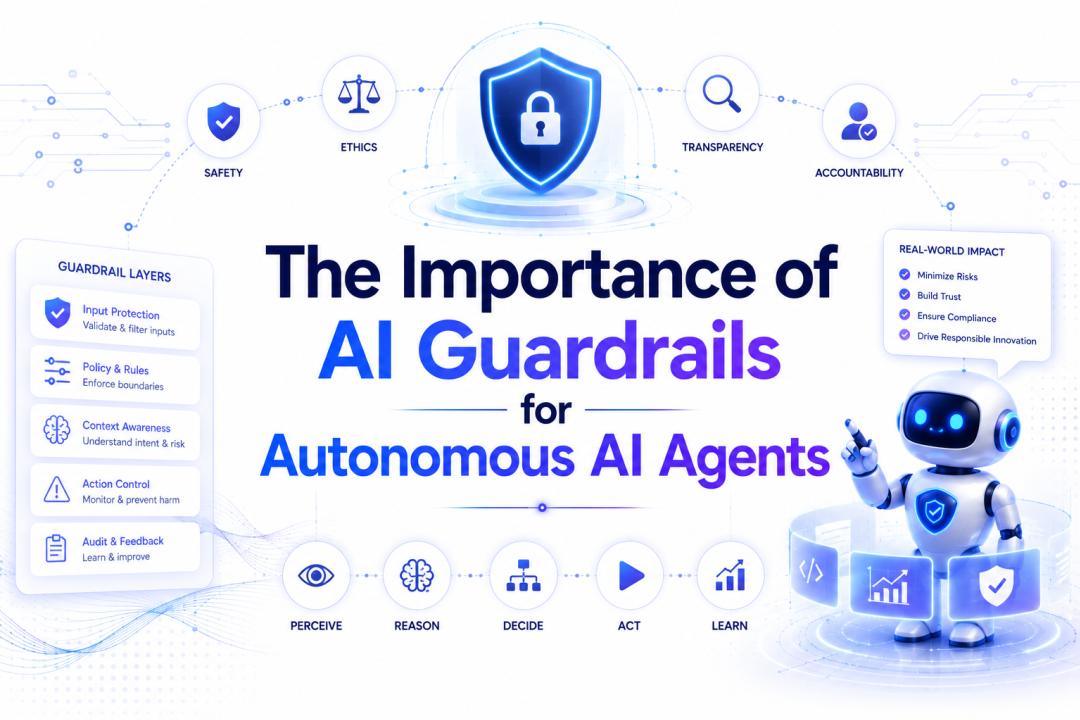
AI guardrails define policies, controls, and procedures that enable AI systems to make appropriate or predictable decisions while preventing undesirable outcomes.
Guardrails enable AI agents to function by defining acceptable behaviors, actions, information disclosure, approvals, and responses to various events. They contribute to making AI decisions more reliable, safe, and compliant with the organization's needs and objectives. By design, AI guardrails protect businesses by preventing AI agents from making unsafe or unpredictable decisions.
As companies continue to adopt autonomous AI agents, guardrails are an important aspect of securing AI operations while enabling the benefits of autonomous digital workers. Organizations that invest in robust AI development solutions from the ground up are better positioned to embed these guardrails early — before risks compound at scale.
Why Autonomous AI Agents Need Guardrails
An autonomous AI agent typically performs a set of tasks or operates enterprise applications on behalf of humans. While traditional software systems are usually focused on specific functions, AI agents can plan and perform actions, operate enterprise software, and make decisions based on the information they process. The flexibility and autonomy of AI agents make them susceptible to abuse and inappropriate use.
Without sufficient security measures in place, an AI agent may gain access to data, take actions, or respond to events in ways that are not intended by the business. In many cases, mistakes and errors can have serious consequences if AI systems operate critical business processes. The importance of AI guardrails is even more prominent for autonomous agents that operate without human input and are capable of taking actions that could be unsafe or damaging to the business.
AI guardrails make sure that AI agents operate under a set of well-defined policies, only perform specific actions, follow operational guidelines, and know when to seek human assistance. Structured AI Agents development services play a key role in designing these guardrails from the earliest stages of system architecture.
AI Guardrails Key Components
An effective AI governance strategy utilizes a combination of tools, controls, and procedures that collectively address various aspects of AI security, reliability, and compliance. There are several key elements that should be considered when designing policies for autonomous AI agents.
- Access control and authentication
- Data privacy and sensitive information protection
- Prompt validation
- Output monitoring and content moderation
- Approvals for specific functions
- Auditing, logging, and activity tracking
- Policy compliance
- Model monitoring
By implementing these critical components of AI guardrails, businesses can ensure that AI agents operate reliably and securely within the enterprise environment. To design these components effectively, many organizations choose to hire dedicated developer teams with deep expertise in AI security and governance frameworks.
The Benefits of AI Guardrails
Businesses that implement AI guardrails see the benefits of increased reliability, protection of sensitive information, reduced risk exposure, enhanced customer trust, improved transparency, regulatory compliance, and control over autonomous operations.
AI guardrails enable enterprises to fully benefit from autonomous AI agents while minimizing the risks and challenges associated with unguarded AI. Leveraging professional AI development services ensures these guardrails are architected to enterprise standards from day one.
Some of the benefits of AI guardrails include:
- Improved AI reliability
- Increased data security
- Simplified compliance
- Enhanced customer trust
- Greater transparency
- Reduced risk exposure
- Better control over AI operations
- More opportunities to adopt enterprise AI
Challenges of AI Guardrails
While the benefits of AI guardrails are undisputed, there are some challenges associated with designing and implementing a comprehensive system of autonomous AI agents governance. Some of the most common challenges of AI guardrails include:
- Need to balance flexibility and control over AI operations
- The complexity of AI security and the growing number of threats
- Need for constant policy updates as regulations and business needs evolve
- The requirement to monitor AI operations 24/7
- The importance of human input in decision-making processes
- The ability to detect and respond to rare or unprecedented events
- They need to make sure that AI agents operate within ethical guidelines
AI guardrails require ongoing improvements to address emerging concerns and risks associated with autonomous AI agents. In addition, guardrails should make sure that AI does not operate outside of human control, especially in financial, medical, or other critically important functions.
Best Practices for Implementing AI Guardrails
Organizations should apply a combination of AI governance and security measures to make sure that autonomous AI agents operate safely and predictably. Some of the best practices for AI guardrails include:
Establishing clear boundaries for AI operations
Implementing role-based access controls for various systems and information
Validating AI outputs and actions before actual implementation
Continuously monitoring and auditing AI activity
Keeping detailed logs of AI-related events for analysis and auditing purposes
Conducting regular testing and evaluations of AI guardrails
Making sure that human input is involved in all critically important functions
AI guardrails best practices help organizations improve the security and transparency of autonomous AI operations. Scalable AI development solutions that incorporate these best practices from the architecture stage produce more reliable and auditable systems over time.
The Future of Safe Autonomous AI
As autonomous AI agents grow more sophisticated and enterprises start to rely on them more heavily, AI guardrails will become much more advanced. Future AI guardrails will feature enhanced security features and will be able to detect and respond to a wider range of threats. By utilizing Generative AI and explainable AI capabilities, autonomous AI agents will become much more transparent, enabling businesses to get greater visibility into AI operations.
New developments in AI governance will enable enterprises to design safer and more reliable AI systems that operate within clearly defined parameters. Rather than being a limiting factor, AI guardrails will enable the enterprise to capitalize on the opportunities presented by autonomous AI agents while reducing the risks and challenges associated with unguarded AI. Partnering with experienced providers of AI development services ensures organizations stay ahead of these governance requirements as the landscape evolves.
Conclusion
The use of autonomous AI agents is expected to transform modern organizations since this will allow companies to become more automated and efficient. Nevertheless, the rise of the autonomy of AI agents comes along with certain duties and risks that need to be addressed by the business. The role of AI guardrails is to assist companies in protecting their operations by ensuring that autonomous AI agents work in a safe and controlled environment.
It is not possible to underestimate the importance of AI guardrails, especially because of the possible dangers connected to ungoverned AI. The use of certain methods and procedures allows businesses to capitalize on the power of AI and to mitigate its risks.