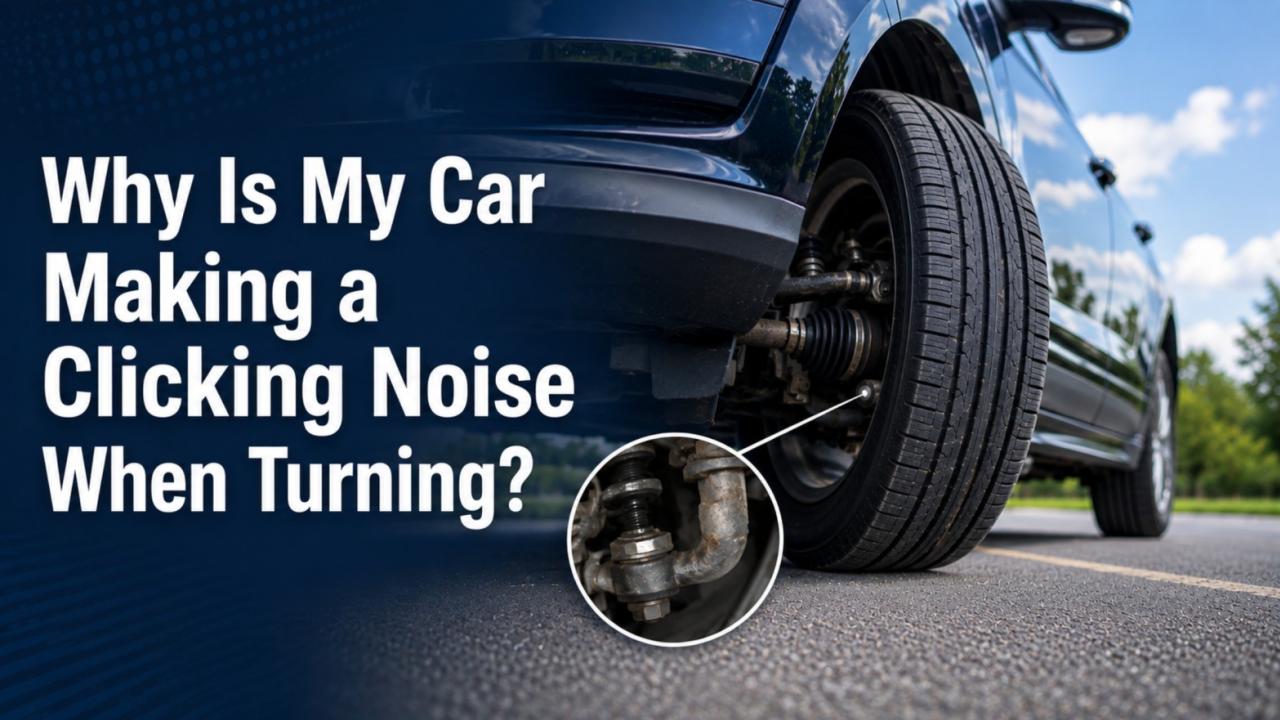
You're rounding a corner into your driveway, wheel cranked all the way over, and suddenly- click, click, click. It's rhythmic, it's annoying, and it's got you wondering if you're one bad turn away from something breaking down entirely.
If your car is making a clicking noise when turning, you're not imagining things, and you're definitely not alone. Drivers here in Southport, NC bring us this exact complaint on a regular basis, and the good news is that most causes are identifiable, and fixable once you know what to listen for.
Left unaddressed, though, some of these issues can escalate into serious suspension repair territory, so let's get into what's actually going on under your car.
The Usual Suspect: A Worn CV Joint
If there's one component responsible for more turning-related clicks than anything else, it's the constant velocity joint, better known as the CV joint.
This part sits at each end of your car's axle shafts, and its whole job is to let power flow smoothly from the transmission to the wheels, even as the suspension moves up and down and the wheels turn side to side. It's a small, unglamorous part doing a lot of heavy lifting.
Over time, the rubber boot protecting the CV joint can crack or tear. Once that happens, grit, moisture, and road grime work their way in while the protective grease works its way out.
A worn CV axle deprived of lubrication starts grinding against itself, and that grinding is exactly what you're hearing as a clicking sound, especially pronounced during sharp turns, like pulling into a parking spot or navigating a tight residential corner.
Signs of failing CV joints usually don't stop at noise alone. Keep an eye out for:
- Grease splattered on the inside of your wheel or tire
- Vibration that gets worse as you accelerate
- Clicking that's louder in one direction than the other
If any of this sounds familiar, it's worth having the joint inspected sooner rather than later, an outer CV joint left to fail completely can eventually cause the axle to come apart, and that's not something you want happening at speed.
It Could Also Be Your Wheel Bearings
Wheel bearings are what allow your wheels to spin freely with minimal resistance. When they start wearing out, they don't always announce themselves quietly.
A failing bearing often produces a clicking or grinding noise during turns, frequently paired with a low humming or growling sound that gets more noticeable the faster you drive.
If you've noticed both a clicking sound and a steady drone that changes with your speed, bearings are a strong possibility.
Ignoring worn bearings isn't just about comfort; it's a genuine safety issue. A bearing that fails completely can cause uneven tire wear at best, and in worst-case scenarios, contribute to a wheel losing stability while driving.
Loose or Worn Suspension Components
Your suspension system is a whole network of parts — control arms, ball joints, tie rod ends, all working together to keep your ride stable and your tires in contact with the road. When any of these parts loosens or wears down, they can knock or click during turns, particularly over bumps or uneven pavement combined with steering input.
This is where a proper steering and suspension inspection earns its keep. A trained technician can isolate exactly which component is loose just by manipulating the suspension by hand, something that's nearly impossible to diagnose from the driver's seat.
If you've also noticed your car handling less predictably, that's often related too, if your steering wheel shakes at high speed, it's an issue worth addressing immediately, since it can point toward the same worn components and, left alone, risks a total loss of steering control.
Damaged Axles From Potholes and Curbs
Southport's roads are mostly kind to your car, but potholes and curb strikes happen everywhere, and a hard enough impact can bend the axle itself. A bent axle typically shows up as vibration, wobbling, a steering pull to one side, or a rhythmic thumping, rather than a sharp click.
That said, an impact severe enough to bend the axle can also knock the CV joint out of alignment or damage its boot, and that's often where a turning-related click actually comes from afterward.
If you've recently hit something hard on one of our local backroads and noticed new noises since, it's worth having both the axle and the CV joint checked together.
Low or Dirty Power Steering Fluid
Sometimes the fix is refreshingly simple, though it's worth setting expectations correctly here. Power steering fluid keeps your steering system lubricated, and when it runs low or gets contaminated, it typically causes a whining, groaning, or squealing noise as you turn the wheel, not a sharp click.
Still, it's an easy thing to rule out. Checking your fluid level and condition takes just a few minutes, and if the noise you're hearing sounds more like a groan than a click, this is a good place to start before assuming the worst.
So, Is It Safe to Keep Driving?
Here's the honest answer: it depends on the cause, and that's exactly the problem with trying to run a car noise diagnosis from the driver's seat. A low power steering fluid issue is a minor inconvenience.
A severely worn CV joint or a loose suspension component, on the other hand, can escalate into a genuine vehicle safety concern, the kind where a part fails unexpectedly while you're driving.
Since a front-end clicking sound involving your drivetrain components can worsen gradually and unpredictably, the smartest move is getting it checked before you're stuck guessing on the side of the road.
Front-Wheel Drive Cars Especially
If you drive a front wheel drive system vehicle, pay extra attention to turning-related noises. FWD cars route more power and steering stress through the front axles and CV joints than rear-wheel-drive vehicles do, which means these components tend to wear faster and show symptoms sooner.
If you drive FWD and you're hearing clicks specifically during turns, a CV joint issue should be near the top of your suspect list.
How to Prevent Clicking Noises Before They Start
A little routine maintenance goes a long way toward avoiding this whole headache:
- Inspect CV boots regularly for cracks or tears before grease has a chance to leak out
- Avoid hitting potholes and curbs whenever you can steer around them safely
- Keep power steering fluid topped off at the recommended level
- Have your tires rotated and suspension inspected during routine service visits
- None of these take much time, but they catch small problems while they're still cheap fixes.
Repair or Replace? Let a Professional Decide
Whether you're facing a repair or replace CV axle decision, a suspension component swap, or simply topping off fluid, the right call depends on how far the wear has progressed, and that's not something you want to guess at.
Preventative car maintenance, including a routine wheel and tire inspection, catches most of these issues while they're still small, affordable fixes rather than expensive repairs.
If you're local and dealing with this exact issue, some team at auto repair Southport NC handles CV joint, axle, and suspension diagnostics every single day. We'll get your car up on a lift, pinpoint exactly where that click is coming from, and give you a straight answer, no guessing games, no upselling.
Don't Delay Suspension Repair Before a Small Click Becomes a Major Breakdown
That clicking sound is your car's way of asking for help before something more serious happens. Whether it's a worn CV joint, a failing wheel bearing, or a loose suspension part, catching it early keeps you safer and keeps repair costs down.
If you're hearing clicks when you turn, don't wait for it to get worse, search suspension service near me and get your vehicle inspected by professionals who'll tell you exactly what's going on and how to fix it right.