
For startups, government policy is rarely just a political issue. Changes in taxes, immigration, trade, regulation, artificial intelligence and access to capital can directly affect a young company's costs, hiring plans, funding strategy and ability to scale.
The U.S. startup ecosystem is currently entering a period of significant policy change. The Trump administration has introduced measures aimed at encouraging domestic investment, manufacturing and deregulation, while also adopting a more restrictive approach to immigration and international trade. For entrepreneurs, the result is a business environment that could offer new opportunities—but also introduce considerable uncertainty.
Here are some of the main challenges startups may face.
1. Higher costs for internationally sourced products
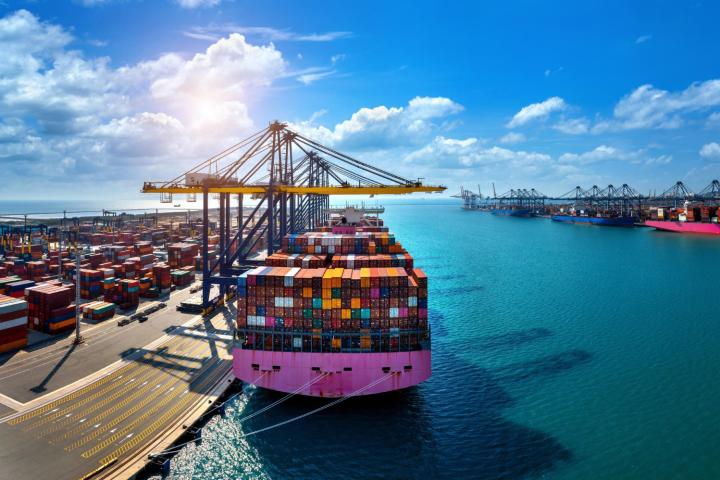
Tariffs are one of the most immediate concerns for startups that depend on global supply chains.
Technology companies may rely on components manufactured overseas, while hardware startups can be particularly exposed to changes in the cost of semiconductors, electronics and other imported products. The administration has been pursuing additional tariffs and considering broader duties on semiconductor-related products.
For an early-stage company, even a relatively small increase in production costs can have a significant impact. Unlike large corporations, startups often have limited purchasing power and less ability to negotiate with suppliers.
The challenge is therefore not simply higher costs. It is also uncertainty. If founders do not know what their supply chain will cost six or twelve months from now, pricing, fundraising and financial forecasting become more difficult.
2. Recruiting international talent could become more expensive
The U.S. technology ecosystem has historically benefited from international talent. Startups in sectors such as AI, software, biotechnology and engineering frequently compete for highly skilled workers from around the world.
Recent changes to the H-1B visa environment could make this more difficult. In August 2026, the administration proposed codifying a fee of more than $100,000 for new H-1B visas, dramatically above previous levels. The proposal is facing legal challenges, meaning that the rules remain subject to change.
For a startup, this creates two problems.
First, the direct financial cost of hiring an international employee could become prohibitive. Second, immigration uncertainty may make it harder for a small company to compete with larger employers that can absorb higher legal and administrative costs.
The consequence could be a shift in where startups build their teams. Some companies may increasingly consider remote international hiring, subsidiaries abroad or alternative talent hubs outside the United States.
3. Regulatory uncertainty can be almost as damaging as regulation itself
Startups need to make decisions before they have much historical data. They are already trying to predict customer demand, fundraising conditions and hiring requirements.
Frequent policy changes add another variable to that equation.
AI provides a good example. The federal government has been pursuing a national framework intended to reduce fragmented state-by-state AI regulation, while simultaneously developing policies around the development, use and international distribution of advanced AI technologies.
A clearer national framework could eventually benefit startups by reducing regulatory fragmentation. But during the transition, founders may still have to monitor federal rules, state legislation and evolving interpretations.
For a startup with a small legal team—or no dedicated legal department—that complexity can become a meaningful operating cost.
4. Access to capital may improve for some startups—but not all
Not every government policy change represents a threat.
The U.S. Small Business Administration has recently expanded financing opportunities. In July 2026, for example, eligible small businesses became able to combine SBA 7(a) and 504 loans for up to $10 million in SBA-backed financing. The SBA has also proposed changes that would expand the number of companies qualifying as small businesses.
The government has also changed its Small Business Investment Company program to encourage private investment in critical industries.
These measures could create opportunities for startups in manufacturing, infrastructure, defense, technology and other strategic sectors.
However, access to these programs does not necessarily mean that every venture-backed startup will benefit. Eligibility requirements, industry focus and the difference between traditional small-business financing and venture capital still matter.
The result could be a more favorable environment for certain types of entrepreneurs while leaving other startup models relatively unaffected.
5. Startups may face pressure to build “American” supply chains
The push to increase domestic production could create both costs and opportunities.
For startups that manufacture physical products, moving part of a supply chain to the United States can increase costs in the short term. Domestic suppliers may be more expensive than overseas alternatives, and building new manufacturing relationships takes time.
At the same time, government policy is creating incentives for investment in domestic production and strategically important industries. The SBA has specifically increased its focus on critical industries and small-business participation in the defense industrial base.
For founders, this means that supply-chain strategy may become part of the company's competitive strategy.
A startup that can successfully position itself as a domestic supplier—or help larger companies meet domestic production requirements—could find new customers and sources of capital.
6. Policy changes can create a competitive divide between startups
One of the less obvious consequences of government intervention is that it can affect different startups very differently.
A software company with employees based entirely in the U.S. may be relatively insulated from tariffs and immigration costs.
A hardware startup importing components from Asia could face substantially higher costs.
An AI company may benefit from a clearer federal regulatory framework but face new restrictions depending on the technologies it develops or the international markets it serves.
A defense startup, meanwhile, could benefit from increased government attention and investment in domestic suppliers.
In other words, there may no longer be a single “U.S. startup environment.” Instead, entrepreneurs may increasingly experience very different conditions depending on their industry, supply chain, workforce and customers.
7. The biggest risk may be uncertainty
For founders, the most difficult part of policy change is often not knowing exactly what the final rules will look like.
Tariffs can change supply-chain economics. Immigration rules can alter hiring plans. AI regulations can affect product roadmaps. Tax incentives can influence investment decisions.
When these policies are changing rapidly, startups have to make long-term decisions using incomplete information.
That favors companies with flexible business models and strong financial discipline.
Instead of building a strategy around a single assumption—such as a specific tariff rate, visa policy or tax incentive—startups may need to develop several scenarios and identify which decisions remain sensible under each one.
How Startups Can Prepare
The changing U.S. policy environment does not necessarily mean startups should become more conservative. It means they may need to become more adaptable.
Founders can consider several practical steps:
- Diversify suppliers rather than depending on a single country or manufacturer.
- Monitor immigration costs and timelines when building international teams.
- Model multiple regulatory scenarios before making major investments.
- Review eligibility for government-backed financing and contracts.
- Track AI and technology regulations in every state and market where the company operates.
- Maintain more financial flexibility when policy changes could materially affect costs.
- Look for new markets created by government priorities, particularly in domestic manufacturing, infrastructure, cybersecurity, AI and defense.
A More Complex—but Potentially More Strategic—Startup Environment
The current transformation of U.S. economic policy creates a complicated picture for entrepreneurs.
Some startups may face higher costs, more difficult international hiring and greater regulatory uncertainty. Others could benefit from expanded access to financing, domestic manufacturing incentives or increased government demand.
The key lesson is that government policy is becoming an increasingly important part of startup strategy.
For founders, understanding Washington may no longer be something left to lawyers, accountants or lobbyists. Trade policy can influence the supply chain. Immigration policy can influence the talent strategy. AI policy can influence the product roadmap. And government financing programs can influence how a company grows.
The startups best positioned for the next phase of the U.S. economy may therefore not simply be the companies with the best technology. They may be the ones capable of adapting quickly when the rules of the market change.