
For many travelers, a campground is more than a place to park an RV or pitch a tent. Guests may need internet access to check directions, communicate with family, work remotely, stream entertainment, or manage travel plans. That makes dependable connectivity an increasingly important part of the outdoor experience. A well-planned campground network can improve guest satisfaction while also creating opportunities for better communication and marketing.
Why Internet Matters at Campgrounds
Campgrounds often cover large outdoor areas with trees, buildings, RVs, and other obstacles that can interfere with wireless signals. Unlike a home network, a campground may need to support many users across multiple locations at the same time.
Meeting Guest Expectations
Modern campers commonly bring several connected devices, including smartphones, laptops, tablets, and smart TVs. They expect to remain connected even while enjoying an outdoor environment.
A reliable Internet at campground setup can help guests browse the web, send messages, check weather updates, join work meetings, and stay in contact with friends and family. UbiFi highlights guest experience, remote work, communication, and flexible property requirements as important benefits of campground connectivity.
Supporting Remote Workers
Camping and remote work are increasingly compatible when a property has dependable connectivity. Guests who work while traveling may need stable internet for video calls, cloud applications, email, and collaboration platforms.
However, simply installing a router is rarely enough. Outdoor coverage requires proper network planning, suitable access points, and enough bandwidth to handle peak demand.
Building a Better Campground Network
A successful campground network starts with the internet connection and extends through the entire property.
Choose the Right Internet Source
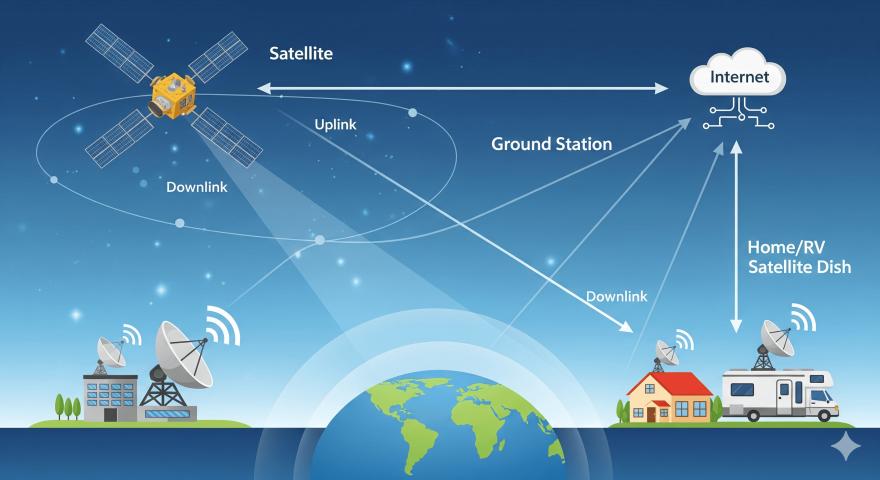
The first step is determining which internet source is available at the campground. Depending on the location, operators may consider fiber, cable, fixed wireless, cellular, or satellite connections.
The best choice depends on availability, property size, expected usage, budget, and reliability requirements. Campground connectivity can also use cellular-based solutions where traditional wired infrastructure is difficult to instal.
Plan Wi-Fi Coverage Carefully
A strong internet connection at the main building does not automatically mean guests will receive a strong Wi-Fi signal throughout the property.
Trees, buildings, terrain, and metal RV structures can reduce wireless coverage. Strategic placement of outdoor access points can help distribute the connection more effectively. For larger properties, multiple coverage zones may be necessary.
Operators should identify high-demand areas such as reception buildings, common spaces, activity areas, and selected camping sites before installing equipment.
Connecting Internet With E-Marketing
Reliable connectivity can also support campground marketing efforts. Guests who interact with online services are already using digital channels, making the internet experience an opportunity to strengthen communication.
Using E-Marketing Strategies
E-marketing strategies can help businesses reach audiences through websites, social media, email, search engines, and other digital channels. For a campground, this might include promoting seasonal offers, sharing local attractions, encouraging repeat bookings, or communicating important property updates.
A reliable internet experience supports these efforts because guests can easily access booking pages, social platforms, online reviews, and digital information while staying at the property.
Campgrounds can also use Wi-Fi login pages to provide useful information about facilities, activities, rules, and nearby attractions. When implemented responsibly, this creates another digital touchpoint between the property and its guests.
The Role of an Internet Service Provider
The quality of a campground's internet ultimately depends heavily on its upstream connection. An Internet Service Provider (ISP) supplies the connection that allows devices and networks to communicate with the wider internet.
Choosing Reliable Internet Connectivity
Selecting an ISP should involve more than comparing advertised download speeds. Operators should consider reliability, upload performance, customer support, scalability, service availability, and the number of users expected during busy periods.
Peak usage is particularly important. A network that performs well when only a few guests are online may slow significantly during holidays or busy weekends.
Preparing for Future Growth
Campgrounds should also think beyond current requirements. More guests may work remotely, stream video, use multiple devices, or expect stronger connectivity in the future.
Designing a network with room for expansion can reduce the need for major upgrades later. Regular monitoring can also help identify congestion, weak coverage areas, and equipment problems before they become major guest complaints.
Conclusion
Reliable internet connectivity has become an important part of the modern campground experience. From helping guests stay connected to supporting remote work and digital marketing, a well-designed network can benefit both visitors and campground operators. By choosing an appropriate internet source, planning Wi-Fi coverage carefully, and supporting the network with the right ISP, campgrounds can provide connectivity that meets today's expectations while preparing for future demand.
FAQs
1. Why is internet important at campgrounds?
It helps guests work, communicate, stream entertainment, check information, and manage travel plans.
2. What is the best internet for a campground?
It depends on location, availability, property size, budget, and expected usage.
3. How can campgrounds improve Wi-Fi coverage?
Using strategically placed outdoor access points and adequate bandwidth can improve coverage and performance.
4. What are e-marketing strategies?
They include digital methods such as SEO, email marketing, social media, websites, and online advertising.
5. What should campgrounds consider when choosing an ISP?
They should evaluate reliability, speed, support, scalability, availability, and peak-use performance.