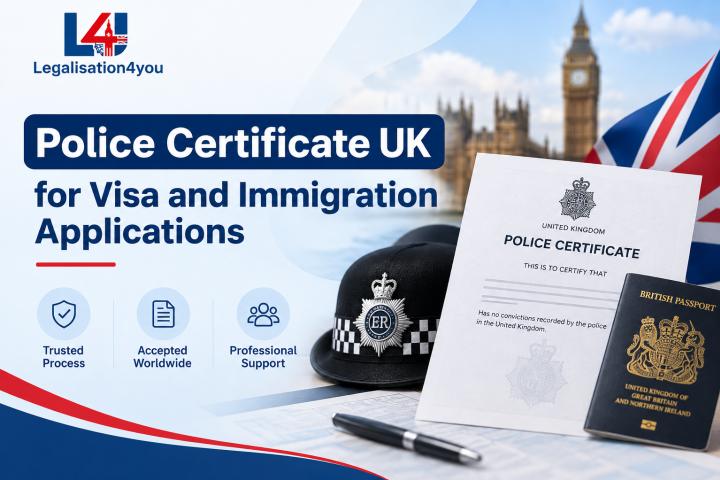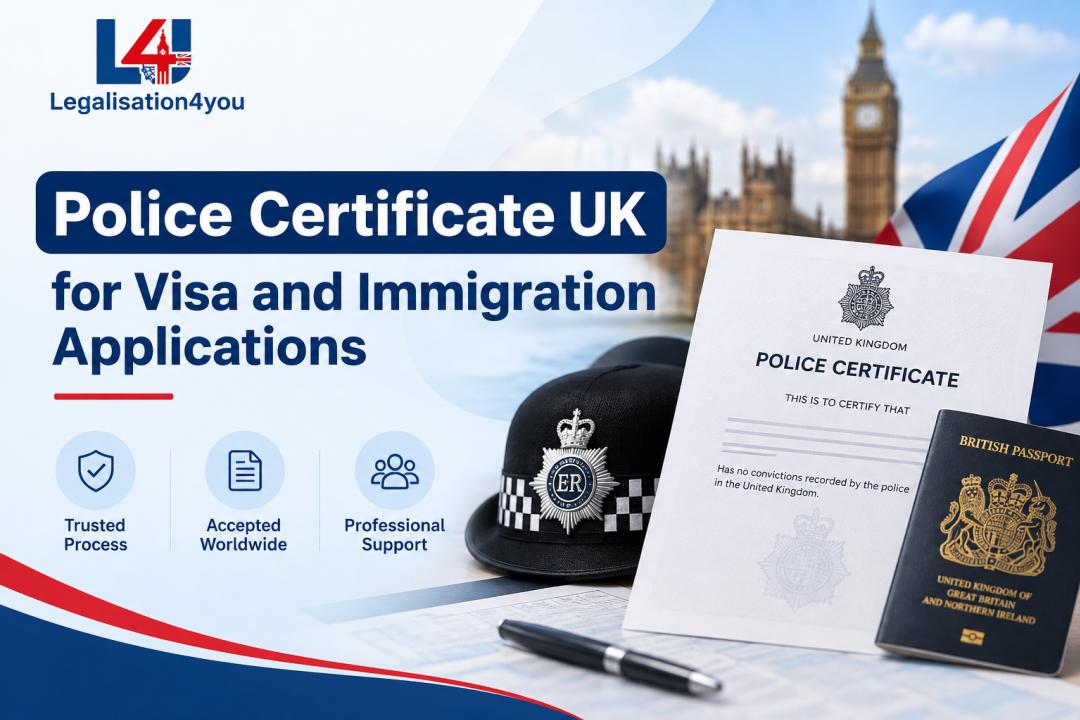
When applying for a visa, immigration permission, overseas employment, or residency, you may be asked to provide evidence of your criminal record history. A police certificate UK is an official document that provides information about an individual's recorded convictions or confirms that no such information is held, depending on the certificate issued.
Legalisation4you provides professional document legalisation and support services for individuals and businesses preparing UK documents for international use. Understanding what a police certificate is, when it may be required, and whether it needs further legalisation can help you prepare your documents correctly.
What Is a Police Certificate UK?
A police certificate UK is an official document used to provide information about an individual's criminal record for purposes such as immigration, visa applications, overseas employment, or residency.
Police certificates are generally different from standard background checks used for employment within the UK. The specific certificate required depends on the country requesting the document and the purpose for which it will be used.
Some overseas authorities request a police certificate as part of their immigration process to assess an applicant's criminal record history. The certificate may include information about relevant convictions or state that no record is held.
Because requirements vary between countries, applicants should check the instructions provided by the relevant embassy, immigration authority, or government department before applying.
When Might You Need a Police Certificate UK?
There are several circumstances where a UK police certificate may be requested.
Visa Applications
Some countries require applicants to provide police certificates when applying for long-term visas or immigration permission.
The requirement may depend on the type of visa, the applicant's age, how long they have lived in a particular country, and the immigration rules of the destination country.
If a police certificate is requested, it is important to provide the correct document and follow any instructions regarding its age, format, translation, or legalisation.
Permanent Residency Applications
Applicants seeking permanent residency or similar immigration status may be required to provide evidence of their criminal record history.
A police certificate can be used as part of the supporting documentation for an application. The relevant immigration authority may specify which countries' certificates are required and the periods of residence that must be covered.
Overseas Employment
Certain overseas employers, professional bodies, or government organisations may request a police certificate before allowing an individual to work in another country.
This can be particularly relevant for positions involving regulated professions, education, healthcare, or other roles where background checks are part of the recruitment or registration process.
Citizenship Applications
Some citizenship or nationality applications may require applicants to provide police certificates from countries where they have previously lived.
The requirements can vary depending on the destination country's nationality laws. Applicants should check whether a UK police certificate is required and whether additional authentication is necessary.
Immigration for Family Members
Police certificates may also be requested for family-based immigration applications.
For example, an applicant moving overseas to join a spouse, partner, parent, or other family member may need to provide a police certificate as part of the application.
The exact requirements depend on the destination country and the specific immigration category.
How Do You Apply for a Police Certificate UK?
The application process depends on the type of police certificate required and the organisation issuing it.
Before submitting an application, check the destination country's requirements carefully. You should confirm whether the authority requires a police certificate, which certificate is accepted, and whether there are any specific validity or formatting requirements.
You may generally need to provide personal information such as your name, date of birth, previous names, addresses, and identification details.
The issuing authority may also require supporting documents to verify your identity.
Once the application has been processed, the police certificate is issued for use according to the relevant requirements.
What Information Can a Police Certificate Include?
The information shown on a police certificate can depend on the individual's record and the rules applicable to the certificate.
It may include details such as:
- The applicant's personal information
- Relevant recorded convictions
- Details relating to offences where applicable
- Information about the applicant's criminal record status
- A statement where no relevant record is identified
The exact format and information included can vary. Therefore, applicants should use the certificate specified by the authority requesting it rather than assuming that another type of criminal record check will be accepted.
Does a Police Certificate UK Need an Apostille?
A police certificate and an Apostille are two different things.
A police certificate provides information about an individual's criminal record, while an Apostille is a form of authentication used for eligible public documents intended for use in another country that recognises Apostilles under the Hague Apostille Convention.
Some overseas authorities may request a police certificate with an Apostille. Others may accept the certificate without further authentication.
Whether an Apostille is required depends on the destination country and the organisation receiving the document. It is therefore important to check the requirements before arranging legalisation.
Legalisation4you can provide support with Apostille and document legalisation requirements where applicable.
Does a Police Certificate Need Translation?
If a police certificate is being submitted to an authority in a country where English is not accepted, a translation may be required.
The receiving authority may specify whether the translation needs to be certified and whether the certificate itself, the Apostille, or both documents must be translated.
Before arranging a translation, check the requirements of the relevant embassy, immigration authority, or government organisation.
Using the correct translation format can help prevent delays caused by documents not meeting the authority's requirements.
Police Certificate UK for Different Countries
The requirements for a UK police certificate can differ depending on the country where the document will be submitted.
One country may require an original police certificate and Apostille, while another may request a certified translation or embassy legalisation.
Some immigration authorities may also have rules about how recently the certificate must have been issued. Others may require certificates from every country where the applicant has lived for a specified period.
For this reason, there is no single set of requirements that applies to every international application.
Common Mistakes to Avoid
Applicants can experience delays when documents do not meet the requirements of the receiving authority. Common mistakes include:
- Applying for the wrong type of certificate
- Not checking the destination country's requirements
- Using an outdated certificate when a recent document is required
- Assuming a UK criminal record check is automatically accepted overseas
- Forgetting to arrange an Apostille when one is required
- Failing to translate the certificate when translation is requested
- Not checking whether embassy legalisation is necessary
- Leaving document preparation until shortly before the application deadline
Checking the requirements before beginning the process can make international document preparation easier.
Why Choose Legalisation4you?
Legalisation4you provides professional support for individuals and businesses preparing UK documents for use overseas.
Our services can assist with:
- Apostille services
- Police certificate legalisation
- Certified translation support
- Embassy and consular legalisation
- Document assessment
- International document preparation
If you are unsure whether your police certificate UK needs an Apostille, translation, or further legalisation, getting the requirements checked before submission can help you avoid unnecessary delays.
Whether your certificate is required for immigration, employment, residency, citizenship, or another overseas purpose, preparing the document according to the receiving authority's requirements is an important part of the process.
Preparing Your Police Certificate for Overseas Use
A police certificate UK may be an important supporting document for visa and immigration applications overseas. However, the exact requirements can vary according to the destination country, type of application, and organisation receiving the certificate.
Some authorities may require only the police certificate, while others may request an Apostille, certified translation, embassy legalisation, or a combination of these services.
Before submitting your documents, check the instructions provided by the relevant authority and make sure your certificate meets its requirements.
For support with police certificate legalisation, Apostille services, or document translation, contact Legalisation4you to discuss your document requirements.
Frequently Asked Questions
1. What Is a Police Certificate UK Used For?
A police certificate may be used to provide criminal record information for overseas visa, immigration, residency, citizenship, or employment applications.
2. Is a Police Certificate the Same as a DBS Check?
No. A police certificate and a DBS check are different types of documents with different purposes. The document accepted overseas depends on the requirements of the relevant authority.
3. Does a Police Certificate UK Need an Apostille?
Not always. Some overseas authorities may require an Apostille, while others may not. The destination country's requirements should be checked before arranging legalisation.
4. Can a Police Certificate UK Be Translated?
Yes. A translation may be required when the receiving authority does not accept documents in English. The authority may also specify whether the translation must be certified.
5. How Do I Know What Legalisation My Police Certificate Needs?
The requirements depend on the destination country and receiving organisation. Check the relevant immigration or embassy instructions before arranging an Apostille, translation, or embassy legalisation.