
The Acrylonitrile
Butadiene Styrene Price Trend moved sharply upward in Q2 2026 before
showing a clear correction toward the end of the quarter. ABS is closely
connected with the prices of styrene, butadiene, and acrylonitrile, so changes
in these raw materials can quickly affect the finished polymer market. During
the first part of Q2, geopolitical tensions in the Middle East disrupted crude
oil and naphtha trade flows and created pressure on feedstock availability.
This increased production costs and encouraged suppliers to raise prices across
several major markets. Later in the quarter, the easing of tensions and
reopening of the Strait of Hormuz reduced some of this cost pressure, while
comfortable inventories and cautious buying from major consuming industries
pushed prices lower.
ABS Market Overview in Q2 2026
The ABS market experienced a very different pattern between
the beginning and end of Q2. During the early part of the quarter, buyers faced
higher offers as feedstock costs increased and supply became less comfortable.
Naphtha availability was affected by delays in Middle Eastern cargoes, while
production disruptions and maintenance reduced availability in some Asian
markets.
Styrene, butadiene, and acrylonitrile are important cost
components in ABS production. When their prices rise together, producers
generally face higher manufacturing expenses. In Q2, this effect became
particularly visible as crude oil and naphtha markets strengthened.
Supply-side problems added another layer of pressure. Force
majeure events, maintenance activity, and lower operating rates affected ABS
and upstream production in several locations. As a result, some buyers moved to
secure material earlier, which added support to the market.
However, the market changed direction in June. The reopening
of the Strait of Hormuz and easing geopolitical tensions helped reduce crude
oil and upstream feedstock costs. At the same time, inventories became more
comfortable and downstream buyers became more cautious. This combination
resulted in lower ABS quotations across most of the markets covered in the Q2
assessment.
South Korea ABS Price Trend
South Korea recorded a 31.00% increase in the ABS Price
Trend during Q2 2026 compared with Q1. Higher feedstock costs and tighter
availability were the main reasons behind the increase.
Delayed naphtha cargoes, lower operating rates, and limited
merchant styrene availability contributed to stronger export offers.
Acrylonitrile and butadiene costs also remained supportive during the quarter.
The market nevertheless changed direction in June. ABS
prices in South Korea declined by 7.89% as lower crude oil, styrene,
acrylonitrile, and butadiene costs weakened production-cost support.
Comfortable inventories and competitively priced Chinese cargoes also increased
pressure on Korean export offers.
Taiwan ABS Price Trend
Taiwan saw an even stronger quarterly increase, with the ABS
Price Trend rising 35.64% in Q2 compared with Q1.
Feedstock disruptions and delays in naphtha shipments
through the Strait of Hormuz reduced supply flexibility. Lower operating rates
and supply interruptions added further pressure to styrene and butadiene
availability.
In June, however, ABS prices in Taiwan dropped 13.95%.
Lower crude oil, styrene, and butadiene costs reduced production-cost pressure.
Weak export demand, comfortable inventories, and competitively priced Chinese
material contributed to the correction.
China ABS Price Trend
China's ABS Price Trend increased 17.61% in Q2 2026
compared with Q1. The rise was supported by higher crude oil and feedstock
costs as well as several production-related supply restrictions.
Maintenance activity and lower operating rates at several
production facilities reduced available supply. A styrene unit shutdown also
added to the pressure on upstream availability.
The market then corrected sharply in June, when ABS prices
declined 16.32%. Higher polymerization operating rates, comfortable
inventories, and slower demand from automotive, electronics, and appliance
industries contributed to the decline. Buyers also became more cautious about
replenishing stocks.
USA ABS Price Trend
In the USA, the ABS Price Trend increased 36.73% in Q2
compared with Q1. The market was strongly influenced by higher Asian export
offers and rising import replacement costs.
Supply disruptions in Asia increased styrene and butadiene
costs and supported higher import quotations. Importers also secured material
while regional availability was tighter.
By June, ABS prices in the USA declined 5.89%. Lower
upstream costs, weaker Taiwanese export offers, comfortable inventories, and
cautious purchasing from downstream industries reduced pressure on landed
import prices.
European ABS Price Trend
Europe recorded some of the largest quarterly increases in
the Q2 market. The Netherlands registered a 56.85% increase, while
Germany increased 51.73% and Belgium increased 56.09% compared
with Q1.
The European market was affected by higher energy costs,
feedstock disruptions, and logistical problems connected with the Middle East.
Higher styrene, butadiene, and acrylonitrile costs increased manufacturing
expenses.
The Netherlands later recorded a 5.45% decline in June,
while Germany fell 4.71% and Belgium declined 5.41%. The
reopening of the Strait of Hormuz and easing geopolitical tensions reduced
upstream cost pressure. At the same time, softer demand from automotive,
appliance, electronics, and construction sectors encouraged suppliers to lower
domestic offers.
India ABS Price Trend
India recorded a 37.35% increase in the ABS Price Trend
during Q2 2026 compared with Q1.
The market was affected by delays in Middle Eastern naphtha
arrivals, higher styrene and butadiene costs, and restrictions affecting LPG
use for petrochemical production. These conditions reduced feedstock
flexibility and increased domestic production costs.
The market remained firm for much of the quarter, but June
brought a correction. ABS prices in India declined 6.28% as lower-priced
imports from Asian suppliers reduced import replacement costs. Comfortable
inventories, subdued manufacturing demand, and cautious buying from automotive,
electronics, and appliance manufacturers also pressured domestic offers.
ABS Prices in Turkey, Brazil, Thailand and Indonesia
Import markets also experienced strong increases during Q2
because they were influenced by higher Asian export offers.
Turkey recorded a 28.03% quarterly increase, while
Brazil increased 36.22%. Thailand and Indonesia recorded increases of 29.85%
and 29.06%, respectively.
These markets were affected by higher South Korean export
prices, tighter feedstock availability, and stronger costs for styrene,
butadiene, and acrylonitrile. Import replacement costs therefore increased
during the quarter.
The June correction was more moderate in Brazil, where
prices declined 2.71%. Turkey recorded a 4.80% decline, while
Thailand and Indonesia declined 8.43% and 8.42%, respectively.
Better cargo availability, lower upstream costs, and cautious purchasing
contributed to the reductions.
What Drove ABS Prices in Q2 2026?
One of the biggest factors behind the Q2 movement was the
cost of raw materials. ABS production depends heavily on styrene, butadiene,
and acrylonitrile. When these materials become expensive, ABS producers usually
need to protect their margins by raising selling prices.
Crude oil and naphtha also played an important role because
they influence the broader petrochemical cost chain. Disruptions in crude oil
and naphtha trade flows created additional uncertainty for producers and
buyers.
Logistics were another important factor. Delays in cargo
movements increased concerns about availability and made replacement material
more expensive. This was particularly important for markets that depend heavily
on imports.
Production rates also influenced regional pricing.
Maintenance, force majeure events, and reduced operating rates limited supply
in several locations. When supply becomes tighter at the same time that
production costs are increasing, price pressure can become stronger.
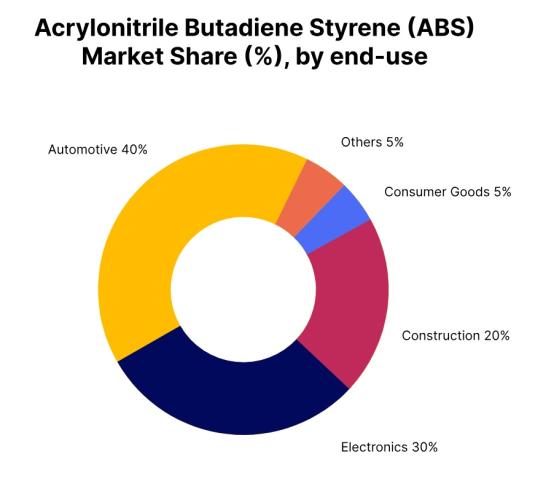
Demand was a different story. While some buyers secured
material during the period of tight supply, downstream industries became more
cautious later in the quarter. Automotive, consumer electronics, home
appliances, and construction are important ABS-consuming sectors, and slower or
cautious purchasing reduced the ability of suppliers to maintain earlier price
increases.
Acrylonitrile Butadiene Styrene Price Chart and Market
Movement
The Acrylonitrile Butadiene Styrene Price Chart for
Q2 2026 would show a clear two-stage movement. The first stage was a strong
upward trend from the Q1 baseline, supported by higher feedstock costs, supply
restrictions, and logistical uncertainty.
The second stage appeared in June, when most markets moved
lower. This correction was not caused by one single factor. Instead, several
developments worked together. Crude oil and upstream feedstock costs eased, the
Strait of Hormuz reopened, material availability improved, and buyers became
more selective.
This kind of movement is important for buyers because a
quarterly average can hide significant changes within the quarter. Looking only
at the average Q2 increase does not fully show the difference between the
strong early-quarter market and the softer June conditions.
Acrylonitrile Butadiene Styrene Price Index
The Acrylonitrile
Butadiene Styrene Price Index also needs to be viewed alongside
regional market conditions rather than as a single global number.
The Q2 data show that Europe experienced particularly strong
increases, while Asian and import markets also recorded substantial gains. The
Netherlands and Belgium were among the markets with increases above 56%, while
India, the USA, Taiwan, and Brazil also recorded increases above 35%.
At the same time, the June correction shows why price index
movements need regular monitoring. A market can experience a large quarterly
increase while still moving downward at the end of the period. This is
especially important for procurement teams that are negotiating prices based on
current replacement costs rather than historical quarterly averages.
Demand Outlook for ABS
ABS demand remained closely connected with the automotive,
electronics, appliance, and construction industries during Q2.
These sectors use ABS because it combines useful properties
such as toughness, impact resistance, processability, and a good surface
finish. However, purchasing decisions in these industries can change quickly
when raw material costs rise.
During the later part of Q2, cautious procurement became
more visible. Buyers were less willing to build large inventories while prices
were uncertain. Instead, many purchasing decisions focused on immediate
requirements.
This behavior can limit price increases even when production
costs remain relatively high. If inventories are comfortable and buyers are not
actively restocking, suppliers may need to adjust offers to encourage
purchases.
ABS Price Forecast: What to Watch Next
The Q2 market suggests that the direction of ABS prices will
continue to depend on several connected factors.
Feedstock prices will remain important. Any renewed increase
in crude oil, naphtha, styrene, butadiene, or acrylonitrile could again
increase production costs.
Supply conditions will also matter. Changes in operating
rates, maintenance schedules, unexpected production problems, and regional
availability can quickly affect market balance.
Logistics should also be watched closely. Any renewed
disruption to major shipping routes could increase freight and replacement
costs.
Finally, downstream demand will be important. If automotive,
electronics, appliance, and construction demand improves, buyers may return to
the market more actively. If demand remains cautious and inventories stay
comfortable, suppliers may continue to face pressure on selling prices.
The Q2 2026 ABS market showed how quickly polymer prices can
change when feedstock costs, logistics, supply, and demand move at the same
time. The first part of the quarter was dominated by higher costs and tighter
availability, resulting in strong price increases across Asia, Europe, North
America, and several import markets.
By June, the situation changed. Easing geopolitical
tensions, the reopening of the Strait of Hormuz, lower crude oil and feedstock
costs, improved availability, and cautious downstream purchasing resulted in a
broad correction.
Please Submit Your Query For ABS Price Trend, Market
Analysis and Forecast: https://www.price-watch.ai/book-a-demo/
About Price Watch™
Price Watch™ is an
India-based, independent raw material price reporting agency that provides
real-time price forecasts and data-driven insights into global raw material
markets. Price Watch™ specializes in tracking raw material prices, analyzing
market trends, and delivering timely updates on plant shutdowns, supply
disruptions, capacity expansions, and demand-supply dynamics. The Price Watch™
platform empowers manufacturers, traders, and procurement professionals to make
faster, smarter decisions. Leveraging AI-powered forecasting and over a decade
of historical data, Price Watch™ transforms market volatility into actionable
opportunity.
Futura Tech Park,
C Block, 8th floor 334,
Old Mahabalipuram Road,
Sholinganallur, Chennai, Tamil Nadu, Pincode - 600119.
𝐋𝐢𝐧𝐤𝐞𝐝𝐈𝐧:
https://www.linkedin.com/company/price-watch-ai/
𝐅𝐚𝐜𝐞𝐛𝐨𝐨𝐤:
https://www.facebook.com/people//61568490385598/
𝐓𝐰𝐢𝐭𝐭𝐞𝐫:
https://x.com/pricewatchai
𝐖𝐞𝐛𝐬𝐢𝐭𝐞:
https://www.price-watch.ai/