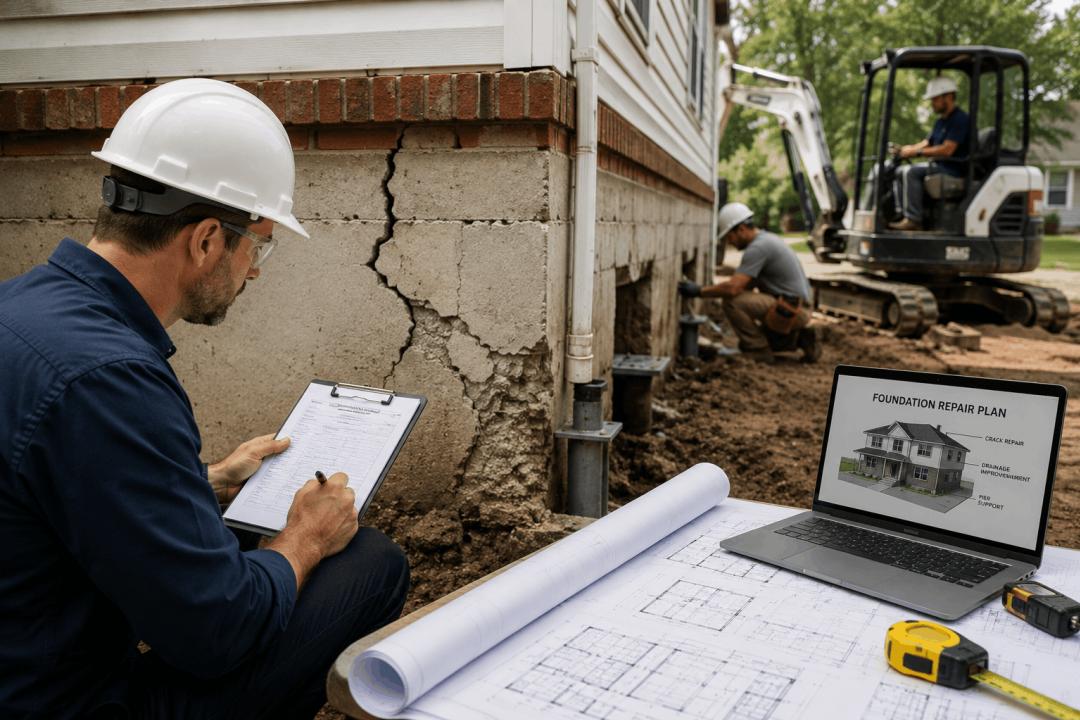
Getting foundation or structural work completed can bring a huge sense of relief.
The cracks have been addressed. Damaged materials have been replaced. A weakened area has been reinforced, and the property finally feels like it is moving in the right direction.
But there is another part of the process that homeowners sometimes overlook.
What happens after the repairs are finished?
Structural repairs are not necessarily the end of the story. A home continues to experience rain, humidity, temperature changes, soil movement, plumbing problems, and everyday wear long after the contractors leave.
That does not mean homeowners should constantly worry about their foundation.
It simply means that keeping an eye on the conditions around the repaired area can help protect the work and make it easier to notice new problems before they become more complicated.
For Alabama homeowners, this is especially important because moisture and severe weather can affect properties throughout the year.
Repairs Solve a Problem, but Maintenance Protects the Result
Imagine a homeowner has a section of deteriorated floor framing repaired after a long-term moisture problem.
The damaged wood is replaced, but water continues entering the crawl space because a drainage problem was never corrected.
The repair itself may have been done properly.
The problem is that the condition that contributed to the deterioration is still present.
This is why long-term protection often starts with understanding why the original damage happened.
Depending on the property, that could involve:
- Poor drainage
- Plumbing leaks
- Roof leaks
- Crawl space moisture
- Inadequate ventilation
- Soil-related movement
- Water collecting near the foundation
Repairing the damaged component is important. Preventing the same conditions from returning is equally valuable.
Keep Water Away From the Foundation
Water management is one of the simplest things homeowners can pay attention to around a property.
After rainfall, look at how water moves around the house.
Does it drain away from the foundation?
Does water collect beside the building?
Are gutters overflowing?
Are downspouts releasing water directly next to the foundation?
These may seem like minor observations, but repeated moisture around a property can create problems over time.
Gutters and downspouts should be kept clear, and drainage should be maintained so rainwater does not repeatedly accumulate where it should not.
The goal is not to keep every drop of water away from a home.
It is to give water a clear path away from areas where it can contribute to deterioration or unwanted soil movement.
Crawl Spaces Deserve Regular Attention
For homes with crawl spaces, the area beneath the living space can tell homeowners a lot about the condition of the property.
It is easy to forget about a crawl space because it is not part of everyday living.
But this area may contain:
- Floor joists
- Beams
- Support posts
- Plumbing
- Insulation
- Ductwork
- Electrical components
After structural repairs, occasional attention to the crawl space can help identify changes such as standing water, persistent dampness, deteriorated wood, or new signs of moisture.
Homeowners should not enter unsafe crawl spaces simply to perform an inspection themselves. If the area is difficult or unsafe to access, a professional evaluation is a better option.
Pay Attention to Changes, Not Every Imperfection
One of the easiest ways to become unnecessarily worried about a repaired home is to treat every small crack as evidence that something has gone wrong.
Homes naturally experience some movement.
Materials expand and contract. Minor settlement can occur. Small cosmetic cracks can develop for reasons unrelated to serious structural problems.
What matters more is a noticeable change or a pattern.
For example, homeowners may want to pay attention if they notice:
- A crack becoming noticeably wider
- New cracks appearing near a previously repaired area
- Doors or windows repeatedly becoming difficult to operate
- A floor developing a new or worsening slope
- New gaps appearing around walls or ceilings
- Moisture returning in an area that was previously repaired
These signs do not automatically prove structural failure.
They simply provide a reason to have the situation looked at if the change continues or appears significant.
Alabama Weather Can Test Repaired Areas
Alabama properties experience plenty of moisture throughout the year, along with periods of heavy rain and severe weather.
Mobile and other parts of the state can also experience tropical systems and strong storms.
Weather does not automatically damage a properly repaired structure.
However, severe weather can expose weaknesses around roofs, drainage systems, exterior walls, foundations, and other parts of a property.
After a major storm, it is worth checking for obvious changes such as:
- New water intrusion
- Damaged gutters or downspouts
- Standing water near the home
- Roof leaks
- Damaged exterior materials
- New or changing cracks
Early attention can make it easier to determine whether the storm caused a new problem or simply revealed an existing condition.
Plumbing Problems Should Not Be Ignored
A small plumbing leak can seem unrelated to foundation or structural maintenance.
Sometimes it is.
But water that repeatedly reaches floors, walls, crawl spaces, or other building components can eventually create deterioration.
After structural repairs, homeowners should pay attention to recurring leaks beneath sinks, around bathrooms, near water heaters, or in other areas where plumbing runs through or near structural components.
A leak that is fixed quickly is one thing.
A leak that goes unnoticed for months can become a very different problem.
Addressing water sources early is one of the simplest ways to reduce unnecessary exposure to moisture.
Landscaping Can Affect Water Movement
Landscaping is another detail homeowners may not associate with structural maintenance.
Trees, shrubs, soil, mulch, and planting areas all influence how water moves around a property.
The important issue is not simply whether a property has large trees or plants near the house.
It is how the landscaping interacts with drainage and the building itself.
Soil should not be arranged in a way that directs large amounts of water toward the foundation. Irrigation systems should also be checked for leaks or excessive watering close to the structure.
Good landscaping can complement a home's drainage rather than work against it.
Keep Records of Major Repairs
Homeowners should keep documentation of significant foundation and structural work.
This can include:
- Inspection reports
- Photographs
- Repair descriptions
- Invoices
- Material information
- Specialist evaluations
- Dates of completed work
Why does this matter?
If a similar concern appears years later, having a record of what was repaired can give a future contractor or professional useful background.
It also helps distinguish older conditions from new ones.
A photograph taken before and after a repair can be particularly useful when evaluating how an area has changed over time.
Do Not Cover a New Problem Too Quickly
Home improvements can sometimes hide changes that would otherwise be easy to notice.
For example, a homeowner may install new flooring over an area that previously had structural concerns. Later, if the floor begins to change, the new finish can make the underlying condition harder to evaluate.
This does not mean homeowners should avoid renovating repaired areas.
It simply means that noticeable changes should be investigated before being covered with another layer of finished material.
A little investigation early can be much easier than removing newly installed finishes later.
When a Follow-Up Evaluation Makes Sense
Not every repaired property requires frequent professional inspections.
However, a follow-up evaluation can make sense when the original problem involved significant movement, extensive deterioration, moisture, or other conditions that could potentially return.
It may also be worth considering an evaluation if the homeowner notices changes after the repair.
The purpose is not to assume the repair failed.
It is to determine what is actually happening.
When structural adequacy is uncertain, an appropriately qualified structural professional should evaluate the condition rather than relying solely on visual assumptions.
A Simple Example
Consider an Alabama homeowner who has part of a damaged floor system repaired after moisture was discovered in the crawl space.
The repair is completed, but the homeowner continues to notice water beneath the house after heavy rainfall.
Instead of waiting for the repaired wood to deteriorate again, the homeowner has the drainage situation evaluated.
The assessment finds that rainwater is collecting near one side of the house.
The structural repair addressed the damage that had already occurred. Correcting the drainage problem helps address the condition that contributed to it.
That second step may be just as important for protecting the property over time.
Final Thoughts
Foundation and structural repairs are an important investment in a home, but protecting that investment does not have to be complicated.
Keep an eye on drainage. Address leaks quickly. Pay attention to crawl space conditions. Watch for meaningful changes rather than worrying about every small imperfection. Keep records of major repairs, and do not ignore new or worsening signs.
For Alabama homeowners, moisture and severe weather make these habits particularly useful.
The goal is not to constantly search for something wrong with the house.
It is simply to understand how the property behaves, take care of the conditions around it, and respond when something genuinely changes.
A well-maintained home gives homeowners a much better chance of catching problems early and protecting the structural work that has already been completed.
Also Read:
General Contracting in Mobile AL: How to Approach a Property With Multiple Repair Needs