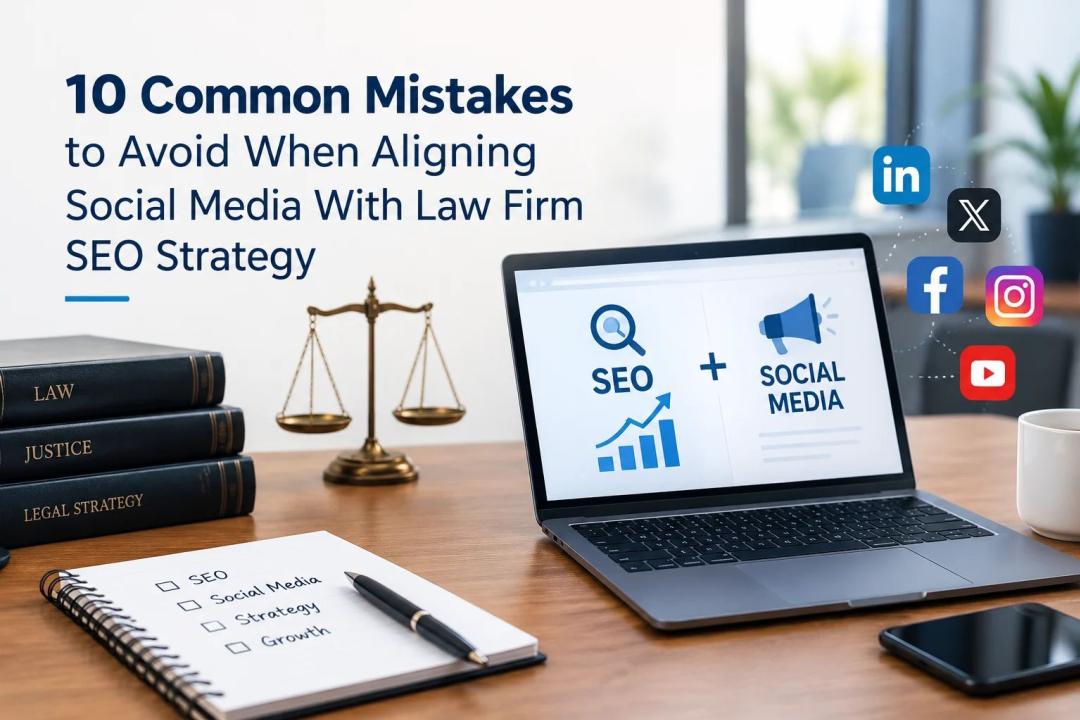
Most law firms treat social media and SEO like two separate jobs. One person posts on LinkedIn, someone else updates the website, and nobody compares notes. The result is wasted effort and mixed signals for both clients and search engines.
Done well, aligning social media with law firm seo strategy builds visibility, boosts branded searches, and brings in better leads. But it only works when both channels pull in the same direction. Here are ten mistakes that hold firms back, and how to avoid each one.
The 10 Mistakes Law Firms Make
1. Treating Social Media and SEO as Separate Channels
When your social team and your website team never talk, your message gets messy. Your posts might promote family law while your site pushes personal injury. Fix this with one shared content calendar. Every post should support a page, a blog, or a service you want to rank. That way, each channel strengthens the other instead of competing for attention, and your audience hears one clear story about what your firm does best.
2. Skipping Keyword Research Before Posting
Many firms post whatever feels timely. Meanwhile, real clients search phrases like “car accident lawyer near me” or “how to file for divorce.” Use the same keyword research behind your website to shape your social topics. When your captions, hashtags, and video titles match the way people actually search, your content becomes easier to find. Even a simple list of ten target phrases helps.
3. Posting Without Linking Back to Your Website
A post that points nowhere is a missed chance. Social links are usually nofollow, so they won’t pass ranking power directly. They do send real visitors to your pages, and that traffic shows interest in your content. Add a clear link to a related blog or practice page whenever it makes sense. Use UTM tags too, so you can see which posts drive visits. Small steps like this turn casual scrollers into website visitors.
4. Using Inconsistent Firm Details
Your firm name, address, and phone number should match everywhere. If Facebook lists an old office and your Google Business Profile lists a new one, search engines get confused, and so do clients. Audit every profile twice a year. Consistent details build trust, support your local rankings, and make it easier for people to reach you when they need help most.
5. Leaving Profiles Half Finished
Many law firm profiles are missing basic information. Use your exact firm name, add your city and practice areas to the bio, include your website URL, and upload a real logo. Social profiles often show up on page one for branded searches. A weak profile can make your firm look careless before anyone ever visits your site, which is not the first impression you want.
6. Chasing Likes Instead of Leads
A funny reel might get 10,000 views and zero consultations. Vanity metrics feel good, but they rarely pay the bills. Track website clicks, contact form fills, phone calls, and branded search growth instead. Those numbers show whether your social activity truly supports your SEO goals. If a post gets few likes but sends three qualified visitors to your site, it is doing its job.
7. Copying Blog Content Word for Word
Pasting a full blog post onto LinkedIn or Facebook gives people no reason to click through. It can also weaken the value of your original page. Instead, share a short takeaway, a surprising stat, or a question, then invite readers to learn more on your site. Repurpose your content, don’t duplicate it. This keeps your website as the main home for your best work.
8. Forgetting Local SEO Signals
Law is local. If you only share general legal tips, you miss people searching in your area. Mention your city, share local court updates, join community conversations, and encourage happy clients to leave Google reviews. These local signals across social media and the web help confirm where you practice and who you serve. They also make your firm feel approachable, not distant.
9. Ignoring Ethics and Compliance Rules
Bold posts can land a firm in trouble. State bar rules on attorney advertising, client confidentiality, and testimonials apply to social media too. Never share case details without permission, avoid promising outcomes, and add disclaimers where needed. A quick compliance check before posting protects your reputation, and your reputation is the foundation of every marketing effort your firm makes.
10. Never Reviewing or Updating the Plan
Algorithms change, and so do audiences. A plan that worked last year may stall today. Review your results every quarter. Look at which posts drove traffic, which topics earned engagement, and which pages gained rankings. Then adjust. Steady progress comes from treating aligning social media with law firm seo strategy as an ongoing process, not a one-time setup you finish and forget.
How to Get Started Without Feeling Overwhelmed
You don’t need to fix all ten mistakes this week. The smartest way to approach aligning social media with law firm seo strategy is to start small. Pick one platform, one practice area, and one monthly theme.
Build a simple weekly routine: publish one useful post, link it to a relevant page, and check the results. Once that feels easy, add more. A simple plan you can maintain beats an ambitious one that fades after a month.
Let’s Turn Your Social Media Into a Steady Source of Cases
Your next client is probably searching for a lawyer right now, and what they find on Google and social media decides who they call. Don’t leave that to chance.
At PageOne Lawyers, we help law firms build SEO strategies that connect every channel and bring in qualified cases. Visit Page One Lawyers today and book your free strategy call. Let’s put your firm on page one and keep it there.
Frequently Asked Questions
1. Does social media directly improve law firm SEO rankings?
Not directly. Social links are usually nofollow, so they don’t pass ranking power. But social activity can bring traffic, build brand searches, and help your content get seen and shared, which supports your SEO results.
2. Which social media platform is best for law firms?
It depends on your practice area. LinkedIn works well for business and corporate law, while Facebook and Instagram suit personal injury, family law, and criminal defense. Start with one platform where your clients spend time.
3. How often should a law firm post on social media?
Two to four quality posts per week is a good starting point. Consistency matters more than volume, so choose a pace you can keep up.
4. Can I share my blog posts on social media?
Yes, but don’t paste the full article. Share a short summary or key takeaway with a link back to your website so readers have a reason to click.
5. How long does it take to see results?
Most firms start seeing early gains in traffic and engagement within three to six months. Stronger ranking and lead growth usually take longer, so steady effort is key.