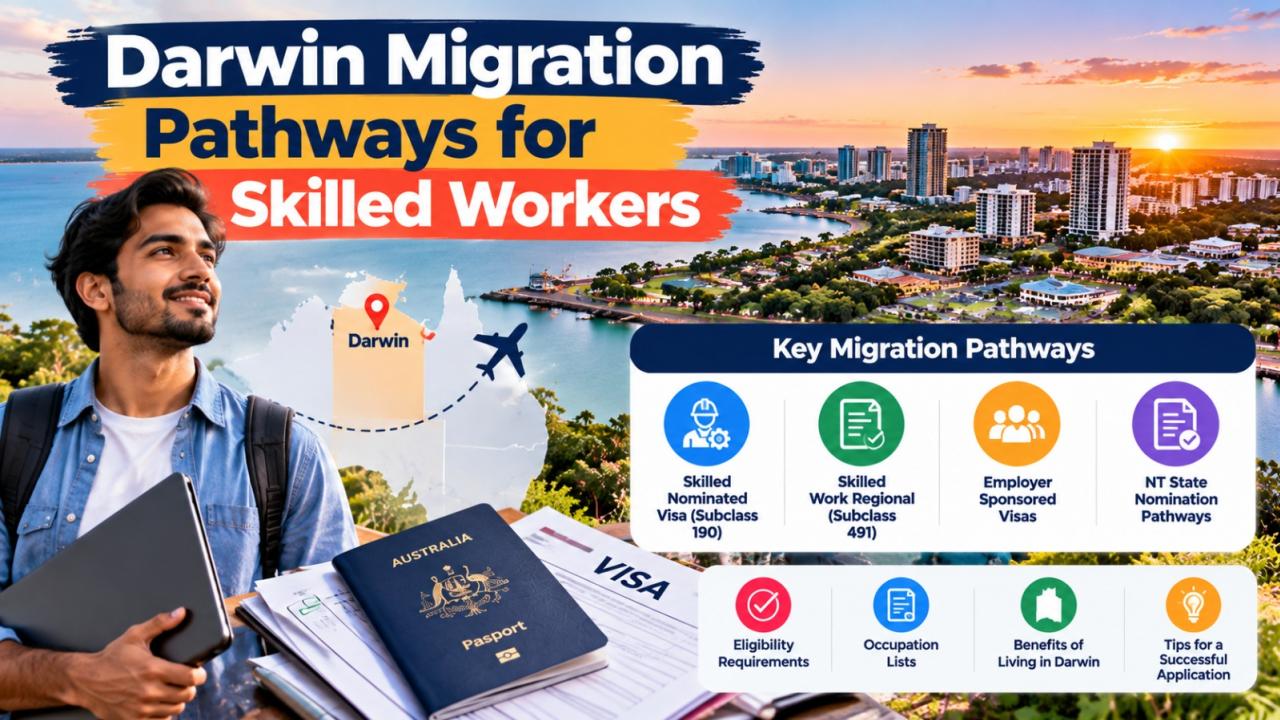
Skilled workers who want to build a life in Darwin have several visa pathways in 2026, but the rules have changed in important ways this year. The Northern Territory opened its new nomination program for 2026-27, employer-sponsored visa fees and salary thresholds rose on 1 July, and some eligibility criteria are tougher than before. This guide explains the main Darwin migration pathways for skilled workers, what is new in 2026, and how to choose the right route.
Information in this article is current as of October 2026. Programs, allocations, and fees change often, so always check the latest details before you apply.
What Changed in 2026: A Quick Snapshot
- The NT opened its 2026-27 General Skilled Migration program on 21 August 2026 for subclass 190 and subclass 491 nominations.
- The NT allocation increased to 1,850 places: 850 for subclass 190 (unchanged) and 1,000 for subclass 491 (up from 800).
- New NT criteria apply. Working remotely for an employer based outside the NT generally no longer counts unless your duties involve servicing NT clients, and NT graduates who rely on job search now need 12 months of NT residence after finishing their course, up from six.
- The offshore NT Priority Occupation stream was closed to new applications at the start of the program year because of a backlog.
- Employer-sponsored costs went up on 1 July 2026. Salary thresholds were indexed, and visa application charges for employer-sponsored and skilled work visas rose by around 25 percent.
For the full details, see this Northern Territory 2026-27 skilled migration program update and the summary of income threshold and fee changes from July 2026.
Pathway 1: Northern Territory Nomination (Subclass 190 and 491)
If you do not have a job offer, NT nomination is often the most direct route. The Territory nominates skilled people for two visas:
- Subclass 190: a permanent visa. Learn how the Skilled Nominated Subclass 190 visa works before you apply.
- Subclass 491: a provisional regional visa that can lead to permanent residency. See the regional pathway through Skilled Work Regional Subclass 491. The whole of the NT counts as regional for this visa.
What the NT Looks For
- An occupation on the NT's own occupation list. There is an onshore list and a separate offshore list.
- A valid skills assessment for that occupation, plus any work experience the occupation requires.
- A competitive points score and English level.
- A signed commitment to live and work in the NT in your nominated occupation, or a closely related one, for at least three years from visa grant.
- Priority sectors have included health, construction, hospitality, mining and resources support, education, and defence-related industries.
Meeting the general skilled migration criteria does not guarantee nomination. States select applicants against their own priorities and allocations.
Why Timing Matters
In the previous program year, the NT portal closed in April 2026 because it had received enough applications to fill the allocation. That means the 2026-27 places can also fill before the year ends, so it pays to be ready early.
Pathway 2: Employer-Sponsored Visas
If a Darwin employer wants to sponsor you, these visas may be the faster option.
Skills in Demand Visa (Subclass 482)
The Skills in Demand visa replaced the old Temporary Skill Shortage visa in December 2024. It has three streams: Specialist Skills, Core Skills, and Labour Agreement. The Core Skills stream uses the Core Skills Occupation List and has a minimum income threshold that is indexed each July. The threshold rose again on 1 July 2026 to just under AUD 80,000 for Core Skills, or the market salary rate for the role if that is higher. Employers also face higher visa charges this year.
Skilled Employer Sponsored Regional Visa (Subclass 494)
This is a regional employer-sponsored visa for roles outside the major capital cities. It can lead to permanent residency later. Read about the employer sponsored option under Subclass 494 regional visa if your employer is based in the Territory.
Employer Nomination Scheme (Subclass 186)
A permanent employer-sponsored visa. It includes a Direct Entry stream that uses the Core Skills Occupation List, and a pathway for people already working in Australia on a temporary visa.
If you want to compare these options in more detail, you can compare employer sponsored work visa options in Australia.
Some Territory employers may also be able to use a regional labour agreement, such as a Designated Area Migration Agreement, where one is available. Ask your employer what they are approved for.
Pathway 3: Skilled Independent Visa (Subclass 189)
The Skilled Independent Subclass 189 visa for high scorers needs no state or employer sponsor. It is points-tested and competitive, and you can live anywhere in Australia, including Darwin. It suits applicants with a high points score and an occupation that is being invited.
Pathway 4: Study in the Territory, Then Move to Skilled Migration
Many people come to Darwin on a student visa, graduate, and then transition to a skilled visa. NT nomination has onshore streams that favour people already living and working in the Territory, including NT graduates. The new 12-month residence rule for graduates who rely on job search makes early planning important. If you are studying or about to study in Darwin, look at your future occupation, skills assessment, and work experience from the start.
Comparing the Main Pathways
Pathway | Job offer needed? | Permanent or provisional | Best for |
NT nomination, subclass 190 | No | Permanent | Applicants in NT priority occupations who will settle long term |
NT nomination, subclass 491 | No | Provisional (regional) | Applicants who need extra points through regional nomination |
Skills in Demand, subclass 482 | Yes | Temporary | Workers with a Darwin employer ready to sponsor |
Subclass 494 | Yes | Provisional (regional) | Workers sponsored by a regional employer |
Subclass 186 | Yes | Permanent | Workers moving to permanent employer sponsorship |
Subclass 189 | No | Permanent | High-scoring applicants in an invited occupation |
A Step-by-Step Plan for 2026
- Check your occupation. Make sure it appears on the NT list and the federal list that applies to your visa. The NT list can use an older version of the occupation classification, so check that the code on your skills assessment matches.
- Get your skills assessment. The assessing body depends on your occupation.
- Book an English test if you need to prove or improve your score.
- Calculate your points. Estimate your skilled migration points first so you know which pathway is realistic.
- Submit an Expression of Interest and apply for NT nomination if you qualify.
- Prepare for the commitment. Only apply for NT nomination if you genuinely plan to live and work in the Territory.
- Lodge your visa application once you are invited, with all documents ready.
Common Mistakes to Avoid
- Choosing a state first and an occupation second
- Relying on remote work for an employer outside the NT
- Waiting too long and missing the window while allocations fill
- Using an out-of-date visa name or salary threshold in your plans
- Applying for nomination without being ready to meet the three-year commitment
Why Use a Registered Migration Agent in Darwin
With new NT rules, a closed offshore stream, and higher costs, the right plan matters more than ever. A mara-registered migration agent in Darwin, Australia can check your occupation against current lists, compare nomination and employer sponsorship, and prepare a clear application. If you are looking for a migration agent Darwin applicants trust, a registered migration agent Darwin wide, or a MARA agent Darwin professionals can meet in person or online, choose someone who is honest about your chances. You can speak with Darwin migration agents about skilled visas or see how Immigration Buddy supports skilled migrants. You can also browse all skilled visa categories on our site before you decide.
Final Thoughts
Darwin offers real options for skilled workers in 2026, from NT nomination to employer sponsorship and independent visas. The key is to match your occupation, points, and plans to the right pathway, and to move early while allocations are open. Check your numbers, understand the new rules, and get tailored advice so your application is ready when the right window opens.
Frequently Asked Questions
Do I need a job offer for NT nomination?
Not always. Subclass 190 and 491 nominations are based on your occupation, skills assessment, points, and commitment to the NT, but some NT streams look for current employment in the Territory.
What changed for NT nomination in 2026-27?
The allocation rose to 1,850 places, remote work for employers outside the NT generally no longer counts unless you service NT clients, and NT graduates who rely on job search now need 12 months of residence after finishing their course.
Is the Temporary Skill Shortage visa still available?
No. It was replaced by the Skills in Demand visa (subclass 482) in December 2024.
Is the whole Northern Territory regional?
Yes, for the subclass 491 visa the entire NT counts as regional.
How long do I need to stay in the NT after nomination?
NT nomination requires a signed commitment to live and work in the NT, in your nominated or a closely related occupation, for at least three years from visa grant.
Can the NT nomination portal close early?
Yes. The 2025-26 portal closed in April 2026 after the allocation was filled, so apply as early as you are ready.