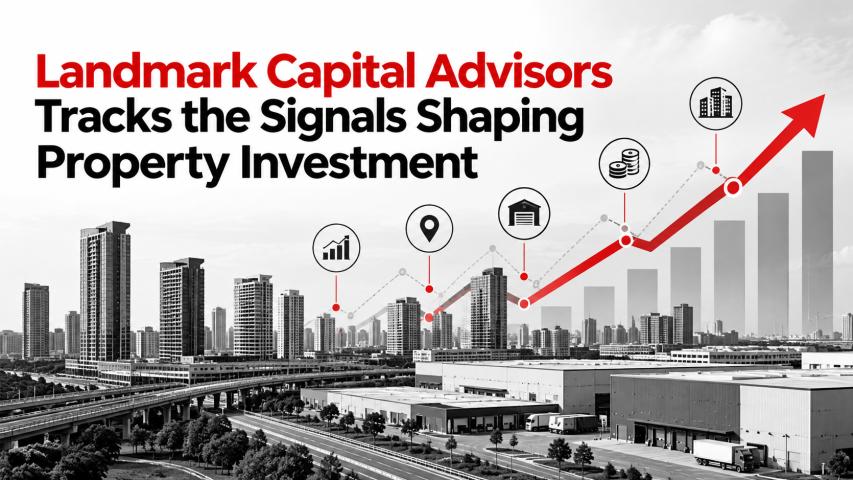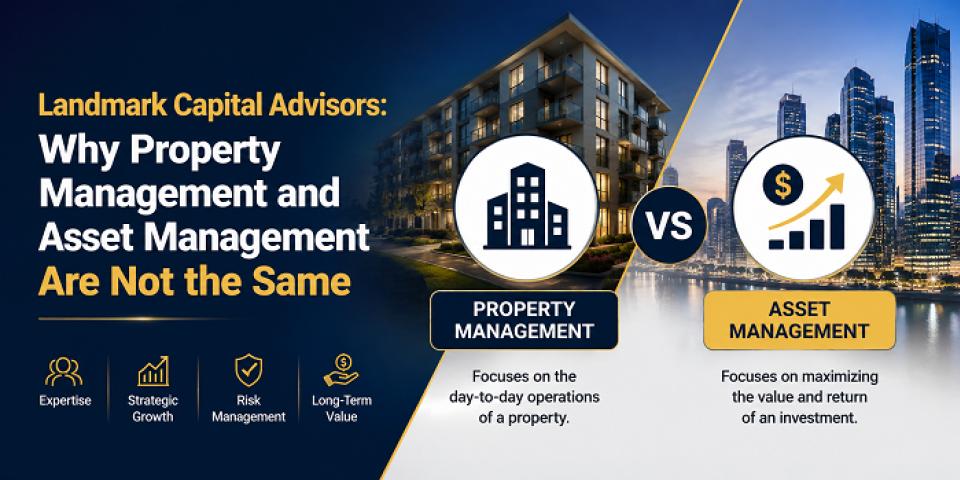

India’s real estate market is seeing a gradual change in the way capital enters the sector. Institutional investors are increasingly looking beyond individual projects and focusing on professionally structured opportunities, asset quality, operating potential and long-term value creation.
The shift is creating greater relevance for investment managers with experience across real estate cycles and investment structures. Within this changing environment, Landmark Capital Advisors News reflects the broader evolution of institutional participation in Indian real estate and the growing role of specialised investment platforms.
From Property Exposure to Structured Real Estate Investment
India’s real estate investment landscape has moved considerably beyond a predominantly development-led model. Institutional capital today is increasingly associated with structured investment vehicles, private equity, alternative investment funds and professionally managed assets.
This change has also broadened the range of opportunities being considered by investors. Warehousing and logistics, residential development and other specialised real estate segments are attracting attention as infrastructure, consumption and business activity reshape demand across markets.
For investment managers, the opportunity is accompanied by a greater emphasis on identifying assets with sustainable fundamentals rather than following short-term market movements.
This is where Landmark Capital Advisors has established its market positioning. The Mumbai-based real estate investment management firm operates across investment and asset-management activities, with its approach centred on identifying opportunities where capital and real estate fundamentals can align over the longer term.
Landmark Capital Advisors Private Limited and Institutional Experience
The market positioning of Landmark Capital Advisors Private Limited is also shaped by its experience in institutional real estate transactions. The firm has been involved in more than 50 transactions and has built exposure across warehousing and residential real estate.
Its reported investment experience includes more than 3.5 million sq. ft. of warehousing and over 2.8 million sq. ft. of residential assets. These figures provide an indication of the scale at which the firm has participated in India's evolving real estate investment ecosystem.
Rather than representing real estate simply as a physical asset, institutional investment increasingly considers the complete investment lifecycle from identifying an opportunity and structuring capital to monitoring performance and managing the asset.
That approach has become particularly relevant as investors seek greater visibility into how their capital is deployed and managed.
Why Warehousing Has Become an Institutional Focus
The growth of organised logistics, e-commerce, manufacturing and supply-chain networks has changed the role of warehousing within India's property market.
Warehousing is no longer viewed only as supporting infrastructure. Location, connectivity, tenant demand, industrial corridors and proximity to consumption centres have made logistics assets an increasingly important component of institutional real estate strategies.
Landmark Capital Advisors' experience in institutional warehousing funding places the firm within this broader market transition. Its focus reflects how investment managers are assessing sectors through the lens of underlying economic activity rather than property cycles alone.
A Broader Investment Landscape
The institutionalisation of real estate is also influencing how investors evaluate residential and commercial opportunities. Infrastructure development, urban expansion, changing consumption patterns and the growth of new employment centres are creating investment possibilities beyond India's established metropolitan markets.
For capital managers, this environment requires an understanding of both financial structures and the operating characteristics of the underlying asset.
The Landmark Capital Advisors News narrative therefore sits within a wider market story: India's real estate sector is becoming increasingly organised, and the role of professional investment management is expanding alongside it.
Market Position Built Through Participation
For Landmark Capital Advisors Private Limited, positioning in this environment is supported by its participation across multiple real estate investment opportunities and its focus on institutional capital.
The firm's investment platforms include the Landmark Opportunity Fund and Landmark Multiplier Fund, alongside managed investment and special-situation strategies. Such structures reflect the broader development of India's alternative investment ecosystem, where investors increasingly have access to specialised vehicles designed around particular real estate opportunities.
The significance of this evolution extends beyond individual firms. As institutional capital grows, the market is placing greater value on investment discipline, asset management capabilities and experience in navigating different property segments.
This has created a more defined space for firms such as Landmark Capital Advisors, whose activities connect investment capital with real estate opportunities through structured investment and active asset management.
The Direction of India's Real Estate Capital Market
The continuing movement of institutional money into Indian real estate suggests that the sector is entering a phase where the quality of capital management is becoming as important as the availability of capital itself.
Investors are increasingly looking at how opportunities are sourced, evaluated, structured and managed over time. At the same time, emerging asset classes and expanding urban markets are creating a wider investment universe.
Against this backdrop, Landmark Capital Advisors represents the type of specialist investment platform that has developed alongside India's transition toward a more institutional real estate market.
For Landmark Capital Advisors News, the more significant development is therefore not simply the amount of capital entering real estate. It is the changing nature of that capital—and the increasing importance of experienced investment managers in converting institutional capital into professionally managed real estate opportunities.