A first aid kit is only useful when its contents are complete, in good condition and ready to use. In a busy workplace, supplies can quickly run low after minor injuries, while expired or damaged products may remain unnoticed until an emergency occurs. For Irish businesses, a first aid kit restocking checklist provides a simple way to monitor supplies and maintain better workplace preparedness.
Rather than relying on occasional visual checks, businesses can use a structured checklist to record what is available, identify missing items and organise replacements. This approach makes first aid kit maintenance easier to manage across offices, warehouses, construction sites and other working environments.
1. Identify the First Aid Supplies Your Business Needs
Before creating a checklist, establish which supplies are appropriate for your workplace. The Health and Safety Authority (HSA) recommends that workplace first aid provision reflects the nature of the work, the number of employees and the risks associated with the working environment.
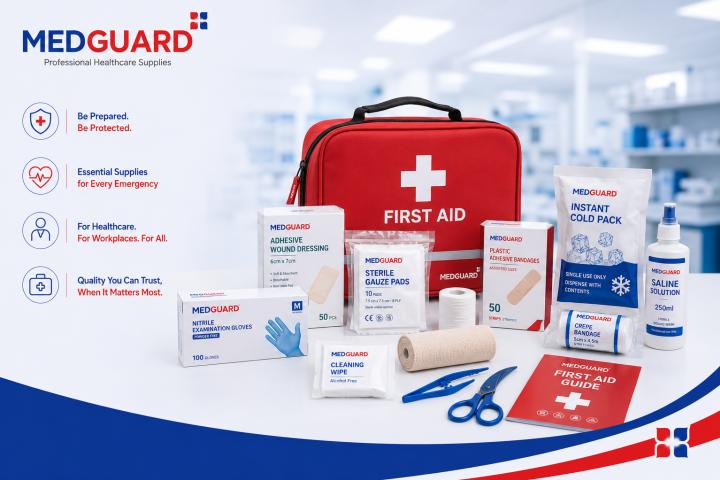
Typical first aid supplies may include:
Adhesive plasters in assorted sizes
Sterile wound dressings
Sterile eye pads
Triangular and crepe bandages
Disposable examination gloves
Cleansing wipes
Safety pins
First aid scissors
Suitable burns dressings, where required
A CPR face shield or pocket mask, where appropriate
This is a general starting list rather than a complete specification for every workplace. Check the current HSA guidance and your workplace risk assessment to establish the appropriate contents and quantities.
2. Create a Checklist With Clear Stock Levels
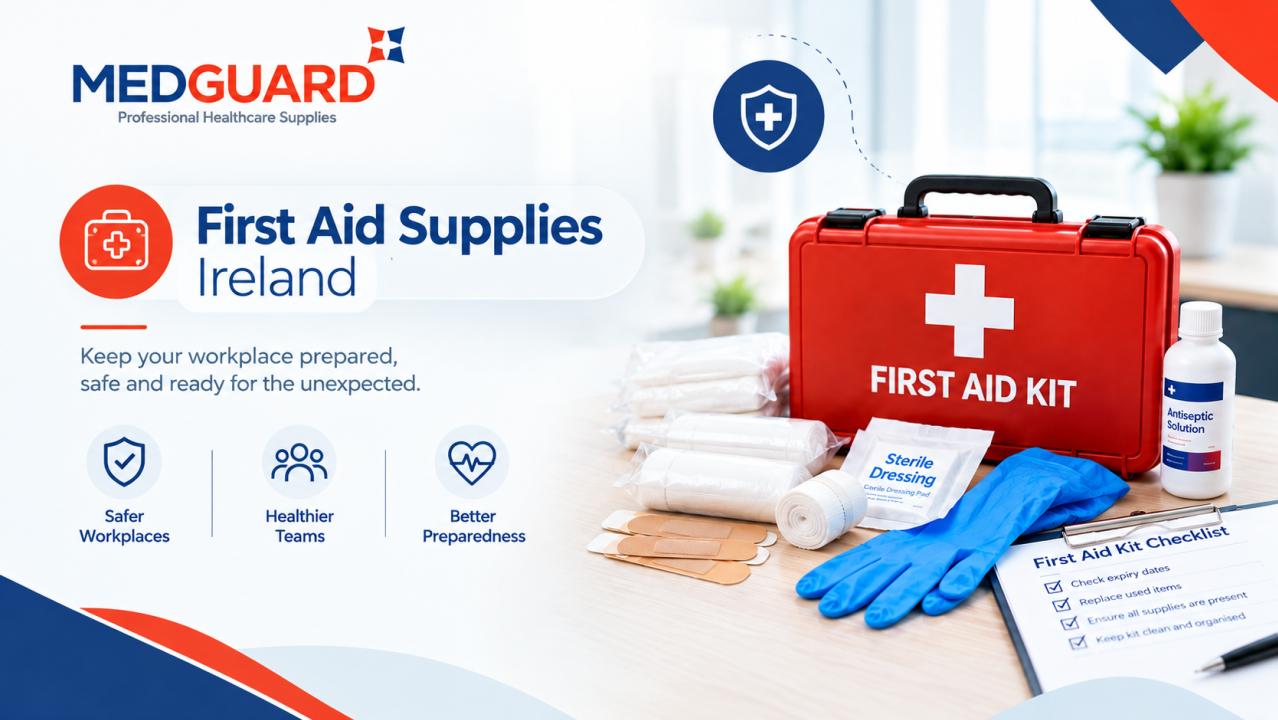
A useful restocking checklist should show what each kit needs, how many items should be available and whether replacements are required.
For example, your checklist could include columns for the product name, required quantity, current quantity, expiry date, condition and action needed.
This makes it easier to identify shortages without opening multiple storage areas or relying on memory. It also helps businesses maintain consistent stock levels when several first aid kits are located across different departments.
Set minimum stock levels for frequently used items so that replacement orders can be arranged before supplies run out.
3. Check the Kit After Every Use
One of the most effective ways to prevent shortages is to inspect the kit after an incident. Even when only a few items have been used, those missing supplies could be needed again later in the day.
The person responsible for the kit should record which items were used, update the stock count and arrange replenishment promptly. If an item has been opened, damaged or contaminated, it should be assessed and replaced where necessary.
A simple reporting process also helps employees notify the responsible person when they take supplies from a kit. This is particularly useful in larger workplaces where not every incident is directly observed by the person managing stock.
4. Include Expiry Dates and Product Condition
Restocking is not just about replacing empty spaces. First aid supplies should remain suitable for their intended use.
During each inspection, check expiry dates on applicable products, confirm that sterile packaging is intact and look for signs of moisture, damage or contamination. Remove expired or unsuitable products and replace them with appropriate alternatives.
Your checklist should include a section for items that need replacing because of their condition, even if they have not been used.
Storage conditions also matter. Keep kits in a suitable location away from excessive heat, dampness and dust, following the manufacturer's storage instructions.
5. Decide Who Will Manage the Checklist
A checklist works best when responsibility is clearly assigned. Nominate a suitable person to inspect the kit, record shortages and arrange replacements.
In workplaces with designated occupational first aiders, first aid equipment should generally be under their control. Where there are no occupational first aiders, responsibility should be assigned to a suitable person identified in the workplace's Safety Statement.
The responsible person should know how to complete the checklist, where replacement products are sourced and how to record completed actions. For businesses with multiple locations or shifts, a central process can help maintain consistency.
6. Set a Regular Inspection Schedule
The inspection frequency should reflect workplace risks, the level of first aid supply usage and the conditions in which kits are stored. A monthly inspection can be a useful starting point for many businesses, but higher-risk or busier workplaces may need more frequent checks.
Your schedule should include:
Routine inspections at planned intervals
Checks after every use
Expiry-date and packaging reviews
Replenishment of missing items
Reviews when workplace activities or risks change
Record the inspection date, the name of the person completing the check, shortages identified and any corrective action taken. This provides a straightforward record of how first aid supplies are maintained.
7. Make Reordering Simple and Consistent
Once shortages have been identified, staff should be able to order suitable replacements without unnecessary delays. Keep a record of commonly used products and use reliable suppliers to maintain availability.
Buying first aid supplies through an established healthcare supplier can also help businesses organise replenishment alongside other workplace healthcare requirements.
Medguard Healthcare supports Irish businesses and organisations looking for first aid and healthcare supplies. Maintaining a clear inventory and an organised purchasing process can help reduce last-minute shortages and make routine restocking more manageable.
Conclusion
A first aid kit restocking checklist helps businesses maintain essential supplies, monitor expiry dates and respond quickly when items are used or damaged. By setting clear stock levels, assigning responsibility and establishing a regular inspection schedule, Irish workplaces can make first aid kit maintenance a straightforward part of their safety routine.
Review your checklist regularly to ensure it continues to reflect your workplace's needs. With an organised approach to stock monitoring and replenishment, your business can keep its first aid kits better prepared for unexpected incidents.
Original Source :https://www.myseodirectory.com/why-can-the-contents-of-a-first-aid-kit-need-to-change-over-time/