Introduction
IMAP accounts are popular because they enable users to access emails from multiple devices while keeping messages in sync with the mail server. However, there are problems when users solely rely on an online mailbox, if emails are deleted by mistake or if accounts become inaccessible or if users want to migrate their mailbox data.
A separate backup of IMAP emails provides an extra copy that can be stored locally and accessed when needed. IMAP Backup helps users to download and save IMAP mailbox data for backup, archival and migration purposes.
This guide covers the importance of backing up IMAP emails, common methods of backup, key features to look for, and a step-by-step process on how to backup your IMAP emails.
Why IMAP Emails Should Be Backed Up?
DataVare IMAP synchronization is handy for using the same mailbox on multiple devices , but synchronization is not a substitute for an independent backup . Additionally, if an email is deleted or removed from the server, the change can be reflected across synchronized devices as well.
Separate backup can help users:
- Create a backup of important emails.
- Keep business correspondence and attachments.
- Keep emails for future use.
- Export mailbox data for migration
- Store email data locally and archive it.
- Be less dependent on a single webmail mailbox.
Keep historical records of email
Businesses can also use regular email backup to support business continuity and meet record retention requirements.
Best Methods to Backup IMAP Emails
IMAP email can be backed up in a number of ways. The best approach will depend on the size of the mailbox, technical requirements, desired output format and the number of accounts.
1. Manually Export Emails
Users can sometimes export messages manually by setting up an IMAP account in a desktop email client. This can work for smaller mailboxes, but if you have a lot of email it can become very time consuming.
Manual methods may also require extra setup and technical expertise.
2. Email Client Based Backup
mailbox data in Outlook and other compatible email applications. There are options to store or export This might work in case users already use a desktop application to manage their IMAP accounts.
But, the precise exporting features are subject to the email client and account settings.
3. Software for IMAP Backup
Specialized backup software can simplify the process by providing a specific workflow to connect to an IMAP account, select mailbox data, and export it to a suitable destination.
One option if you want a dedicated way to back up IMAP mailboxes is IMAP Backup.
Key Features to Consider When Choosing an IMAP Backup Tool
When choosing an IMAP backup solution, the following features should be taken into account.
Support for Multiple IMAP Accounts
It is good when a backup solution is compatible with popular IMAP-enabled email services. Before you begin, be sure that it works with your specific email provider.
Selective Backup
Selective backup can be useful when users need to backup specific folders or messages and not the whole mailbox.
Attachment Maintenance
Important emails often have invoices and reports, documents and other files. The backup solution needs to preserve attachments as required.
Folder Structure
It is easier to find archived emails after a backup if you restore the original folder hierarchy.
Multiple Outputs
The different output formats are for different purposes. For example, EML can be useful for individual email storage, and PST may be suitable for supported Outlook workflows. Always check the formats supported by the version of the software you are using.
User-friendly interface
A simple interface can help decrease the complexity of connecting an account, selecting folders, and starting the backup.
Security Authentication
Since the software needs to access the mailbox, users should review the authentication process and follow the security requirements of the email provider.
Step-Wise Process for Backup IMAP Emails
The following steps outline a general workflow for backing up IMAP email. The exact options available may differ based on the software version and email provider.
Step 1: Get IMAP Backup Tool
Check out the official IMAP Backup product page:
Please check the product information, supported requirements and available features before downloading the software.
Step 2: Install and Launch Software
Download the app to your computer and open it after installing.
Before you start the backup, ensure that there is enough space on the computer to store the mailbox data and attachments.
Step 3: Fill in the IMAP Account Details
Input the requested IMAP account details in the software.
Depending on the email provider you may need information such as:
Email address *
IMAP-server
IMAP port
Password or Authentication Data
SSL/TLS Configuration
Use the right server configuration for your email service.
4. Verify the Account
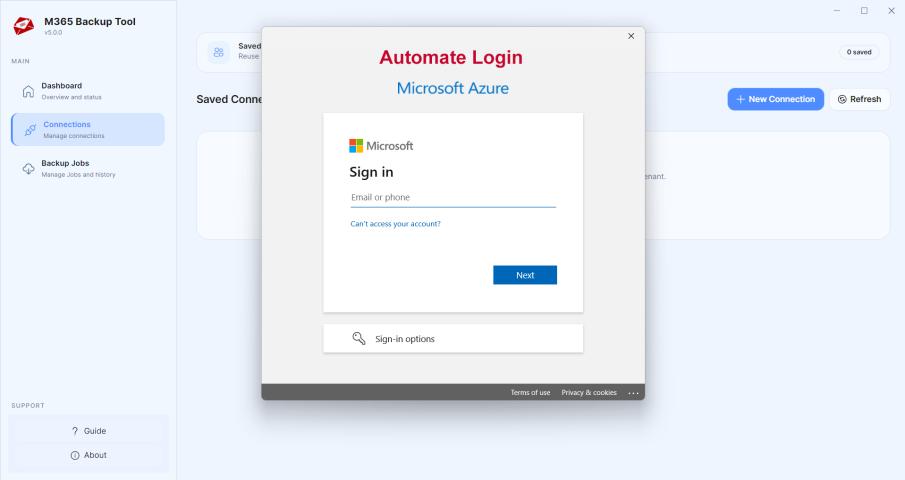
Complete the necessary authentication process. Your email provider may require additional security verification or an app-specific password.
If you are not able to connect the account check with the current provider IMAP access and authentication requirements.
Step 5. Import the mailbox
Allow software to get the available mailbox folders after successful authentication.
Browse carefully through the folders you see and choose the data you want to backup.
Step 6: Choose the Folders You Want
Select the folders that you want to include in the backup.
Depending on your requirements, you can choose folders like:
- Inbox
- Sent.
- Drafts
- Archive
- Critical
- Folders you created
If the software offers selective backup, it is possible to be more targeted by choosing only the necessary folders.
Step 7: Choose the Output Format
Choose the right output format for your backup.
For example, an individual-message format may be useful for accessing emails individually, while a mailbox-oriented format may be more useful for migration or application-specific workflows.
Make sure to check what output formats are currently supported on the official product page, before you start the export.
Step 8: Select Destination Folder
Choose a safe place on your computer or external storage device.
Ensure there is enough free space on the destination, especially if the mailbox contains a lot of messages or attachments.
Step 9: Begin the Backup Process
Review account, folder(s), output format and destination location.
When you’re happy with everything, start the backup.
Do not close the application or disconnect the internet unnecessarily and let the software complete the operation.
Step 10: Observe the Backup
Monitor the progress of the backup. The time it takes can be longer for large mailboxes depending on the number of messages, the size of attachments, the speed of the server's response and the speed of your Internet connection.
If you see an error, review the information shown and check the account connection, permissions, server settings, and available storage.
Step 11: Check the Backup Files
After the process is finished, go into the destination folder and check out the exported files.
Browse a collection of messages from all sorts of folders and see:
Email body
Sender and recipient information
- Dates
- Attachments:
- Folders
- File access
Before you can rely on a backup as a recovery or archival copy, verification is an important step.
Step 12: Keep Backup Safe
Once you have confirmed your backup, store it in a safe place.
For important business e-mail it is worth keeping more than one copy and storing the copies separately. Access is restricted to authorized users. Email archives may contain confidential information.
IMAP Email Backup Best Practices
A good backup strategy should include more than one export. To better protect yourself, follow these best practices:
Do Regular Back Ups. Create backups as frequently as the mailbox changes.
Make Multiple Copies Keep important backups in separate locations.
Check Backups – Open sample messages and attachments after each significant backup.
Protect Backup Files: Use appropriate access restrictions and encryption where appropriate.
Check Storage Space Make sure that there is enough space available before starting a large backup.
Use Secure Authentication: Follow the security practices of your email provider.
Keep the Original Mailbox: Do not delete source emails until the backup has been verified.
Test Recovery: Periodically verify that archived messages can still be retrieved.
Document Business Backups: Document backup dates and locations for critical organizational mailboxes.
Adhere to Business Email Retention Policies: Retain and discard business emails in line with relevant policies.
Common Problems and Their Solutions for IMAP Backup
Authentication failure
If the software is not connecting to the mailbox check the username , password , server settings , port , and authentication requirements . Some providers require an app password or other authorization.
IMAP server settings are incorrect
Each email provider has a different server address and port. Verify the provider’s published configuration details and confirm that SSL/TLS settings are properly configured.
Missing Folders
If you don’t see any folders, check that the account is connected and that you have permission to the folders. Some email services may have special folder settings.
Attachments Missing
Try opening a few backed up conversations and see if the attachments are there. If files are missing, review the software export settings and repeat the backup if necessary.
Backup Slower
Backup speed can be affected by large mailboxes, many attachments, network conditions and server limitations. Let the process finish and do not run other network intensive applications simultaneously.
Not enough storage
If there is not enough space on the destination drive, select a larger storage location or delete unnecessary files, and then start the backup again.
IMAP Backup Best Practices
The best backup depends on what you want to use the archive for. If you intend to use the data for long-term storage, pick an output format that will be easy to get to in the future. Choose a format that the destination email platform will accept if the goal is migration.
It’s also helpful for business users to set up a regular backup schedule and document which mailboxes are being protected. Important backups should be tested periodically instead of being left forever unverified.
Why Should You Opt for IMAP Backup?
IMAP Backup is a specialized software-based solution to backup IMAP mailbox data. Instead of manually exporting individual messages, users can connect to the mailbox, select the needed data, and save the resulting backup in a structured workflow.
The software can be evaluated by individuals, administrators and organizations who need to backup, archive or migrate IMAP email data.
Before starting a backup, users should check the official product page to verify the latest supported features, system requirements, authentication methods and output options.
Conclusion
Backing up IMAP emails is an important step in protecting valuable communications and maintaining access to historical mailbox data. Of course, manual exports and mail clients can do the trick in some cases, but specialized backup software can offer a more organized approach for users dealing with larger or more complex mailboxes.
IMAP Backup is another option to consider for taking local copies of IMAP email data. Once the account is linked, users can select the folders they want to backup, select an output format, start the backup and verify the files created to create a more reliable email backup procedure.