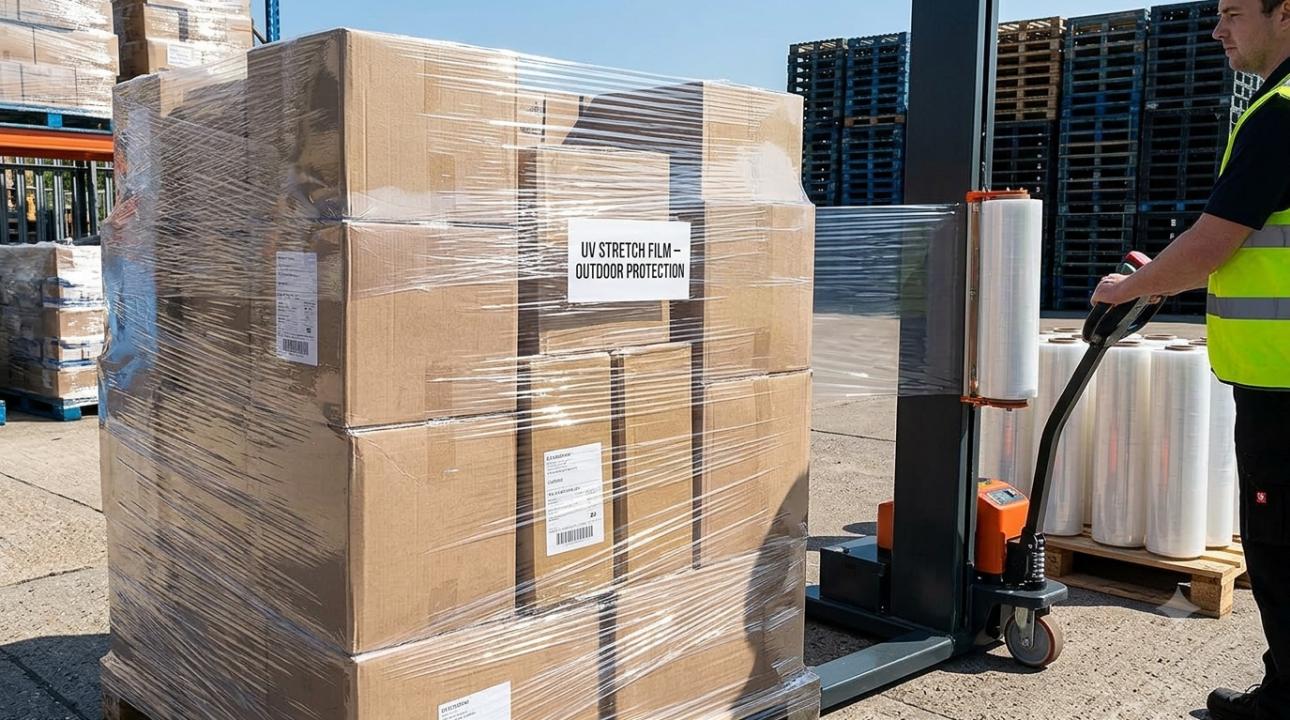
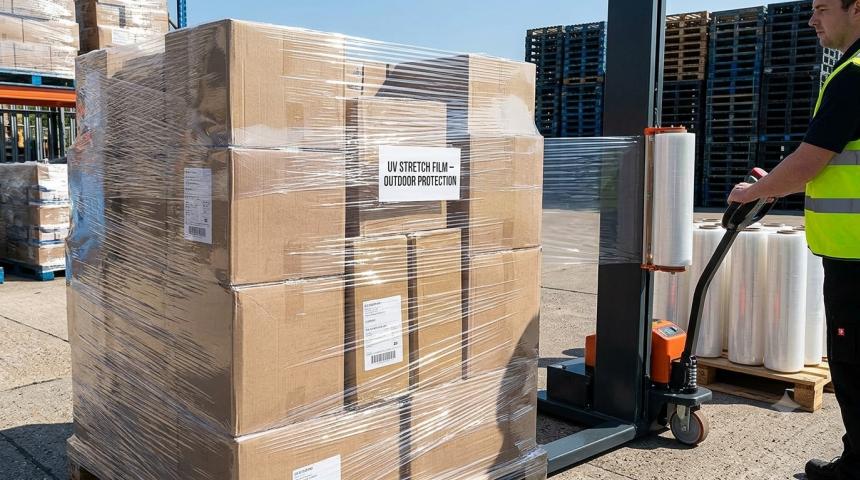
UV stretch film is a practical packaging solution for businesses that store goods outdoors or transport palletized products through changing weather conditions. Unlike standard stretch film, UV-resistant variants are designed to withstand ultraviolet radiation for a specified period, helping protect wrapped loads during outdoor storage. However, product quality, film performance, and the intended exposure period all matter when choosing the right material.
Finding a dependable UV Stretch Film Wholesaler in India involves more than comparing prices. Buyers should evaluate film specifications, consistency, supply capacity, and suitability for their packaging operations. Understanding these factors helps businesses make informed purchasing decisions and maintain reliable load protection across warehouses, manufacturing facilities, and distribution networks.
What Is UV Stretch Film and Why Is It Used?
UV stretch film is a stretchable plastic packaging film formulated with ultraviolet stabilizers to help reduce degradation caused by sunlight. It is commonly used to wrap palletized goods that may remain outdoors during storage, transportation, or loading operations.
Prolonged exposure to sunlight can weaken ordinary plastic films, potentially causing brittleness, tearing, or reduced holding performance. UV-resistant film is designed to offer improved resistance to these effects, depending on its formulation and specified exposure limits.
Common applications include:
- Agricultural supplies: Securing packaged materials stored in outdoor areas.
- Construction materials: Wrapping selected building products for temporary outdoor storage.
- Industrial packaging: Stabilizing palletized components before dispatch.
- Logistics and warehousing: Protecting unitized loads during handling and transportation.
UV resistance does not make a pallet completely weatherproof. Rain, dust, temperature changes, and the characteristics of the packaged goods should also be considered.
How to Choose a Reliable UV Stretch Film Wholesaler in India
A dependable wholesale source should offer consistent product quality and clear information about film performance. Before placing an order, evaluate the following factors.
1. Verify UV Resistance Specifications
Ask about the film's intended outdoor exposure period and the conditions under which its UV resistance was evaluated. UV protection varies by formulation, thickness, sunlight intensity, and climate. Avoid assuming that every UV-resistant film provides the same level of protection.
2. Check Film Quality and Consistency
Examine the film for uniform thickness, clarity where relevant, adequate stretch, and resistance to tearing. Consistent quality helps reduce wrapping interruptions and supports dependable pallet containment.
3. Evaluate Wholesale Supply Capacity
Businesses with regular packaging requirements need a wholesaler that can maintain a reliable supply. Discuss order quantities, product availability, delivery timelines, and the ability to meet recurring demand before committing to a supplier.
4. Compare Overall Value
The lowest price per roll may not deliver the lowest packaging cost. Film consumption, wrapping efficiency, breakage, and load stability also influence the total cost of use. Compare products on equivalent specifications rather than price alone.
What Factors Affect UV Stretch Film Performance?
Several factors determine how well UV-resistant film performs in practical packaging applications.
- Film thickness: The appropriate gauge depends on load weight, shape, sharp edges, and wrapping requirements.
- Stretchability: Suitable elongation helps the film conform to a load and maintain tension during wrapping.
- Puncture resistance: Stronger resistance to punctures can be important for irregular or heavy products.
- Outdoor exposure: Direct sunlight, local temperatures, and storage duration influence film degradation.
- Wrapping technique: Correct tension and sufficient overlap help improve load stability without unnecessarily stretching or damaging the film.
Selecting film based on actual operating conditions is generally more effective than choosing a product based on thickness or price alone.
Expert Buying Tips for Businesses
- Before purchasing from a UV Stretch Film Wholesaler in India, use this practical checklist:
- Request technical specifications and available product information.
- Confirm the recommended outdoor exposure period instead of relying on general claims.
- Test a sample under representative wrapping and storage conditions when possible.
- Check roll dimensions, weight, and packaging details before comparing quotations.
- Ask about storage recommendations and shelf-life guidance.
- Review delivery reliability and the supplier's process for addressing quality concerns.
Businesses should also distinguish between UV resistance and waterproofing. Stretch film can help protect packaged loads from dust and light moisture, but it should not replace suitable weatherproof packaging when goods require complete protection from rain or humidity.
Frequently Asked Questions
1. What is UV stretch film used for?
UV stretch film is used to wrap and secure palletized goods that may be exposed to sunlight during storage, handling, or transportation.
2. How is UV stretch film different from standard stretch film?
UV stretch film contains UV-stabilizing additives designed to improve resistance to sunlight-related degradation. Standard stretch film may not provide the same level of UV protection.
3. How long can UV stretch film remain outdoors?
The duration depends on its formulation, exposure conditions, sunlight intensity, and temperature. Buyers should confirm the manufacturer's specified exposure period.
4. Is UV stretch film completely waterproof?
No. Although it can provide some protection against dust and light moisture, it should not be considered a substitute for fully waterproof packaging.
5. How can businesses choose the right wholesale supplier?
Compare technical specifications, product consistency, wholesale availability, delivery reliability, and overall packaging value before making a decision.
Conclusion
Choosing suitable UV-resistant stretch film requires attention to outdoor exposure, film strength, wrapping conditions, and supplier reliability. Businesses should verify technical specifications, compare equivalent products, and test performance under realistic operating conditions before placing large orders.
For companies exploring industrial wrapping solutions, Stretchfilm provides a starting point for reviewing stretch film options and identifying products suited to their packaging requirements. A well-informed purchasing decision can help improve load stability, reduce avoidable packaging waste, and support more reliable operations.