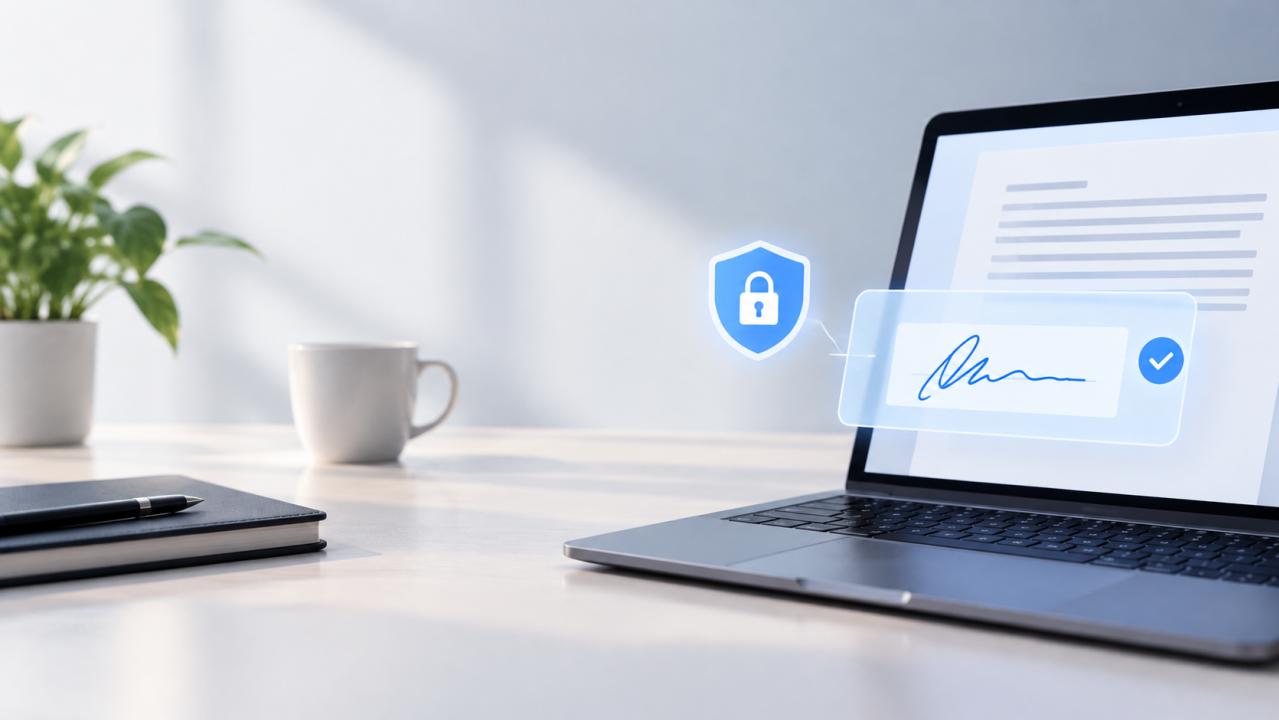
The use of digital solutions is growing in the business world, as it helps to streamline processes and minimize paperwork. Organizations require quicker and more secure document management, from signing contracts to completing employee onboarding. An electronic signature is a digital signature that allows people or organizations to sign documents without having to print, scan, and send them physically.
In addition to convenience, electronic signatures can enhance security, facilitate quick approvals, and aid in streamlined business processes.
What is an electronic signature?
An electronic signature is an electronic means of indicating a person's intention to sign or approve a document. It may consist of a typed name, a signature drawn on a touchscreen, or any other electronic action that is linked to the approval.
An e-signature enables businesses to handle agreements remotely and speed up transactions. But the security and identity assurance are different for each signature method, technology, and legal requirement.
1. Accelerating Business Processes
In the traditional paper signing process, documents are printed, scanned, couriered and followed up manually. These activities can cause delays in approval and add to the administration costs.
Electronic signatures allow businesses to obtain approvals electronically, which can speed up the process for teams to complete transactions. Examples of common uses are employment contracts, supplier agreements, sales proposals, and customer consent forms.
When organizations incorporate electronic signing into their workflows, they can cut down on repetitive tasks and enable workers to concentrate on more valuable tasks.
2. Strengthening Document Security
Paper-based processes can lead to inconsistent records, unauthorized access to sensitive documents, and loss. Audit trails can be used to provide a history of document access, signing, and completion, which can enhance accountability in electronic signature solutions.
Some platforms also employ cryptographic methods to aid in the identification of changes to signed documents. These features can serve as helpful evidence in case of a dispute.
But an electronic signature isn't a sure sign of identity. For businesses that deal with sensitive agreements, extra authentication and security measures should be taken.
3. Mitigating Fraud with Identity Verification.
There is a risk of impersonation and unauthorised signing in digital transactions. Businesses can gain more confidence that the individual signing a document is the individual they believe to be, through identity verification.
Document verification software can check identity documents for authenticity markers and tampering. It can enhance the digital onboarding and contract approval workflows when paired with appropriate authentication protocols.
For instance, financial institutions can confirm the identity of their customers before they are able to sign on to critical agreements. Depending on the risk level of a transaction and relevant regulations, the appropriate verification method will be used.
4. Knowing the various kinds of electronic signatures
It is important for businesses to be aware of the various types of signatures and choose the one that best suits their security and legal needs.
Simple electronic signature: A simple electronic signature can be a typed name or an electronic action to signify acceptance. Depending on the circumstances and applicable law, it can be appropriate for routine transactions.
Advanced electronic signature: An advanced electronic signature is a type of electronic signature that complies with the EU eIDAS framework, which specifies certain requirements for the signature, such as the ability to be linked to the signatory, to be identified, and to be linked to the signed data in such a way that any changes can be detected.
Qualified electronic signature: An advanced electronic signature which fulfills the additional requirements of eIDAS, such as the use of a qualified certificate and a qualified electronic signature creation device. It is usually legally binding under EU law and is considered to have the same legal force as a handwritten signature.
Before choosing the way to sign, businesses need to consider the jurisdiction, sensitivity of transactions, and legal requirements.
5. Enhance compliance and recordkeeping
There is a need for organizations to have a record of agreements, approvals, and interactions with customers. An electronic signature platform can store signed documents and related records in one central location, making them more easily retrievable and reviewable.
Depending on the platform's capabilities, audit trails can be used to show when documents were sent, accessed, and signed. These records are used in preparation for internal governance and audit.
But electronic signatures are not enough to ensure regulatory compliance. Data protection, document retention, access permissions, and legal requirements are also important considerations for businesses.
6. Adopting Electronic Signatures for Digital Workflows
Electronic signatures are more useful when they are part of the existing business systems. Signing can be integrated into customer onboarding, contract management, procurement, and HR processes.
The process usually includes creating a document, verifying the identity of the person signing (if required), obtaining signatures, ensuring the document is not altered, and securely storing the signed document.
CRM and document management system integration can further minimize manual tasks and provide greater insight into the approval process.
Secure Electronic Signing Best Practices
These are some of the practices that businesses can follow to enhance their workflows:
Choose the appropriate type of signature: Ensure that the signature >
Properly verify identities: Implement extra verification for sensitive or high-risk transactions.
Keep good signing logs: Keep accurate signing logs.
Secure documents: Employ access controls, secure storage, and appropriate integrity protections.
Examine compliance requirements: Discuss applicable laws, privacy requirements, and retention policies.
Educate staff: Set guidelines for the handling of confidential records and unusual signing requests.
Final Remarks:
Electronic signatures make it easier for businesses to approve documents, cut down on administrative tasks, and enhance accountability. With proper identity verification, document integrity measures, and robust record management, they can play a role in more secure and efficient digital processes.
With the right type of signature and the correct security features, organizations can optimize business processes and ensure trust in their digital agreements.