Choosing the right insurance policy can be challenging when several options offer different premiums, benefits, and coverage conditions. An insurance broker can help buyers understand these differences and identify policies that suit their requirements. However, the quality of guidance and support can vary, making it important to evaluate a broker carefully before relying on their services.
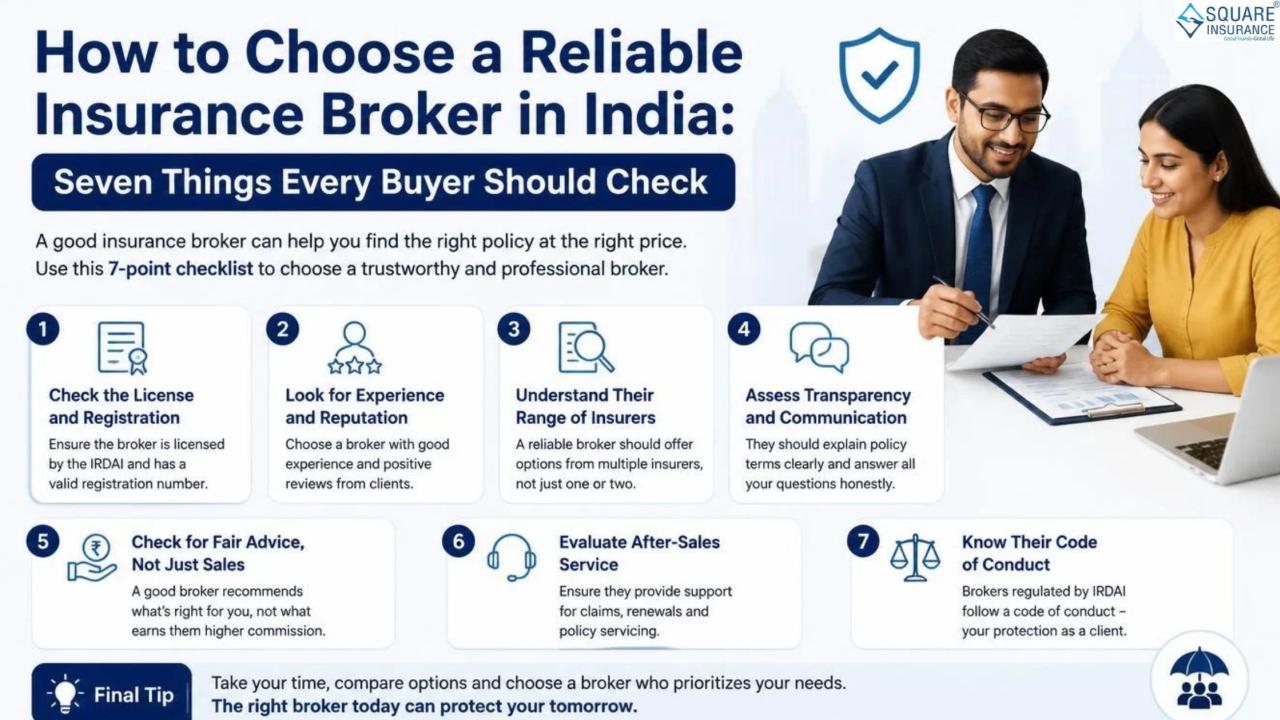
When comparing Insurance Brokers in India, buyers should look beyond promotional offers and focus on professional credibility, transparency, product knowledge, and customer service. Here are seven important things to check before choosing an insurance broker.
1. Verify Registration and Regulatory Credentials
The first step is to confirm whether the broker is authorised to conduct insurance business. In India, insurance brokers are regulated by the Insurance Regulatory and Development Authority of India (IRDAI) under the applicable regulatory framework.
Check the broker's registration details and verify them through official IRDAI resources. Do not rely solely on a website, advertisement, or verbal assurance. A legitimate broker should be willing to explain its registration status and business activities clearly.
This initial verification helps you make a more informed decision and reduces the risk of dealing with an unauthorised provider.
2. Check the Range of Insurance Products Available
Different buyers have different protection needs. Some may be looking for health insurance, while others may require life, motor, travel, or business insurance.
Before selecting a broker, understand the types of policies it can offer and whether the available choices match your requirements. A wider selection can make comparisons easier, but the number of products alone does not establish the quality of a broker.
Ask whether the broker can explain the differences between suitable policies, including their coverage limits, exclusions, deductibles, and additional benefits.
3. Evaluate Transparency in Premiums and Charges
A reliable insurance broker should explain the financial details of a policy before you make a purchase. These details include the premium, applicable taxes, deductibles, coverage limits, and any relevant fees or charges.
Be cautious if someone promises unusually low premiums without explaining the coverage or pressures you to make an immediate payment. A cheaper policy may have limitations that do not meet your expectations.
Request clear quotations and compare policies with similar coverage. Understanding the complete cost helps you avoid unpleasant surprises later.
4. Assess Product Knowledge and Professional Guidance
Insurance documents often contain technical terms that can be difficult for first-time buyers to understand. A knowledgeable broker should be able to explain these terms in straightforward language.
For example, when discussing health insurance, the broker should clarify waiting periods, pre-existing disease conditions, room rent limits, and exclusions where applicable. For motor insurance, the discussion may include third-party liability, own-damage coverage, deductibles, and add-on benefits.
The broker should also explain the limitations of a policy instead of highlighting only its advantages. Clear guidance helps buyers make decisions based on their actual needs rather than sales pressure.
5. Review Customer Service and Claim Assistance
Insurance support becomes particularly important when a customer needs to renew a policy, understand a document, or initiate a claim. Before choosing a broker, ask how customer queries are handled and what assistance is available after purchasing a policy.
Check whether the broker provides accessible communication channels, clear response procedures, and guidance on contacting the relevant insurer. You can also review customer feedback to identify recurring concerns about service quality.
Remember that insurers make claim decisions according to policy terms and applicable rules. A broker may assist with the process, but should not guarantee claim approval.
6. Examine Digital Tools and Policy Management Facilities
Convenient digital services can make insurance management easier. Some brokers offer online policy comparisons, digital documentation, renewal reminders, and customer support through websites or applications.
Check whether these facilities are easy to use and whether your personal information is handled securely. Ask how you can access policy documents, update permitted details, and contact support if a digital service is unavailable.
Technology should simplify the insurance experience rather than make it confusing. Choose a broker whose services suit your comfort level and everyday requirements.
7. Understand the Broker's Responsibilities and Limitations
Before finalising your choice, understand exactly what the broker will do for you. Ask about policy comparisons, documentation support, renewal assistance, and the help available if a concern arises after purchase.
Read the relevant terms and conditions carefully, and keep copies of quotations, policy documents, and important communications. Never share an OTP or sensitive banking credentials with someone claiming to arrange an insurance policy.
You should also review the final policy issued by the insurer to confirm that the coverage, premium, and personal details match your expectations.
Frequently Asked Questions
1. Why should I verify an insurance broker's registration?
It helps you confirm whether the broker is authorised to conduct insurance business under the applicable regulatory requirements.
2. Can an insurance broker help compare policies?
Yes. Depending on the broker's authorised activities and available products, it can help explain differences in premiums, benefits, exclusions, and coverage.
3. Does an insurance broker guarantee claim approval?
No. Claim decisions depend on the policy terms, supporting documents, and the insurer's assessment.
4. What should I check before buying a policy through a broker?
Review the premium, coverage, exclusions, waiting periods where applicable, deductibles, and the insurer's policy documents.
Conclusion
Choosing a reliable insurance broker requires careful research rather than relying on advertisements or attractive premium offers. By checking registration credentials, product choices, pricing transparency, professional knowledge, customer support, digital facilities, and service responsibilities, buyers can make more confident decisions.
Square Insurance can be explored as a resource for understanding insurance options and comparing relevant policy information. Ultimately, review the policy documents carefully and select coverage that aligns with your needs, budget, and long-term financial protection goals.