Prediction market platforms depend on more than interesting events and active traders. They also need a reliable mechanism for connecting buy and sell orders. When users trade contracts based on economic indicators, elections, financial benchmarks, or other real-world outcomes, the platform must process orders according to clearly defined rules. Delays, inconsistent execution, or unclear order handling can undermine user confidence and make markets difficult to operate.
For businesses planning to enter this market, choosing a Kalshi Clone Script with Advanced Order Matching can provide a technical starting point for building an event-contract trading platform. However, understanding how the matching engine works—and what operators need to configure—is essential before launch.
How Does Order Matching Work in a Prediction Market?
An order matching engine processes buy and sell orders submitted by users and determines when they can be executed against each other. In a binary prediction market, users may trade contracts representing “Yes” or “No” outcomes. Each order includes parameters such as the contract, direction, quantity, and price.
The matching engine evaluates incoming orders against available opposing orders. When the platform's matching conditions are satisfied, it executes the trade and updates the relevant positions and account balances. Orders that cannot be matched immediately may remain in the order book, depending on the supported order types and trading rules.
For operators, the important point is consistency. The engine should apply the same execution logic to every eligible order, maintain accurate order-book information, and record each transaction for monitoring and reconciliation.
Essential Capabilities of an Advanced Matching Engine
A business evaluating prediction market infrastructure should look beyond the phrase “fast order matching.” The actual capabilities and operating rules matter.
1. Clear Price-Time Priority Rules
A matching engine needs a defined method for prioritizing orders. A common approach is price-time priority, where better-priced orders are considered first, followed by the time an order was received. The platform should communicate its execution rules so users understand how orders are handled.
2. Real-Time Order Book Updates
Users and administrators need current information about available bids, offers, and executed trades. Timely order-book updates help participants understand market activity and allow operators to monitor changing demand.
3. Support for Relevant Order Types
Market and limit orders can serve different trading needs. Market orders prioritize execution against available liquidity, while limit orders specify the price at which a user is willing to trade. The platform should clearly define which order types it supports and how each behaves under different market conditions.
4. Accurate Balance and Position Updates
A completed trade must be reflected correctly in the user's account. The matching engine should work with wallet and position-management components to ensure that balances, open orders, and contract holdings remain consistent.
5. Monitoring and Administrative Controls
Operators need visibility into order activity, market conditions, and unusual trading patterns. Administrative tools can help authorized personnel monitor markets, apply configured controls, and investigate operational issues.
Order Matching Challenges Platform Operators Should Consider
Building a matching engine is not simply about processing as many orders as possible. Operators must consider what happens during periods of high activity, when several orders arrive close together, or when available liquidity is limited.
Concurrency management is important because simultaneous requests must not produce duplicate or inconsistent executions. The system also needs reliable handling for order cancellation, partial fills where supported, rejected orders, and interrupted transactions. Testing should cover normal activity as well as peak-load conditions.
Market rules require equal attention. Operators should establish price limits, order-size restrictions, exposure controls, and procedures for pausing or closing a market. These policies help make trading behavior more predictable and provide a framework for responding to unusual market conditions.
What to Evaluate Before Choosing a Kalshi Clone Script
Before selecting a solution, assess the matching engine's execution logic, supported order types, order-book updates, wallet integration, transaction records, and administrative controls. Ask how the platform handles simultaneous orders, partial execution, cancellations, system interruptions, and reconciliation.
Also consider the event lifecycle. Order matching is only one part of the operation: markets must be created, event information maintained, outcomes verified, and contracts settled according to published rules. Data-feed or oracle integrations should be evaluated for source reliability and resolution procedures.
Finally, plan for security, identity verification, user support, and jurisdiction-specific legal requirements. A software platform does not automatically grant permission to operate a prediction market. Obtain appropriate legal and regulatory advice before accepting users or enabling real-money trading.
Build Your Prediction Market Platform With Coinexra
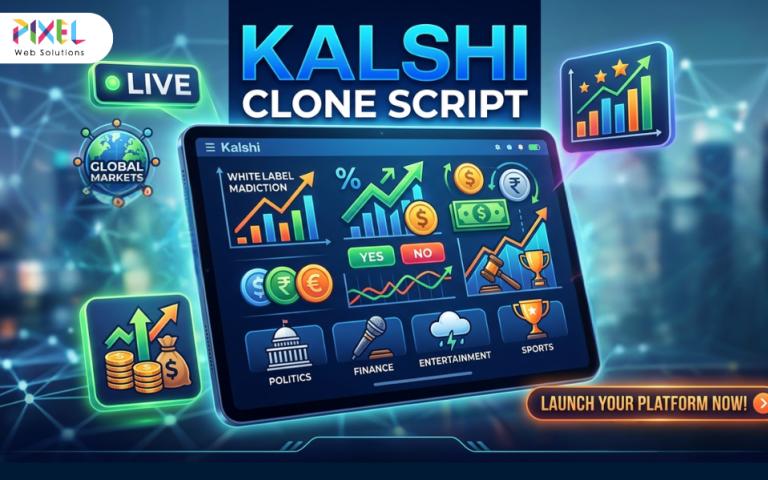
Coinexra provides a Kalshi Clone Script designed to help businesses establish customizable event-based trading platforms. Its listed capabilities include a real-time trading engine, instant order matching, contract price updates, event creation and management, wallet and payment integration, automated market settlement, risk controls, and a centralized admin dashboard.
This infrastructure gives founders a starting point for configuring market operations around their intended audience and business model. Instead of treating order matching as an isolated feature, businesses can assess how it connects with event listings, user accounts, transaction processing, and settlement workflows.
Explore Coinexra's Kalshi Clone Script solution to evaluate the platform components available for your prediction market business. The final configuration should be validated against expected trading volumes, security requirements, data-source arrangements, and the legal framework in each operating market.
Conclusion
Advanced order matching is central to a dependable event-contract trading experience. A platform needs transparent execution rules, accurate order-book updates, consistent account processing, and practical administrative controls. By evaluating these elements before launch, businesses can make a more informed decision about the infrastructure they choose and build a prediction market that is easier to operate as participation grows.