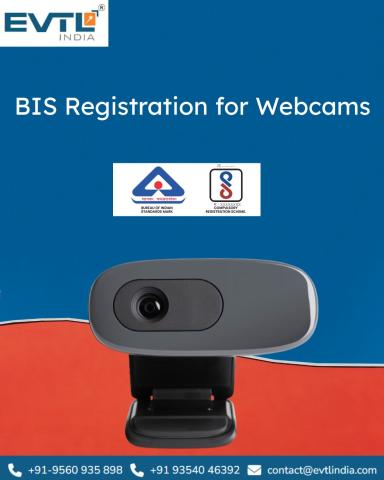

In India, confirming product quality and safety is a top priority for manufacturers, regulators, and consumers. To uphold these standards, the Bureau of Indian Standards (BIS) plays a necessary role by providing a framework for BIS Certification. This guide will explore the significance of BIS Registration, the process, and how to obtain and download a BIS certificate for your products.
What is BIS?
BIS stands for the Bureau of Indian Standards, an organization under the Ministry of Consumer Affairs, Food, and Public Distribution. BIS is responsible for setting quality standards for various goods and confirming that products meet these criteria to confirm consumer safety.
What is BIS Certification?
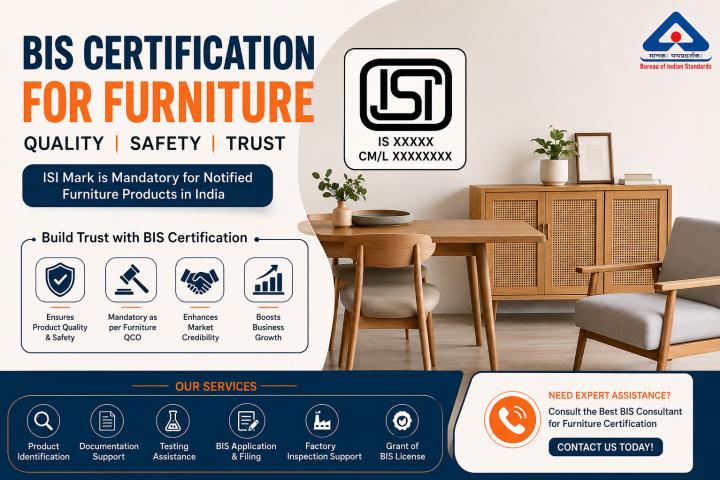
BIS Certification is a mark of quality assurance provided by BIS. It confirms that a product complies with the Indian standards prescribed for quality, safety, and performance. Products that receive this certification can display the ISI mark, indicating adherence to Indian standards.
Purpose of BIS Registration
The primary purpose of BIS Registration is to:
1.Confirm Product Quality: BIS certification confirms that products meet quality standards, promoting consumer safety.
2.Enhance Consumer Trust: Products with BIS certification are trusted by consumers, enhancing brand reputation.
3.Compliance with Regulations: Certain products are legally required to have BIS certification before they can be sold in India.
4.Reduce Import of Substandard Goods: BIS certification helps curb the import of non-compliant and inferior products.
5.Market Advantage: Certified products gain a competitive edge in the market.
Products Requiring BIS Registration
BIS has identified a list of products that require mandatory certification, such as:
•Electrical appliances (e.g., refrigerators, air conditioners)
•Cement
•Household goods (e.g., pressure cookers, LPG cylinders)
•Food products
•Electronics and IT products under the Compulsory Registration Scheme (CRS)
BIS Certificate Full Form
The BIS Certificate Full Form is the Bureau of Indian Standards Certificate, a document certifying that a product adheres to the established quality standards.
Types of BIS Certification Schemes
1.ISI Mark Certification Scheme: For products conforming to Indian Standards.
2.Compulsory Registration Scheme (CRS): Applicable for electronic and IT products.
3.Foreign Manufacturers Certification Scheme (FMCS): For foreign manufacturers exporting to India.
4.Hallmarking Scheme: For gold and silver jewelry.
BIS Registration Process
1. BIS Login and Portal Access
•Visit the official BIS website and use the BIS Login to access the portal.
•Create an account if you are a new user.
2. Application Submission
•Fill in the registration application form with details like product type, manufacturing address, and production capacity.
•Upload the necessary documents.
3. Document Submission
Key documents required for BIS Registration include:
•Business registration proof.
•Product test reports from a BIS-approved laboratory.
•Manufacturing process details.
•Proof of address.
•Trademark certificate (if applicable).
4. Payment of Fees
•Pay the applicable registration fee as prescribed under the scheme.
5. Product Testing
•Submit product samples to BIS-recognized laboratories for quality testing.
6. Factory Inspection
•BIS may conduct factory inspections to verify manufacturing processes and quality control systems.
7.Grant of BIS Certificate
•Upon satisfactory evaluation, BIS will issue a BIS Certificate.
How to Download BIS Certificate?
Once registered, follow these steps to download the BIS certificate:
1.Login to the BIS official portal using your BIS Login credentials.
2.Navigate to the 'Issued Certificates' section.
3.Search for the issued certificate using product details or registration number.
4.Download and save the certificate for records and future reference.
Validity and Renewal of BIS Certification
•The validity of a BIS certification varies but is generally for one to two years.
•Renewal applications should be submitted at least six months before expiration.
•Retesting of the product may be required for renewal.
Common Challenges in BIS Registration
1.Incomplete Documentation: Missing or incorrect documents can delay the process.
2.Product Non-Compliance: Failure to meet required standards during lab tests.
3.Delayed Inspections: Scheduling factory inspections may extend timelines.
4.Fee Payment Issues: Incomplete or incorrect payment can result in application rejection.
Benefits of BIS Certification
•Market Credibility: Certified products gain consumer trust.
•Compliance Assurance: Confirms adherence to legal requirements.
•Competitive Advantage: Certified products can command better market prices.
•International Acceptance: Enhances credibility in global markets.
Penalties for Non-Compliance
Manufacturers failing to obtain BIS certification for mandatory products may face:
•Monetary penalties.
•Confiscation of non-certified products.
•Legal action, including prosecution.
Final Remark
Obtaining BIS Registration is essential for manufacturers to confirm product compliance with Indian standards, build consumer trust, and gain a competitive advantage in the market. It not only certifies product quality but also helps businesses adhere to legal requirements. Insight the process, from BIS Login to obtaining and downloading the BIS certificate, is necessary for smooth registration and market access. By following proper procedures, manufacturers can confirm that their products meet Indian standards and enhance consumer satisfaction.