The rapid digitization of financial services in India has brought the Aadhaar Enabled Payment System (AEPS) into the spotlight. AEPS is an innovative banking platform that uses biometric authentication to facilitate financial transactions. It plays a pivotal role in driving financial inclusion by enabling individuals—particularly those in rural and remote areas—to access banking services without the need for debit cards, credit cards, or smartphones.
At the heart of this technology lies robust AEPS software, which integrates seamlessly with banking systems, biometric devices, and government APIs. This article provides a deep dive into AEPS software development—its technical architecture, security protocols, and integration capabilities—and outlines why it is essential in today’s digital financial ecosystem.
What is AEPS Software?
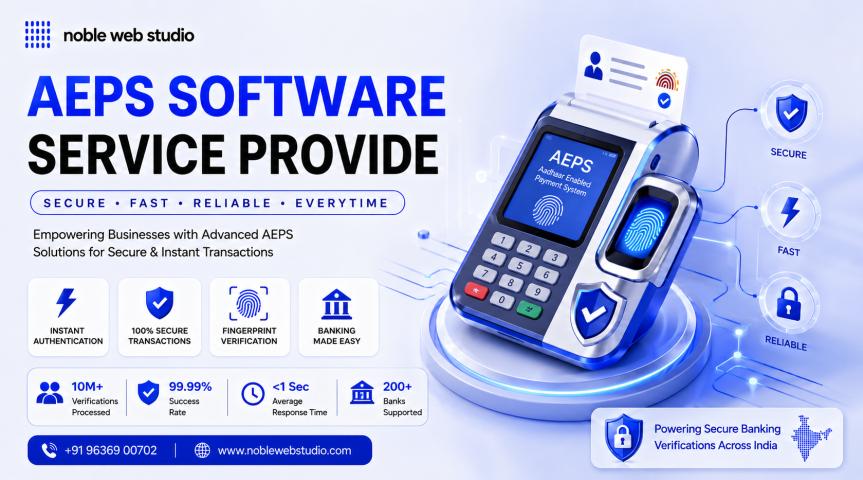
AEPS software is a digital platform that allows agents, retailers, and banking correspondents (BCs) to offer banking services to end users through Aadhaar authentication. Using this software, customers can:
-
Withdraw cash
-
Check balances
-
Transfer funds between Aadhaar-linked accounts
-
Access government subsidies via Direct Benefit Transfers (DBTs)
AEPS is powered by the National Payments Corporation of India (NPCI), and the transactions are authorized through the UIDAI (Unique Identification Authority of India) using Aadhaar-linked biometric data.
Key Components of AEPS Software Architecture
An effective AEPS platform relies on a scalable, secure, and modular architecture. Let’s break down the core elements:
1. User Interface Layer
This is the front end of the AEPS software, typically a web or mobile application used by agents and retailers. It offers:
-
Transaction input forms
-
Biometric device integration
-
Real-time notifications
-
Multilingual support for regional users
2. Middleware/Business Logic Layer
This layer handles the application’s internal processing:
-
Validates transaction data
-
Routes requests to the appropriate bank or NPCI server
-
Applies business rules such as transaction limits or commission logic
-
Generates reports and logs
3. API Integration Layer
The AEPS platform is API-driven, making integration with banks and external systems essential. Key APIs include:
-
NPCI API for transaction processing
-
UIDAI API for biometric authentication
-
Bank CBS APIs for fund transfer, deposit, and balance updates
4. Database Layer
A secure and scalable database is critical for storing:
-
User profiles
-
Agent and retailer information
-
Transaction history
-
System logs and compliance records
How AEPS API Integration Works
AEPS API integration is the backbone of AEPS software functionality. It enables the software to communicate with:
-
NPCI’s central switch
-
Banks’ core banking systems (CBS)
-
UIDAI’s Aadhaar authentication services
AEPS Transaction Flow:
-
The user enters their Aadhaar number and selects a service (e.g., cash withdrawal).
-
Their fingerprint is scanned using a biometric device.
-
AEPS software captures the data and calls the UIDAI API for authentication.
-
Once authenticated, the system sends a transaction request to NPCI, which routes it to the respective bank’s API.
-
The response is returned via the AEPS API and displayed to the user.
This real-time integration ensures that AEPS transactions are completed securely and instantly, improving trust and adoption among rural users.
Security Features in AEPS Software Development
Security is the foundation of any financial application—especially one that handles sensitive biometric and banking data. AEPS software incorporates several key security mechanisms:
1. Biometric Encryption
Biometric data (fingerprints or iris scans) are encrypted at the device level before transmission. This prevents data leaks and unauthorized access.
2. Two-Factor Authentication
AEPS transactions require dual verification—Aadhaar number + biometric scan—which significantly reduces fraud risks.
3. Secure API Calls
All communication between the AEPS software, UIDAI, and NPCI servers is secured using SSL/TLS protocols, preventing interception or data tampering.
4. Role-Based Access Control (RBAC)
Only authorized agents and administrators can access specific modules or functionalities, minimizing internal threats.
5. Transaction Logging and Monitoring
Every transaction is recorded in real time, allowing for audits, monitoring, and dispute resolution. AEPS software also includes fraud detection systems to identify suspicious patterns.
AEPS Integration with Other Services
One of the major strengths of modern AEPS platforms is their ability to integrate with other fintech services, creating a multi-utility platform for agents and customers alike. Examples include:
-
BBPS (Bharat Bill Payment System) for electricity, water, and mobile bill payments
-
DMT (Domestic Money Transfer) APIs for fund transfers to any bank account
-
PAN Card Services for user registration and commissions
-
Mobile Recharge and utility top-ups
These integrations allow AEPS agents to become one-stop service providers in rural India, increasing revenue opportunities and expanding digital reach.
Why Businesses Should Invest in AEPS Software
For fintech startups, CSPs (Customer Service Points), and rural entrepreneurs, investing in AEPS software is a strategic move. Here's why:
1. Revenue from Commissions
Agents and distributors earn commissions for every transaction, such as cash withdrawals and DBT payouts. AEPS enables regular earnings even in low-income communities.
2. Scalability and Reach
AEPS software can be deployed at scale with minimal infrastructure. All that is needed is a smartphone, biometric device, and internet connection.
3. Government Support
Initiatives like Jan Dhan Yojana and Digital India actively promote AEPS, making it a future-ready solution.
4. Brand Value and Trust
Providing AEPS services builds brand trust in underserved areas. It demonstrates a business’s commitment to inclusive growth.
Choosing the Right AEPS Software Provider
When selecting an AEPS software provider, businesses should evaluate the following:
-
NPCI-approved AEPS API integration
-
Robust admin and agent dashboards
-
Biometric device compatibility (Morpho, Mantra, Startek)
-
Real-time transaction logs and reports
-
Scalability for agent onboarding
-
24/7 technical support and compliance readiness
Noble Web Studio, for instance, is a recognized AEPS software development company providing API-driven solutions with admin control, reporting, and multi-service integration. Choosing a provider like this ensures a faster go-to-market and sustained support.
Conclusion
AEPS software is not just a digital product—it’s a gateway to financial empowerment for millions of Indians. With a robust architecture, high-end security protocols, and seamless integration, AEPS platforms have become essential tools in the digital transformation of rural banking. For entrepreneurs, developers, and fintech businesses, understanding the intricacies of AEPS software development is key to building scalable, secure, and profitable service platforms.
In an increasingly digital India, aligning with a trusted AEPS API provider ensures long-term growth, innovation, and impact in the evolving digital finance space.