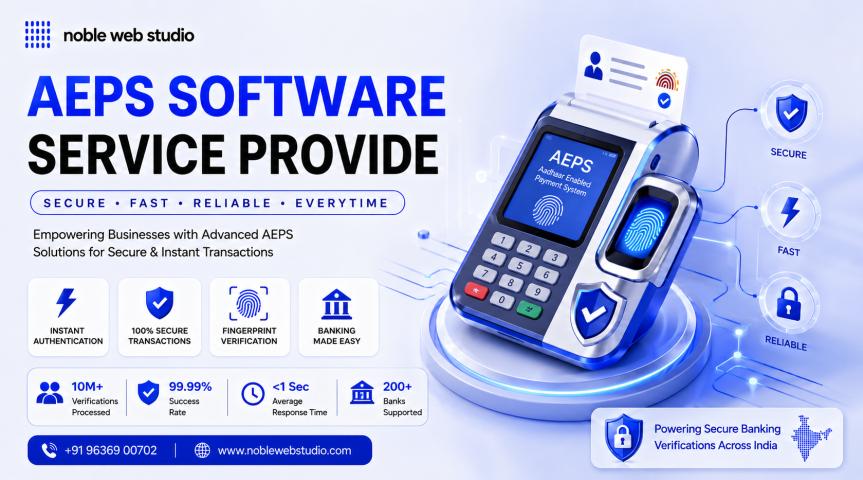
In India, the Aadhaar Enabled Payment System (AEPS) has revolutionized the way people conduct financial transactions, especially in rural and underserved areas. The integration of AEPS software with Aadhaar-based biometric authentication ensures that financial services are easily accessible to every citizen, making it a game-changer for financial inclusion in the country.
What is AEPS?
AEPS is a government-backed initiative that enables people to access banking services using their Aadhaar card as a medium. The system allows transactions to be conducted using biometric authentication (such as fingerprint or iris scan) linked to an individual’s Aadhaar number. It eliminates the need for physical documents or traditional banking methods like ATM cards, passwords, or PINs.
AEPS is particularly beneficial in rural areas where traditional banking infrastructure is limited, offering a convenient, secure, and user-friendly solution for a variety of financial services. AEPS software plays a central role in driving this innovation by making the technology accessible and functional on a large scale.
Key Features of AEPS Software
AEPS software powers a range of features that make Aadhaar-based transactions simple, secure, and effective. These features include:
-
Biometric Authentication: AEPS uses biometric data (fingerprints or iris scans) linked to the Aadhaar number to authenticate transactions. This is crucial in rural areas where people may lack literacy or access to devices like debit cards or mobile phones.
-
Cash Withdrawal: AEPS enables users to withdraw money from their bank accounts without needing an ATM card. This function is vital for people in areas without ATM infrastructure.
-
Fund Transfer: AEPS allows users to transfer funds from one account to another, even in remote areas. This service ensures that banking is accessible, regardless of geographical barriers.
-
Balance Inquiry: With AEPS software, users can check their account balance using biometric authentication, ensuring that users can stay informed about their finances without needing a physical ATM or bank branch.
-
Mini Statements: AEPS users can also access mini statements, which provide a summary of their recent transactions. This is particularly useful for those who are new to digital banking.
The Role of AEPS Software in Rural India
One of the most significant impacts of AEPS is its ability to provide financial services in rural India. In a country with millions of unbanked citizens, AEPS is bridging the gap and ensuring that everyone, regardless of their location, has access to essential banking services.
AEPS software allows local agents to offer banking services in areas where physical branches are scarce. These agents act as business correspondents, providing cash withdrawal, balance inquiries, and other banking services through devices powered by AEPS software.
By using AEPS, rural residents can access digital payments, transfer money to family members, and receive government subsidies and welfare payments directly into their bank accounts, reducing dependency on cash transactions.
How AEPS Software Ensures Seamless Transactions
The main advantage of AEPS software is its ability to ensure seamless transactions without relying on complex infrastructure. Here's how AEPS software makes this happen:
-
Ease of Use: AEPS removes the barriers to banking for individuals who are unfamiliar with digital systems or traditional banking practices. The biometric authentication makes it easy for even the illiterate population to access their accounts, making the process quick and straightforward.
-
Cost-Effective: AEPS eliminates the need for costly infrastructure such as ATMs or card readers, making it a more affordable solution for both banks and customers. This affordability ensures that services can be extended to rural areas where traditional banking would not be economically viable.
-
Security: By utilizing biometric authentication, AEPS ensures that each transaction is secure. Unlike traditional methods, such as PINs and passwords, biometric data is unique to each individual, reducing the risk of fraud and unauthorized access.
-
Wide Acceptance: AEPS is designed to be interoperable across multiple banks and service providers. This means that people can use the same Aadhaar-linked system to perform transactions at various points of service, enhancing convenience and flexibility.
AEPS and Digital Financial Inclusion
Digital financial inclusion is the goal of many government initiatives, and AEPS is at the heart of this vision. By offering seamless access to banking services, AEPS software is empowering individuals who have traditionally been excluded from the formal banking system.
In rural areas, where people may lack access to bank branches, AEPS brings the bank to the doorstep through business correspondents equipped with AEPS software. This encourages a cashless economy and enables people to access government subsidies, pensions, and other benefits directly.
Conclusion
AEPS software plays a crucial role in ensuring that India’s banking system is inclusive, secure, and accessible to all. By enabling Aadhaar-based transactions through biometric authentication, AEPS has revolutionized the way financial services are delivered, particularly in rural India. With its user-friendly features, seamless integration, and cost-effective nature, AEPS continues to drive digital financial inclusion across the nation, bringing banking services to millions of previously underserved people.