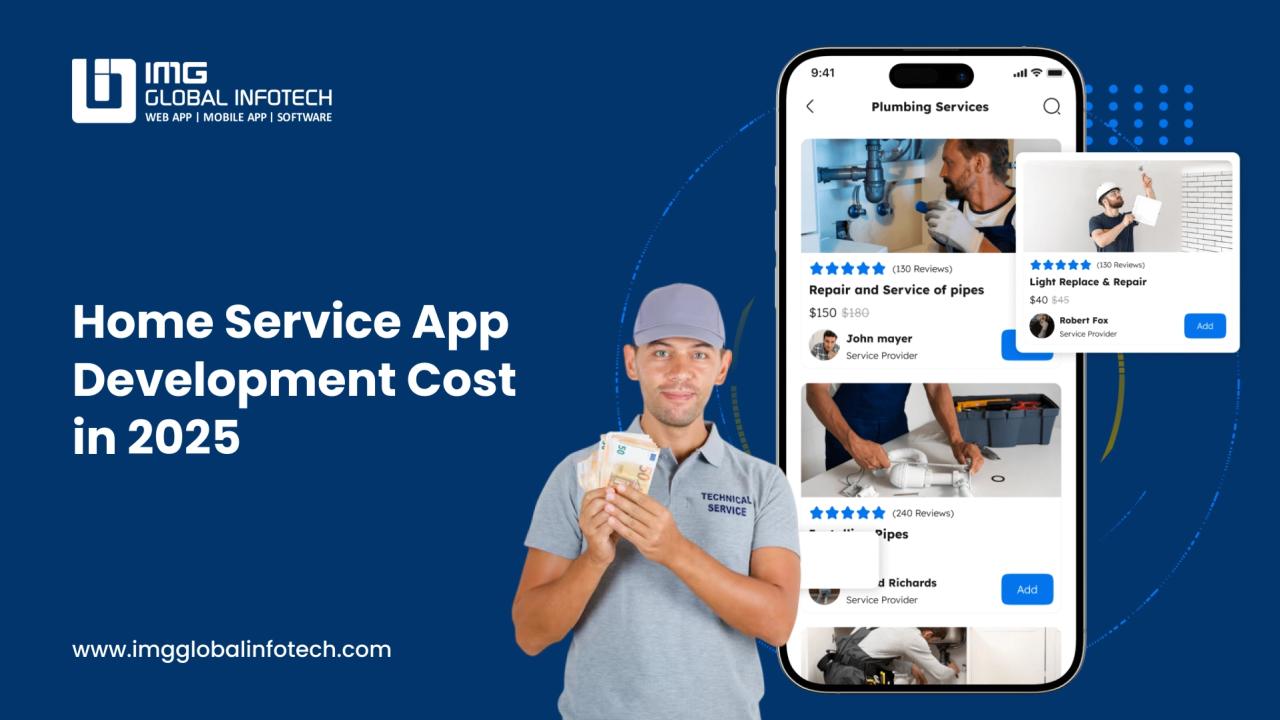

In today’s digital era, the demand for home service apps like UrbanClap, TaskRabbit, and Handy has skyrocketed. From on-demand cleaning and plumbing to appliance repair and painting, users now expect seamless access to services at their fingertips. If you’re planning to build a home service app in 2025, understanding the cost of development is a crucial first step.
In this article, we’ll explore the key factors that influence cost, feature requirements, technology stack, and price estimates based on different home service app development models.
Why Invest in a Home Service App?
- Rapid urbanization and busy life>
- Rising demand for contactless, on-demand services
- Monetization potential through subscriptions, commissions, and ads
- Enhanced customer loyalty with personalized app experiences
Key Features of a Home Service App
Before we dive into costs, let’s take a look at the essential features that your app may require:
For Users:
- User registration & login
- Service categories & search filters
- Real-time booking & scheduling
- Price estimates
- In-app payments
- Ratings & reviews
- Notifications
For Service Providers:
- Profile creation & verification
- Job request alerts
- Accept/decline requests
- In-app messaging
- Earnings dashboard
For Admin Panel:
- Dashboard analytics
- User & service provider management
- Category control
- Commission tracking
- Support and ticket system
Factors Influencing Home Service App Development Cost
1. App Complexity
- Basic: Simple app with minimal features
- Mid-level: Real-time booking, chat, notifications, payment
- Advanced: AI-powered suggestions, route optimization, multi-language, AR-based service previews
2. Number of Platforms
- Single Platform (iOS or Android): Lower cost
- Cross-Platform (Flutter/React Native): Cost-effective
- Native for Both Platforms: Higher cost
3. UI/UX Design
- Custom design increases cost but improves user retention.
4. Backend Infrastructure
- Real-time tracking, scalable cloud hosting, and secure databases add to backend costs.
5. Third-Party Integrations
- Payment gateways (Stripe, Razorpay)
- SMS/Email APIs
- Map & navigation services (Google Maps API)
6. Location of Development Team
| Region | Hourly Rate (USD) |
|---|---|
| USA/UK | $80–$150/hr |
| Eastern Europe | $40–$80/hr |
| India/UAE | $20–$50/hr |
Here’s a rough estimate based on complexity:
| App Type | Estimated Cost (USD) |
|---|---|
| Basic MVP | $10,000 – $20,000 |
| Mid-level App | $20,000 – $35,000 |
| Advanced On-Demand App | $30,000 – $49,000+ |
Conclusion
Investing in a home service app can open up tremendous business opportunities. However, development cost depends heavily on your app’s complexity, feature list, and choice of development partner. By understanding the cost structure and planning wisely, you can build a feature-rich, scalable, and profitable home service platform.