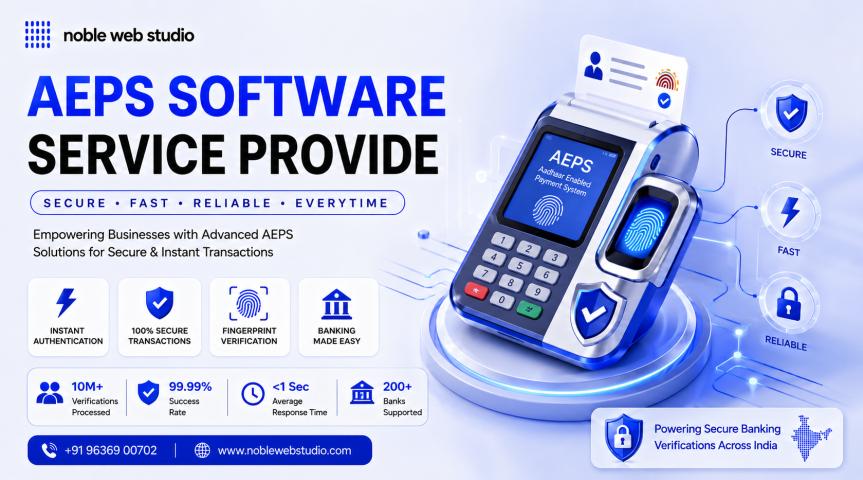
In recent years, an AEPS Software Provider has become a crucial part of promoting financial inclusion in rural India. AEPS, or Aadhaar Enabled Payment System, allows people to carry out banking transactions using their Aadhaar number and biometric authentication. This simple yet powerful technology has opened doors for millions of Indians living in remote areas who previously had limited access to formal banking services.
AEPS software providers offer the necessary technology and infrastructure to banks, agents, and business correspondents (BCs), enabling secure and convenient digital banking services in places where traditional bank branches are scarce. This article explores why AEPS software providers are essential for India's rural financial ecosystem and how they are helping build a more inclusive economy.
What Is AEPS and How Does It Work?
AEPS is a government-backed payment system that allows customers to perform banking transactions using just their Aadhaar number and fingerprint or iris scan for authentication. These transactions include cash deposits, withdrawals, balance checks, and fund transfers between accounts.
AEPS software providers develop platforms that connect banks, agents, and customers, making these transactions smooth and reliable. With biometric devices and mobile apps powered by AEPS software, people can access banking services at local points such as shops or kiosks, without needing to visit distant bank branches.
The Role of AEPS Software Providers in Rural India
1. Bridging the Banking Gap
Many rural areas lack proper banking infrastructure. AEPS software providers equip local agents and business correspondents with digital tools to offer banking services in villages and small towns. This technology allows residents to withdraw money, check balances, and transfer funds without traveling long distances.
2. Secure and User-Friendly Platforms
AEPS software providers design secure applications that use biometric authentication, reducing the risk of fraud and identity theft. These platforms are also user-friendly, supporting agents who may have limited technical knowledge. Easy navigation and real-time transaction updates build trust among rural users.
3. Boosting Financial Literacy
By making banking services accessible and simple, AEPS software encourages rural communities to engage with formal financial systems. This exposure increases financial literacy and empowers individuals to save, invest, and plan for their future.
4. Supporting Government Initiatives
Many government welfare schemes use direct benefit transfers (DBT) linked to Aadhaar accounts. AEPS software providers enable beneficiaries to receive payments directly into their bank accounts and withdraw cash conveniently. This transparency reduces leakages and corruption.
Benefits for Agents and Entrepreneurs
AEPS software providers also benefit local entrepreneurs who become banking agents. These agents earn commissions for transactions processed through AEPS, helping them generate income and create jobs in rural areas. With reliable software solutions, agents can manage transactions smoothly and expand their customer base.
Key Features to Look for in AEPS Software
For agents and banks choosing AEPS software providers, important features include:
-
Seamless Aadhaar-based biometric authentication
-
Real-time transaction processing and settlement
-
Support for multiple banks and accounts
-
Easy-to-use interfaces for agents and customers
-
Security compliance with RBI and UIDAI guidelines
-
Detailed transaction reporting and commission tracking
These features ensure a reliable and scalable AEPS business model that can grow with increasing demand.
Challenges and Future Outlook
Despite its success, AEPS adoption faces challenges like inconsistent internet connectivity, occasional biometric failures, and low awareness among users. However, ongoing improvements in technology and training programs by AEPS software providers are steadily overcoming these issues.
Looking ahead, AEPS is expected to integrate with other digital payment modes and expand to include more financial services like microloans and insurance, further strengthening rural financial inclusion.
Conclusion
In conclusion, AEPS software provider play a vital role in making banking accessible to rural India. Their technology bridges gaps in traditional banking infrastructure, promotes financial literacy, and supports government welfare programs. By empowering local agents and providing secure, easy-to-use platforms, AEPS software providers are helping millions of Indians step into the formal financial system.
As India progresses toward a more inclusive digital economy, AEPS software will remain a key driver of financial inclusion, transforming lives and livelihoods in the remotest parts of the country.