In recent years, aeps software development has become an important tool in ensuring that government schemes and Direct Benefit Transfer (DBT) programs reach the right people at the right time. The Aadhaar Enabled Payment System (AEPS) allows citizens to access banking services through their Aadhaar number and biometric verification. This system plays a big role in India’s mission to bring transparency, speed, and efficiency to government welfare services.
As India continues to expand its digital infrastructure in rural and semi-urban areas, AEPS software is making a real difference in delivering government support directly to people’s bank accounts.
What Is AEPS and Why Is It Important?
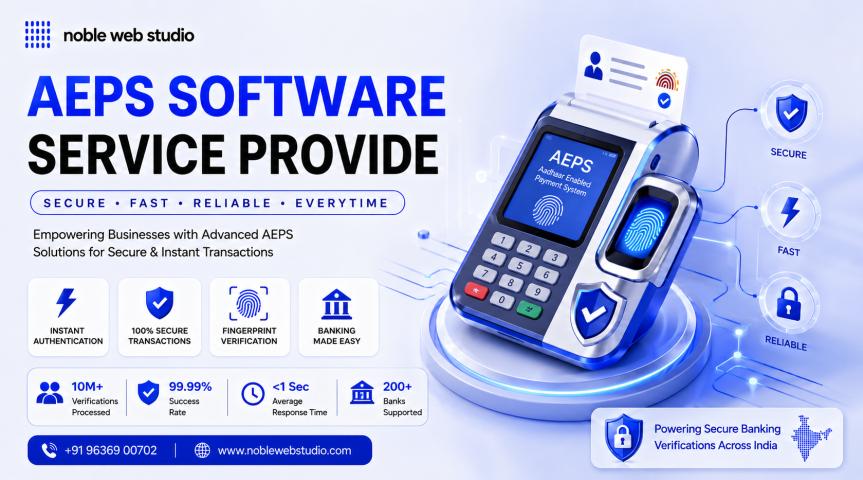
AEPS is a digital banking platform that works with Aadhaar authentication. It enables users to perform financial transactions like cash withdrawal, balance inquiry, and mini statements using just their Aadhaar number and a fingerprint scan. No debit card, ATM, or smartphone is needed.
For millions of people in India who don’t have easy access to banks or ATMs, AEPS gives them a simple and safe way to manage their money. For the government, it offers a reliable way to send welfare benefits directly to the people who need them, without involving middlemen.
How AEPS Supports Direct Benefit Transfers (DBT)
One of the biggest successes of AEPS software has been in supporting DBT programs, where subsidies and financial aid are transferred directly into beneficiaries’ bank accounts. These include:
-
PM Kisan (for farmers)
-
MGNREGA wage payments
-
Social pensions
-
LPG subsidies
-
Scholarships and other welfare schemes
AEPS software helps ensure that the DBT funds are withdrawn easily by beneficiaries, even in areas where banking infrastructure is limited. Retail agents and CSPs (Customer Service Points) equipped with AEPS systems and biometric scanners act as mini-bank branches for people in remote locations.
Key Benefits for Government and Citizens
-
Transparency: AEPS reduces the risk of fraud and corruption because funds are delivered directly to verified Aadhaar-linked bank accounts.
-
Efficiency: With AEPS, people can access their funds on time without needing to travel far. This is especially important in rural areas.
-
Cost-effective Delivery: The government saves money by cutting down on the need for physical infrastructure and middlemen.
-
24/7 Access: AEPS agents can serve people even outside banking hours, giving flexibility to citizens.
-
Secure Transactions: Biometric verification ensures the money is withdrawn by the rightful person.
AEPS Software Features That Help Government Programs
Modern AEPS platforms come with admin dashboards, real-time reports, and multi-agent monitoring. These tools help authorities track how funds are being withdrawn and whether there are any delays or issues.
Additionally, many AEPS systems are now being integrated with mobile recharge, utility bill payment, and insurance services. This makes the agent model more sustainable, as they earn commission on multiple services.
The ability to operate on low internet bandwidth and support for local languages also make AEPS ideal for use in deep rural areas.
Growing Need for Reliable AEPS Software
As government schemes continue to grow, the demand for robust, scalable, and secure AEPS platforms is increasing. Governments and service providers need systems that can handle high transaction volumes without errors or delays.
This is why choosing the right aeps software development company is essential. A good provider not only offers stable software but also ensures proper support, training, and updates to match government policy changes and technological upgrades.
Conclusion
AEPS software has transformed the way government welfare schemes and DBT programs are delivered in India. With its simple, secure, and accessible platform, AEPS bridges the gap between the banking system and the rural population. It helps ensure that no deserving citizen is left out of the digital financial system.
As India moves forward in its digital journey, strong and reliable aeps software development companies will play a central role in making public welfare more efficient, transparent, and inclusive.