In today’s digitally transformed world, Artificial Intelligence (AI) has become the heartbeat of innovation. From virtual assistants and personalized experiences to autonomous systems and predictive analytics, AI technologies are embedded into the fabric of modern applications. While Python often dominates the AI conversation, another stalwart in the software world—Java—is making significant strides in AI development, especially with the emergence of powerful libraries like Deeplearning4j.
This blog explores the growing potential of Java in AI, the advantages it brings to developers, and how companies—whether a Java development company, an Android app development company, or an Artificial Intelligence development company—can tap into Java's ecosystem to build robust, scalable AI-driven solutions.
Why Java Still Matters in the AI Era
Java may be decades old, but it's far from outdated. Known for its stability, performance, and platform independence, Java continues to power enterprise applications across industries. When it comes to AI, Java offers several compelling advantages:
1. Enterprise Compatibility
Java has been the backbone of enterprise applications for years. Its integration into existing systems is seamless, making it an ideal choice for organizations that want to adopt AI without rebuilding their entire tech stack.
2. Scalability and Speed
Java is designed for high performance and large-scale systems. Its multithreading capabilities and memory management make it suitable for complex AI algorithms that require significant computational power.
3. Cross-Platform Support
With the Java Virtual Machine (JVM), Java applications can run on any platform. This portability ensures that AI applications can be developed once and deployed anywhere, including on mobile devices and embedded systems.
4. Strong Ecosystem
Java boasts a rich ecosystem of libraries, frameworks, and tools, along with a vast developer community. It also has mature support for big data tools like Hadoop and Spark, both of which are essential for large-scale AI projects.
Deeplearning4j: Java’s Flagship Deep Learning Library
Among the AI libraries available for Java, Deeplearning4j (DL4J) stands out as a powerful and production-ready tool for deep learning. Developed by Skymind, DL4J is the first commercial-grade, open-source deep learning library written for Java and Scala.
DL4J supports neural networks, deep belief networks, convolutional neural networks, and more. It integrates smoothly with big data frameworks, and because it's written in Java, it's highly compatible with enterprise-grade applications.
Key Features of Deeplearning4j:
-
Support for both CPUs and GPUs
-
Integration with Apache Spark and Hadoop for distributed computing
-
Built-in tools for model training, evaluation, and visualization
-
Seamless interaction with Java-based applications
For a Java development company aiming to enter or scale its presence in the AI space, DL4J offers the tools necessary to build sophisticated AI models without leaving the Java ecosystem.
AI Applications Built with Java
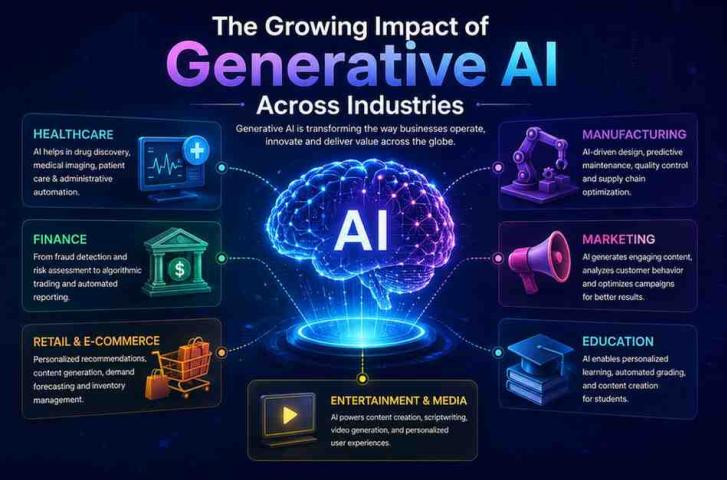
Contrary to common belief, Java is being used extensively in AI across various industries. Here are a few domains where it shines:
1. Financial Services
AI in finance is revolutionizing fraud detection, algorithmic trading, and credit scoring. Java's speed and precision make it ideal for high-frequency trading and risk analysis tools.
2. Healthcare
From patient diagnostics to personalized treatment recommendations, Java-based AI systems are being used to manage and interpret massive datasets. Java's reliability is particularly beneficial in healthcare, where accuracy is critical.
3. Retail and E-Commerce
AI-powered recommendation engines, customer segmentation tools, and supply chain optimizations can be implemented in Java. For companies with existing e-commerce platforms in Java, integrating AI becomes more efficient.
4. Manufacturing and IoT
Java’s ability to handle real-time data and integrate with Internet of Things (IoT) devices makes it ideal for predictive maintenance, smart automation, and machine vision applications.
5. Telecommunications
Telecom companies use AI for network optimization, customer support automation, and churn prediction. Java-based systems, which are common in telecom infrastructures, can be upgraded with AI functionalities without major rewrites.
Java and Android: AI at Your Fingertips
With mobile AI on the rise, particularly in industries like health, retail, and education, the synergy between Java and Android becomes increasingly important. Java has long been one of the core languages for Android development. This opens up opportunities for an Android app development company to bring powerful AI features directly into users’ hands.
Benefits for Android App Developers:
-
On-device inference for real-time processing
-
Improved user experience through predictive and personalized features
-
Enhanced security and privacy by reducing cloud dependency
-
Competitive edge through smart automation features in mobile apps
As AI capabilities become a standard expectation in mobile applications, Java’s native compatibility with Android makes it easier to integrate intelligence into apps without relying on external services.
The Role of Java Development Companies in AI
A modern Java development company is no longer just a service provider for enterprise applications. With tools like Deeplearning4j, Weka, MOA, and Smile, Java developers are uniquely positioned to lead in AI development.
Such companies can:
-
Modernize legacy Java applications with AI capabilities
-
Develop AI-powered web and mobile apps
-
Build scalable data pipelines for machine learning models
-
Collaborate with data scientists to transition models into production
Moreover, Java’s strength in backend development, combined with AI capabilities, allows these firms to offer full-stack intelligent systems.
Artificial Intelligence Development Company Perspective
For a specialized Artificial Intelligence development company, Java is an underutilized yet potent tool. While Python remains dominant for model research and prototyping, Java is preferred for deployment, especially in business environments where performance, maintainability, and security are critical.
Java’s capabilities enable AI development companies to:
-
Deliver end-to-end solutions from data ingestion to intelligent decision-making
-
Build AI modules that integrate with cloud services and APIs
-
Support large-scale, distributed AI applications
-
Optimize and deploy AI models for edge computing and mobile devices
By mastering Java’s AI libraries, these companies can offer more diverse and technically sound services to clients with existing Java infrastructure.
Challenges in Java AI Development
Despite its strengths, Java does face some hurdles in the AI domain:
1. Community Size
Python has a much larger and more active AI community. This means Java developers may find fewer learning resources or open-source models compared to Python.
2. Verbosity
Java's syntax can be more verbose, which makes quick prototyping slower than Python. However, this is offset by better readability and maintainability in large-scale systems.
3. Tooling Integration
Many of the latest AI tools and frameworks are initially developed for Python. While Java-compatible alternatives are growing, there may still be integration challenges.
Nevertheless, these challenges are steadily being addressed, with more cross-language tools and bridges being developed to allow seamless integration between Java and Python environments.
The Future of Java in AI
As enterprises continue to embrace AI, the need for production-ready, scalable, and secure AI applications is becoming critical. Java, with its long-standing reputation for enterprise reliability, is perfectly positioned to meet this need.
Key trends pointing to Java’s growing relevance in AI include:
-
Integration of Java with modern AI frameworks and cloud platforms
-
Growing ecosystem of Java-compatible AI tools
-
Increased focus on AI for edge and mobile devices where Java is strong
-
Rising demand for AI in enterprise systems where Java dominates
For developers, businesses, and tech service providers, mastering AI development in Java opens doors to a broad array of innovation opportunities.
Conclusion
Java may not be the first language that comes to mind when you think of Artificial Intelligence, but it’s quietly becoming a powerful player in the field. With tools like Deeplearning4j and a strong ecosystem of machine learning libraries, Java is enabling developers and companies to build scalable, high-performance AI solutions.
Whether you're a Java development company looking to enhance your service offerings, an Android app development company aiming to integrate smart features into mobile apps, or an Artificial Intelligence development company seeking enterprise-grade tools, Java provides a stable, scalable, and efficient path forward in the AI revolution.