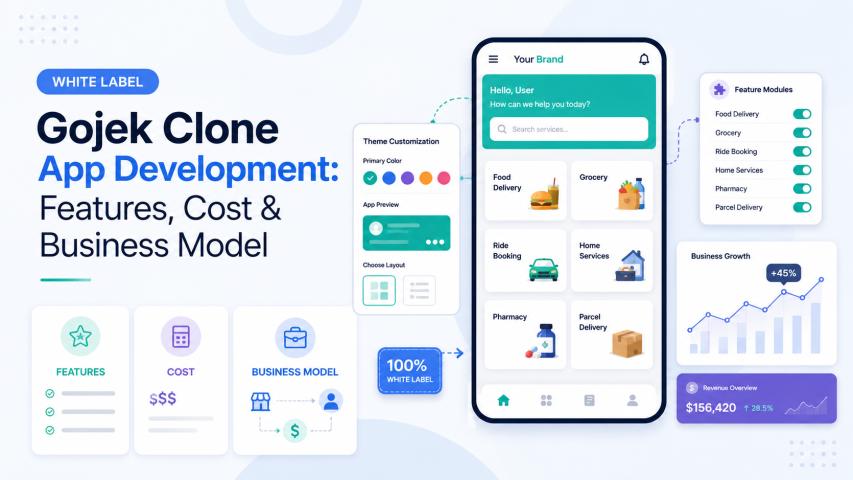

In the digital publishing world, the demand for eBooks and audiobooks continues to surge. Readers and listeners are increasingly turning to digital solutions for convenience and accessibility. For startups aiming to enter this space, the choice between developing a custom app and opting for a white label ebook platform is a critical one. More often than not, startups are leaning towards white label solutions, and for good reason. These platforms offer speed, cost efficiency, and reliability—elements that are essential for any early-stage business. Let’s explore in detail why startups are choosing white label eBook platforms over custom development.
The Growing Popularity of Digital Publishing
The digital content industry has seen exponential growth in recent years. With the rise in smartphone usage and the popularity of on-the-go content consumption, eBooks and audiobooks have become mainstream. Consumers are looking for engaging and accessible content, while businesses are exploring ways to meet this demand through platforms that offer scalability, personalization, and monetization opportunities.
For startups, entering the digital publishing industry seems like an attractive venture. However, the journey from concept to launch can be complicated, especially when it comes to mobile app development. That’s where the option of using a white label ebook platform becomes increasingly appealing.
What Is a White Label eBook Platform?
A white label ebook platform is a pre-built solution that allows companies to brand and customize the app as their own without having to develop it from scratch. It comes with ready-to-use features such as content management, user interface customization, payment gateway integration, and backend support.
With this model, startups can launch an eBook or audiobook app in a much shorter timeframe and with significantly fewer resources compared to custom app development. It enables them to focus more on content strategy and marketing rather than the technical complexities of software development.
Time to Market Is Crucial for Startups
One of the primary reasons startups opt for a white label ebook platform is the reduced time to market. In a competitive industry, launching an app quickly can mean the difference between success and failure. A white label solution allows startups to deploy their platforms within weeks, while custom development can take several months or even a year.
Startups often operate under tight timelines, especially when they are trying to capture a market opportunity or meet investor expectations. With a white label app for sale, entrepreneurs can get their product out to users faster, test the waters, and iterate based on user feedback.
Cost Efficiency and Budget Management
Custom development involves a significant financial investment. It requires hiring a team of developers, designers, QA testers, and project managers. The cost continues to rise with maintenance, updates, and bug fixes. For startups operating on a lean budget, this approach can quickly exhaust financial resources.
White label ebook platforms offer a more budget-friendly alternative. They come at a fixed or subscription-based price, allowing startups to predict and manage their expenses more effectively. This cost efficiency is particularly beneficial for early-stage companies looking to maximize their return on investment.
Access to Advanced Features Without Technical Hassles
White label platforms come with a suite of features that are essential for a high-quality user experience. These include search functionalities, bookmarking, offline access, multi-device syncing, analytics dashboards, and user account management. Some platforms also offer integrated support for whitelabel audiobook app development, enabling startups to serve both readers and listeners under a single platform.
Creating such features from scratch would require extensive planning, development, and testing. With a white label solution, startups can offer a feature-rich experience to their users without the hassle of building everything internally.
Scalability and Reliability
White label ebook platforms are designed to support scalability. As a startup grows, the platform can handle increased traffic, a larger content library, and more users without requiring major overhauls. These platforms are built on robust backend infrastructure, often cloud-based, to ensure high performance and reliability.
In contrast, a custom-built solution may require significant redevelopment as the user base grows. This can result in delays, downtimes, and increased costs. Startups looking to scale rapidly prefer a white label solution that is tested, proven, and capable of evolving with their needs.
Focus on Core Business Goals
When startups use a white label ebook platform, they can focus their energy on core business areas such as content acquisition, marketing, user engagement, and monetization strategies. They don’t have to get bogged down by the technicalities of app development.
This freedom allows founders and their teams to build brand awareness, form partnerships with publishers or content creators, and experiment with pricing models. Additionally, the ability to work on audio ebook app development within the same ecosystem helps startups offer more value to their users.
Easier Maintenance and Updates
Maintaining a custom app requires a dedicated tech team that can manage updates, security patches, and user support. For startups, building such a team may not be feasible at the outset. With a white label app, the platform provider handles ongoing maintenance and system updates. This ensures that the app remains secure, functional, and up-to-date with minimal effort from the startup.
Moreover, white label solutions often evolve based on market trends and user feedback, and startups benefit from these improvements without additional investment.
Flexibility and Custom Branding
Despite being ready-made, white label ebook platforms offer a surprising degree of customization. Startups can tailor the app’s interface, logo, color schemes, and other branding elements to align with their identity. This level of personalization allows them to build a unique presence in the market while leveraging a reliable backend.
Some providers also offer customization services for additional features or integrations, giving startups more control over the user experience. This balance of flexibility and convenience is another reason why white label solutions are gaining popularity.
Conclusion
Startups entering the digital publishing space face several challenges, from tight budgets to fast-moving competition. Choosing a white label ebook platform provides them with a head start by offering an affordable, scalable, and feature-rich solution that can be launched quickly.
Rather than spending months building a product from scratch, startups can focus on what really matters—creating compelling content, attracting users, and generating revenue. With growing support for white-label audiobook app development and versatile white-label app options for sale, it’s clear why this model is becoming the go-to choice for modern digital publishing ventures.