Why Mobile-First Fintech Companies Are Betting On Flutter
The financial technology (fintech) landscape is relentlessly evolving, driven by an insatiable demand for faster, more intuitive, and highly secure digital financial services. In this mobile-first era, where a user's entire financial life can be managed from a smartphone, the choice of technology stack is paramount. Among the myriad of development frameworks, Google's Flutter has emerged as a formidable contender, rapidly becoming the go-to choice for ambitious fintech companies. Its unique blend of performance, rapid development capabilities, and stunning UI rendering addresses the core needs of the modern financial application.
As we move deeper into 2025, the dominance of mobile in fintech is undeniable. According to a 2025 report by Hyperlink InfoSystem, Flutter is now the 8th most popular framework, actively used by over 2 million developers. This article delves into the strategic advantages that compel mobile-first fintech companies to bet big on Flutter, examining its technical prowess, economic benefits, and long-term viability.
The Need for Speed: Accelerated Development & Time-to-Market
In the fast-paced fintech world, being first to market with innovative features can make all the difference. Flutter's architecture is inherently designed for speed, both in terms of development cycles and application performance. This agility is a critical competitive advantage.
Flutter's "hot reload" and "hot restart" features are revolutionary for developers. They allow instantaneous reflection of code changes in the running application without losing the application's state. This dramatically reduces iteration time, enabling developers to experiment with UI designs and logic almost in real-time. For fintech companies, this means faster prototyping, quicker bug fixes, and the ability to roll out new features, promotions, or security patches with unprecedented speed. This accelerated development directly translates to a faster time-to-market, allowing fintechs to capture opportunities and respond to market demands more efficiently than their competitors.
Cross-Platform Prowess: One Codebase to Rule Them All
One of Flutter's most compelling offerings is its true cross-platform capability. Unlike other frameworks that might rely on bridges to native components, Flutter compiles directly to machine code, providing near-native performance on both iOS and Android from a single codebase.
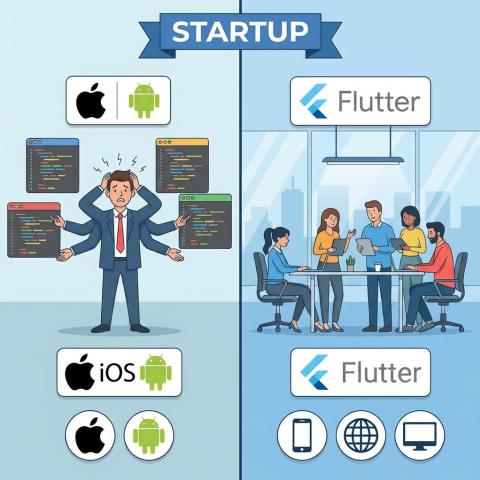
This "write once, deploy everywhere" approach is a game-changer for mobile-first fintech companies. Historically, developing separate native applications for iOS and Android was resource-intensive, requiring distinct development teams, separate codebases, and often leading to inconsistencies in user experience and features. With Flutter, fintechs can:
Reduce Development Costs: A single codebase significantly slashes development expenses, as there's no need to hire separate iOS and Android development teams. This efficiency extends to testing and maintenance, further optimizing costs.
Ensure Consistent User Experience: By using a unified codebase, fintech companies can guarantee a consistent look, feel, and functionality across all platforms, fostering a stronger brand identity and improving user trust.
Broaden Customer Reach: Reaching both major mobile ecosystems simultaneously with a high-quality application ensures a wider customer base from day one.
The ability to streamline development efforts and maintain consistency across platforms is invaluable in a sector where user trust and brand perception are paramount.
Security and Scalability: Building Trust in a Digital Realm
For fintech applications, security is not just a feature; it's the foundation of trust. Flutter offers robust capabilities to build highly secure and scalable financial applications, addressing the stringent regulatory and user demands of the industry.
Flutter's architecture, combined with the Dart programming language, allows for secure handling of sensitive data. It supports strong encryption libraries for data in transit and at rest, integrates seamlessly with secure APIs (like banking backends with TLS 1.3 endpoints), and provides out-of-the-box support for biometric authentication (fingerprint, facial recognition). These features are crucial for safeguarding user information and transactions, ensuring compliance with regulations like GDPR and PCI-DSS. Moreover, Flutter's modular and widget-based architecture inherently supports scalability. Applications built with Flutter can effectively handle a growing user base and heavy transaction loads without compromising performance. This makes it ideal for fintechs anticipating rapid growth and a high volume of concurrent users.
Robust Encryption: Supports industry-grade encryption libraries for data at rest and in transit.
Biometric Integration: Seamlessly integrates with fingerprint and facial recognition for enhanced security and user convenience.
Compliance Ready: Facilitates adherence to critical financial regulations like GDPR and PCI-DSS.
Scalable Architecture: Built to handle millions of users and transactions, ensuring smooth performance even under high load.
When considering a framework for long-term fintech solutions, the ability to hire dedicated Flutter developer talent who are adept at implementing these security and scalability measures is a strategic imperative.
Unparalleled UI/UX: Crafting Engaging Financial Experiences
User experience (UX) is a significant differentiator in the competitive fintech market. Users expect intuitive, visually appealing, and highly responsive applications that simplify complex financial tasks. Flutter excels in delivering exactly this.
Flutter's rendering engine directly draws UI components on the screen, bypassing OEM widgets and ensuring pixel-perfect control over the user interface. This enables developers to create highly customizable and expressive UIs with smooth animations and transitions, leading to an incredibly fluid and engaging user experience. For fintech apps, this means:
Beautiful, Brand-Consistent Designs: The ability to craft unique and consistent visual identities across platforms.
Fluid Interactions: Smooth animations and transitions that make financial transactions feel effortless and modern.
Intuitive Navigation: A widget-based approach allows for highly adaptable and user-friendly navigation flows, crucial for managing diverse financial features.
This focus on UI/UX is not merely aesthetic; it directly impacts user adoption, engagement, and retention, which are vital metrics for any mobile-first fintech.
Expert Voices & Consensus: Real-World Success Stories
The growing adoption of Flutter in the fintech sector is not just theoretical; it's backed by real-world success stories and a strong consensus among industry experts. Thought leaders and companies alike recognize Flutter's potential to transform financial application development.
Leading financial institutions and innovative fintech startups have embraced Flutter to great success. For instance, Google Pay itself leveraged Flutter to unify its Android and iOS applications, reportedly reducing engineering effort by 70% and lines of code by 35% (Source: pragma.co, January 2025). Another notable example is Tide, a leading business banking platform in the UK, which has heavily invested in Flutter for its mobile offerings, citing its speed and efficiency. Similarly, NuBank, one of Latin America's largest digital banks, has integrated Flutter into various parts of its ecosystem to deliver seamless user experiences. These examples underscore Flutter's business adaptability and its ability to meet the stringent demands of the financial sector.
According to a 2025 survey, 60% of businesses reported cost savings by choosing Flutter over native development, while Flutter apps showed 50% faster development cycles (Source: HashStudioz Technologies, February 2025). These statistics further cement Flutter's position as a cost-effective and efficient choice for fintech. Experts consistently highlight Flutter's ability to deliver native-like performance, accelerate development, and provide a rich user experience as key drivers for its increasing popularity in fintech. The robust and ever-growing community support, coupled with Google's continued investment in the framework, also provides a strong sense of long-term stability and innovation.
Actionable Insights & Recommendations for Fintech Leaders
For CTOs, product managers, and business owners evaluating Flutter for long-term use in their fintech strategies, here are some actionable insights and recommendations:
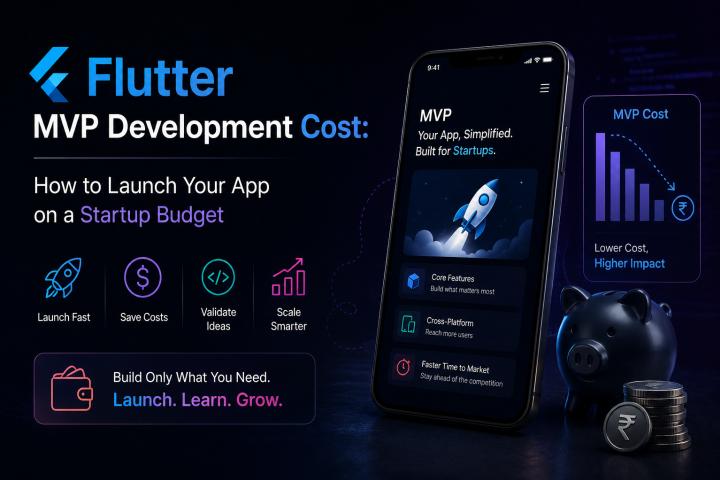
Prioritize a Strong MVP with Flutter: Leverage Flutter's rapid development capabilities to launch a Minimum Viable Product (MVP) quickly. This allows for early market validation, gathering user feedback, and iterating efficiently.
Invest in Skilled Talent: While Flutter simplifies many aspects of development, building secure, scalable, and high-performance fintech applications still requires expertise. Seek to hire dedicated Flutter developer teams or individuals with a strong understanding of financial systems and security protocols. Their proficiency in Dart and the Flutter ecosystem will be crucial.
Focus on State Management: As fintech applications grow in complexity, effective state management becomes critical. Research and choose a state management solution (e.g., BLoC, Provider, Riverpod) that aligns with your application's architecture and team's expertise to ensure maintainability and scalability.
Integrate Robust Security Practices: Beyond the inherent security features of Flutter, implement best practices for secure coding, regular security audits, and penetration testing. Ensure compliance with all relevant financial regulations from the outset.
Plan for Long-Term Maintenance: While Flutter offers simplified maintenance due to its single codebase, ongoing updates, bug fixes, and feature enhancements are essential. Factor in the cost and resources for continuous maintenance to keep the app secure, performant, and aligned with evolving user needs and regulatory changes.
By strategically adopting Flutter and building a competent team, fintech companies can unlock significant advantages in terms of development speed, cost efficiency, and user satisfaction, ultimately positioning themselves for sustained growth and innovation.
The Future is Fluid: Flutter's Continued Evolution in Fintech
The trajectory of Flutter in the fintech space looks exceptionally promising. As of 2025, Flutter's ecosystem continues to mature, with ongoing improvements in tooling, performance optimizations (like the Impeller renderer), and enhanced integration capabilities. The framework's adaptability also positions it well for emerging fintech trends.
Flutter is increasingly being leveraged for integrating with technologies like blockchain for DeFi applications, AI/ML for personalized financial advice and fraud detection, and even for developing "super apps" that consolidate a wide range of financial services into a single platform. Its ability to handle complex UI and diverse features makes it a natural fit for these multi-purpose financial ecosystems. The consistent evolution of Flutter, driven by Google and a vibrant open-source community, ensures that it remains a cutting-edge and future-proof choice for mobile-first fintech companies.
In conclusion, Flutter offers a compelling proposition for mobile-first fintech companies seeking to build high-performance, secure, and user-friendly applications with unprecedented speed and cost-efficiency. Its cross-platform capabilities, robust security features, and exceptional UI/UX rendering make it a strategic asset in a highly competitive market. By choosing to hire dedicated Flutter App developer talent and embracing this innovative framework, FinTech's can not only meet the current demands of digital finance but also position themselves at the forefront of future innovation.