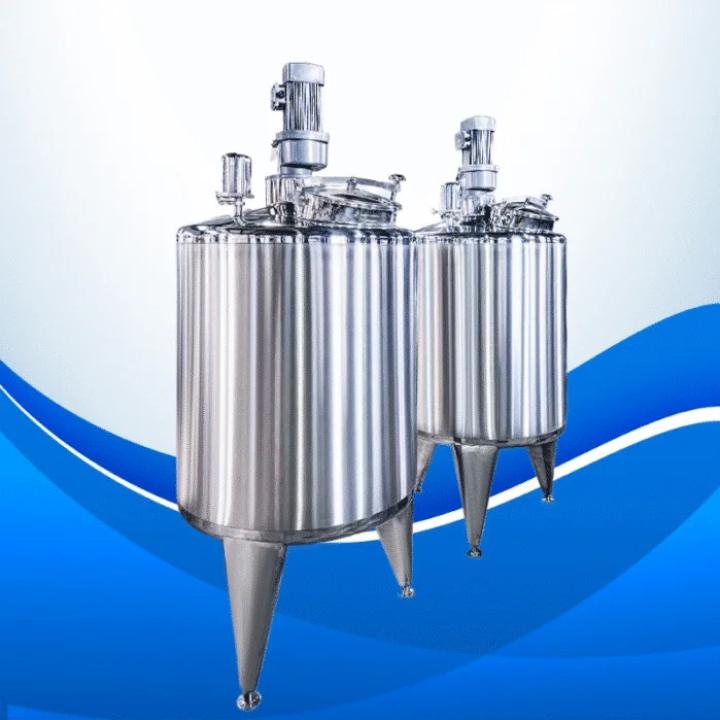
Industrial mixing operations demand equipment that can withstand years of continuous use while maintaining structural integrity and product purity. The choice of material directly impacts the lifespan, maintenance requirements, and overall performance of your mixing tank. Different industries face unique challenges, from corrosive chemicals to extreme temperatures, making material selection a critical decision that affects both operational costs and product quality.
Understanding the properties and limitations of various materials helps engineers and facility managers make informed decisions. The wrong material choice can result in premature failure, contamination issues, costly repairs, and production downtime. This analysis examines the most durable materials available and their specific applications in mixing tank construction.
Stainless Steel: The Industry Standard
Grade 316L Stainless Steel Properties
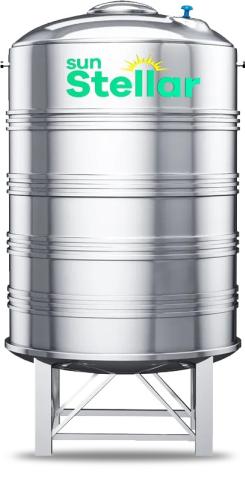
Stainless steel remains the most widely used material for mixing tank construction due to its balance of durability, corrosion resistance, and cost-effectiveness. Grade 316L offers superior performance in most industrial applications, containing 2-3% molybdenum that provides additional resistance to chlorides and acids. The low carbon content (less than 0.03%) reduces the risk of carbide precipitation during welding, maintaining corrosion resistance at weld joints.
This grade demonstrates excellent strength properties, with a yield strength of approximately 25,000 psi and tensile strength reaching 70,000 psi. The material maintains these properties across a wide temperature range, from cryogenic conditions to temperatures exceeding 800°F. The austenitic structure provides good ductility, allowing the mixing tank to absorb mechanical stresses without cracking.
Grade 304 vs 316L Comparison
Grade 304 stainless steel costs less than 316L but offers reduced corrosion resistance in chloride environments. The absence of molybdenum makes it unsuitable for coastal locations or applications involving salt water. However, 304 grade performs adequately in mild chemical environments and food processing applications where chloride exposure remains minimal.
The welding characteristics of both grades require careful attention to prevent sensitization. Proper heat treatment and welding procedures maintain the corrosion-resistant properties of the base material. Grade 316L generally provides better weldability due to its lower carbon content, reducing the need for post-weld heat treatment in many applications.
Specialized Alloys for Extreme Conditions
Hastelloy and Inconel Applications
When standard stainless steel cannot withstand the operating environment, specialized nickel-based alloys provide superior durability. Hastelloy C-276 offers outstanding resistance to both oxidizing and reducing environments, making it suitable for severe chemical processing applications. This alloy maintains strength at temperatures up to 1900°F while resisting stress corrosion cracking and pitting.
Inconel 625 provides excellent high-temperature strength and oxidation resistance, commonly used in mixing tanks handling hot corrosive materials. The alloy contains significant amounts of chromium, molybdenum, and niobium, creating a stable oxide layer that protects against further corrosion. These materials command premium prices but deliver extended service life in applications where standard stainless steel would fail rapidly.
Duplex Stainless Steel Benefits
Duplex stainless steels combine the benefits of austenitic and ferritic structures, providing higher strength than conventional grades while maintaining good corrosion resistance. Grade 2205 duplex stainless steel offers approximately twice the yield strength of 316L, allowing for thinner wall construction without sacrificing pressure ratings.
The dual-phase microstructure provides excellent resistance to stress corrosion cracking and chloride pitting. This makes duplex grades particularly valuable in offshore applications or processes involving elevated chloride concentrations. The higher strength-to-weight ratio can result in cost savings through reduced material usage, partially offsetting the higher alloy costs.
Carbon Steel with Protective Coatings
Epoxy and Polyurethane Coating Systems
Carbon steel mixing tanks with appropriate protective coatings offer significant cost advantages over stainless steel in suitable applications. High-performance epoxy coatings provide excellent chemical resistance while maintaining good adhesion to properly prepared steel surfaces. These systems typically include a primer coat, intermediate layers, and a topcoat designed for the specific chemical environment.
Polyurethane coatings offer superior abrasion resistance compared to epoxy systems, making them suitable for mixing tanks handling abrasive materials. The elastomeric properties of polyurethane allow the coating to flex with thermal expansion and contraction cycles without cracking. Proper surface preparation remains critical for coating adhesion and long-term performance.
Glass-Lined Steel Construction
Glass-lined carbon steel combines the strength of steel with the corrosion resistance of glass, creating a durable mixing tank suitable for acidic environments. The glass lining provides complete chemical inertness while the steel substrate handles mechanical loads. This construction method proves particularly effective in pharmaceutical and chemical processing where product purity cannot be compromised.
The glass lining process involves applying multiple coats of specially formulated glass frit, followed by high-temperature firing to create a uniform, impervious surface. Modern glass-lined mixing tanks can withstand thermal shock and mechanical impact better than earlier versions, though they still require careful handling to prevent chipping or cracking of the glass surface.
Composite Materials and Alternative Options
Fiberglass Reinforced Plastic (FRP) Advantages
FRP mixing tanks provide excellent corrosion resistance at a fraction of the weight of metal alternatives. The composite construction allows engineers to tailor the material properties by selecting appropriate resin systems and reinforcement patterns. Vinyl ester resins offer superior chemical resistance compared to polyester resins, while epoxy novolac resins provide excellent high-temperature performance.
The manufacturing process allows for complex geometries and integral components, reducing the number of joints and potential leak points. FRP tanks demonstrate excellent fatigue resistance under cyclic loading conditions, making them suitable for applications with frequent temperature or pressure variations. The low thermal conductivity reduces heat loss and can eliminate the need for external insulation in some applications.
Polypropylene and HDPE Considerations
Thermoplastic materials like polypropylene and high-density polyethylene (HDPE) offer good chemical resistance for specific applications while remaining cost-effective. Polypropylene demonstrates excellent resistance to acids, bases, and organic solvents at moderate temperatures. The material can be welded using thermoplastic welding techniques, creating leak-proof joints without gaskets or seals.
HDPE provides outstanding resistance to stress cracking and maintains flexibility at low temperatures. Both materials suffer from limited temperature resistance compared to metal alternatives, typically restricted to operating temperatures below 200°F. The lower modulus of elasticity requires additional structural support or thicker walls to achieve equivalent pressure ratings.
Material Selection Criteria and Decision Factors
Chemical Compatibility Assessment
Selecting the most durable material for your mixing tank requires thorough analysis of the chemical environment. Compatibility charts provide initial guidance, but actual testing with process materials remains the most reliable method for confirming suitability. Consider not only the primary process chemicals but also cleaning agents, sanitizers, and any potential contamination sources.
Temperature effects can dramatically alter chemical compatibility, with materials that perform well at ambient conditions failing at elevated temperatures. Concentration effects also play a significant role, as dilute solutions may be compatible with materials that cannot handle concentrated versions of the same chemicals.
Economic Analysis and Life Cycle Costs
Initial material costs represent only one component of the total ownership expense. Maintenance requirements, expected service life, and replacement costs must be factored into the decision process. A more expensive material that lasts twice as long while requiring less maintenance often provides better value than a cheaper alternative with higher operating costs.
Consider the costs associated with unplanned downtime, product contamination, and regulatory compliance when evaluating material options. Industries with strict quality requirements may justify higher material costs to ensure consistent product quality and avoid costly batch losses.
Conclusion
The durability of mixing tank materials depends on the specific operating environment and application requirements. Stainless steel grades 304 and 316L remain the most commonly specified materials due to their proven performance and reasonable cost. Specialized alloys like Hastelloy and Inconel provide superior durability in extreme chemical environments but at significantly higher costs.
Carbon steel with protective coatings offers cost advantages in suitable applications, while composite materials like FRP provide unique benefits in corrosive environments. The selection process requires careful evaluation of chemical compatibility, operating conditions, and economic factors to identify the most durable and cost-effective solution. Proper material selection ultimately determines the long-term success and reliability of your mixing tank installation.