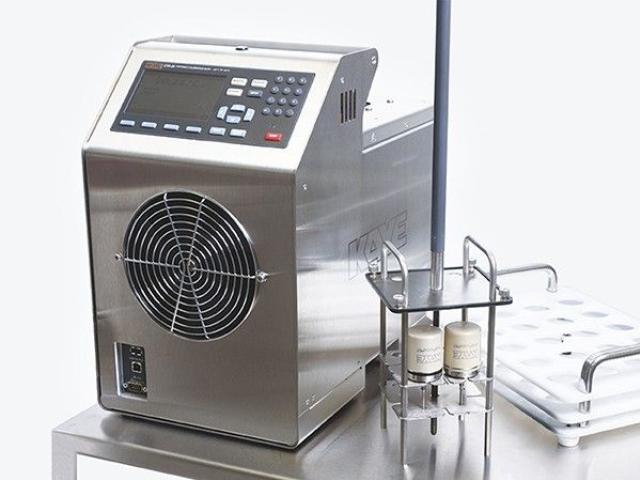
In industries where precision temperature measurement is critical - such as pharmaceuticals, food processing, aerospace, and manufacturing - calibration equipment plays an essential role. Two of the most widely used tools in this field are the Dry Block Calibrator and the Liquid Bath Calibrator. Both are designed to ensure that temperature sensors, thermometers, and other measuring devices deliver accurate readings, but they operate differently and serve distinct purposes.
What is a Dry Block Calibrator?
A Dry Block Calibrator is a temperature calibration device that uses a solid metal block to generate stable and uniform temperatures. The block is heated or cooled to a set temperature, and thermometers or probes are inserted into precisely sized wells in the block for calibration.
Dry block calibrators are widely appreciated for their portability, quick temperature stabilization, and ease of use in both laboratory and field environments. They are ideal for situations where a clean, dry, and efficient calibration process is required. Because they don’t use liquids, there’s no risk of contamination, making them especially suitable for cleanroom or pharmaceutical applications.
What is a Liquid Bath Calibrator?
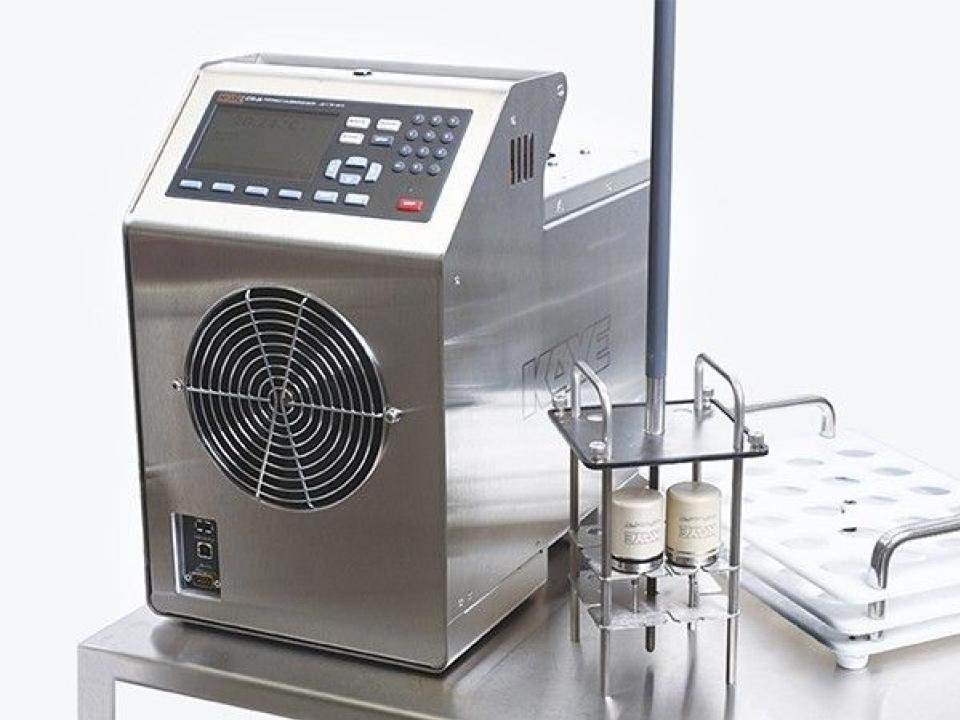
A Liquid Bath Calibrator uses a liquid medium - such as silicone oil or water - to provide stable and uniform temperatures for calibration. Temperature sensors are immersed in the liquid, which is continuously stirred to maintain consistency.
Liquid bath calibrators are known for their superior thermal transfer and ability to maintain uniform temperatures, even around irregularly shaped sensors. They can achieve higher accuracy than dry block calibrators, especially at extremely low or high temperatures. This makes them an excellent choice for calibration labs that require the highest precision.
Dry Block Calibrator vs. Liquid Bath Calibrator
While both devices are used for temperature calibration, they have key differences:
- Portability – A dry block calibrator is more compact and portable, making it suitable for on-site calibrations. A liquid bath calibrator is typically larger and more suited for stationary lab use.
- Accuracy – A liquid bath calibrator generally offers higher accuracy due to better thermal contact between the liquid and the sensor.
- Cleanliness – A dry block calibrator is cleaner to use, with no risk of spills or contamination.
- Temperature Range – Both can operate over wide temperature ranges, but liquid bath calibrator are often preferred for extreme temperatures.
Applications of Each Calibrator
- Dry Block Calibrator: Used in field calibration of industrial temperature sensors, HVAC systems, and manufacturing equipment.
- Liquid Bath Calibrator: Preferred in calibration laboratories, research institutions, and industries where ultra-high precision is essential.
Choosing the Right Calibrator
Selecting between a dry block calibrator and a liquid bath calibrator depends on your operational needs. If portability and cleanliness are priorities, a dry block calibrator is the ideal choice. If accuracy and thermal uniformity are paramount, especially in controlled environments, a liquid bath calibrator may be the better option.
Conclusion
Both the dry block calibrator and the liquid bath calibrator are indispensable tools in temperature calibration. While their applications differ, they share the same goal: ensuring measurement devices operate with maximum accuracy and reliability. By choosing the right calibrator for the job, businesses can improve quality control, meet regulatory standards, and maintain operational efficiency.