The fintech space is booming. In 2023 alone, over $51 billion was invested in fintech globally. Yet, more than 75% of fintech startups fail within the first five years. That’s a reality you can’t ignore.
Why does this happen? Because running a fintech start-up in 2025 is no longer just about offering digital services. It's about regulatory clarity, user trust, fast integrations, investor backing, and scale-ready solutions.
One of the major reasons for startup failure can be that they are unable to figure out how to overcome the challenges and turn them into opportunities.
Well, the market is full of ideas, but short on execution.
You may have the next big idea. But without the right structure and strategy, you might struggle to survive, let alone grow.
And that’s why it’s crucial to understand the real challenges and how you can turn each of them into a stepping stone for success in your digital payment system.
Let’s break them down one by one.
1. Navigating complex regulatory landscapes
Meeting regulatory standards is non-negotiable for any fintech start-up in 2025.
Let’s break down the risk and the way forward.
Ever-changing compliance requirements
You’re not just offering a mobile payment service, you’re managing people’s money. That means you might face constant updates in licensing, KYC/AML rules, data privacy laws, and cross-border restrictions. And every market operates differently depending on the type of digital payment services one is offering.
And one wrong step can result in heavy penalties or service shutdowns.
Solution: Adopt scalable, regulation-ready platforms
You don’t need to handle everything alone. To make your work easy, you can use a white-label digital payment system that adapts to local and global regulations. Choose platforms that offer compliance support for GDPR, PSD2, PCI-DSS, and more.
This keeps your operations smooth and future-ready.
2. Building customer trust in a crowded market
Gaining user trust in a saturated fintech space is one of your biggest hurdles today.
Here’s how this issue unfolds and what you can do about it.
Security concerns and lack of credibility
Your customers want assurance that their data remains safe and secure. And if they don’t feel their data and money are safe, they won’t stay. Most users will abandon a new fintech app after just one poor experience.
Ultimately, when customers' trust drops, so does your growth.
Solution: Prioritize transparency and security standards
You must offer a secure and transparent mobile payment system for your customers. Implement features like biometric login, real-time alerts, transaction history, and encrypted storage in your system. And communicate clearly, users love brands that keep them informed.
Build trust with transparency. Win loyalty with security.
3. Ensuring seamless payment infrastructure
A stable, responsive, and unified system is key to keeping your users active and satisfied.
Let’s look at what goes wrong and how to fix it.
System downtime and fragmented integrations
Slow load times, failed transactions, or clunky user journeys can damage your reputation fast. Worse, poor integrations with banks or agents create roadblocks in scaling.
You can’t afford friction in a business built on speed.
Solution: Use interoperable and scalable payment systems
You must choose platforms that offer 99.99% uptime and integrate easily with core banking systems, agent networks, and wallets. Plus, a seamless infrastructure helps you deliver a flawless user experience, and that’s what keeps customers coming back.
4. Accessing sustainable funding and investor confidence
Investors want speed, traction, and returns, but you need time to build and scale.
Here’s the common roadblock and how to move past it.
Short runways, long development cycles
Building a fintech product takes time. And your investors want results fast. So, if you take too long to launch or scale, you risk losing both funding and confidence.
Most startups burn out before they break even.
Solution: Launch MVPs using ready-to-deploy wallet solutions
If you are new to the market, it is always advisable to start by launching a minimum viable product. And you can accelerate your launch with white-label mobile wallet solutions. They reduce development time and cost for you. This helps you focus on traction and user acquisition.
So, prove your concept early, show results fast, and keep your investors excited.
5. Standing out in an overcrowded fintech space
You can’t afford to blend in with other traditional businesses because you don’t have time to adjust and settle into the financial space. Plus, the fintech market is already filled with lookalike digital payment solutions and identical features.
Let’s dive into what’s missing and how to stand apart.
Lack of differentiation in features or UX
Thousands of fintech apps offer the same things: P2P transfers, bill payments, and digital banking. If your app feels just like the others, why should users choose you?
So, you need to be memorable, you need to offer unique features than your peers to stand out in the fintech market competition.
Solution: Offer value-added services and personalization
To offer value-added services to your customers, you can add features like savings goals, gamified rewards, merchant cashback, and AI-driven expense tracking in your platform. Moreover, personalization increases retention, and value-added services boost engagement.
“Create a user journey they won’t forget”.
6. Scaling across borders with limited infrastructure
Emerging markets offer growth potential, but fragmented infrastructure often slows you down.
Here’s what’s holding you back and how to break through.
Infrastructure gaps in emerging markets
Expansion to regions like Africa or Southeast Asia brings opportunity, but also challenges. You have to deal with fragmented mobile networks, inconsistent regulations, and low banking penetration.
If your system isn’t flexible, you’ll struggle.
Solution: Use global-ready mobile wallet platforms
You can use platforms designed for emerging markets. Look for features like agent network support, offline functionality, multilingual UI, and regional currency adaptability.
This can unlock new users and revenue, without breaking your system.
How to turn challenges into growth opportunities
The challenges you face today can become your biggest growth drivers if you act strategically.
Let’s explore how to flip problems into progress.
Leverage pre-built, scalable fintech infrastructure
Instead of building from scratch, you can use proven digital wallet platforms. These help you launch fast, stay agile, and reduce tech debt. Also, you can focus on growth without any backend headaches.
Use regulatory compliance as a competitive advantage
When you showcase your licenses, secure payment flows, and compliant policies, customers and partners will trust you more, and so will regulators.
Offer a superior user experience through smart innovation
Use AI, automation, and smart design to create delightful experiences. Plus, show users that you're not just another fintech, you’re their preferred partner.
Turn security into a value proposition
Make your app’s security visible and understandable. You can add biometric logins, transaction alerts, and instant freezes. Let users feel in control and safe at every step.
Conclusion
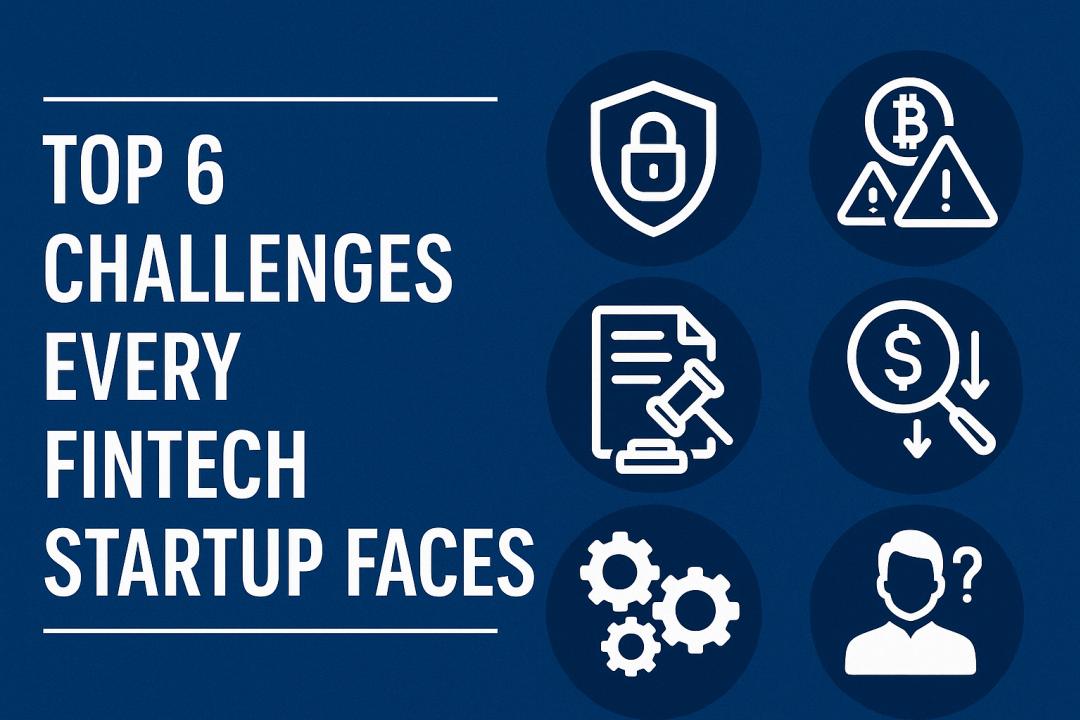
You now know the six most pressing challenges every fintech startup faces. But you also know something more important: how to turn each challenge into a growth lever.
With the right infrastructure, strategy, and mindset, your startup won’t just survive; it will lead.
Want to launch faster, scale wider, and build stronger relationships with your users? You have to choose the right mobile payment system for fintechs.
Get the digital wallet system built to empower fintechs like yours. Let your solution work smarter so you can grow faster.