Visible Light Communication (VLC), an innovative optical wireless technology, is rapidly transforming how data is transmitted using the visible spectrum of light. Operating by modulating LED light intensity to encode data, VLC offers numerous advantages over traditional radio frequency (RF) communication, including higher bandwidth, enhanced security, and immunity to electromagnetic interference. The year 2025 heralds an era of technological maturation and widespread adoption of VLC, enabling new applications across industries ranging from healthcare and smart cities to automotive and aviation.
According to Straits Research, the global visible light communication segment was valued at USD 52.83 billion in 2024 and is projected to grow from USD 88.46 billion in 2025 to a staggering USD 5,467.8 billion by 2033, growing at an exceptional CAGR of 67.45% during the forecast period (2025-2033). This explosive expansion reflects VLC’s transformative potential to address the ever-increasing demand for faster, secure, and interference-free wireless data transmission.
Technological Innovations and Emerging Applications
LED Arrays and Advanced Photodetectors
The backbone of VLC systems revolves around LED transmitters and photodetectors. Research showcases innovations in LED array configurations—from single LEDs to multi-element grids—significantly enhancing transmission distance and data rates. Novel photodetectors such as silicon PIN photodiodes (e.g., the BPW34) exhibit superior sensitivity and bandwidth, facilitating reliable optical-to-electrical conversions critical for high-speed VLC performance.
Healthcare and Electromagnetic-Sensitive Environments
VLC stands out in medical settings where RF signals can interfere with sensitive equipment such as MRI machines or pacemakers. Hospitals are increasingly deploying VLC-based communication networks for secure, high-speed data transmission without electromagnetic interference (EMI). Applications include patient monitoring systems, surgical robotics, and body sensor networks, where VLC ensures both reliability and safety.
Smart Homes and Internet of Things (IoT)
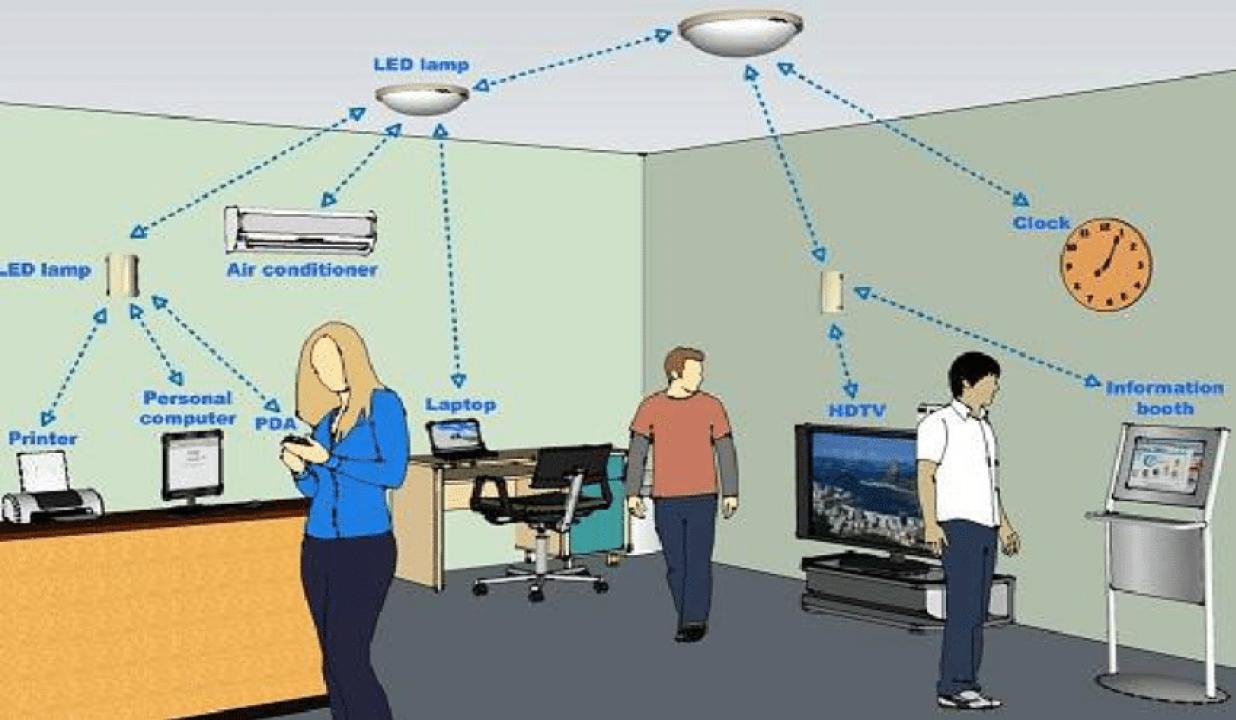
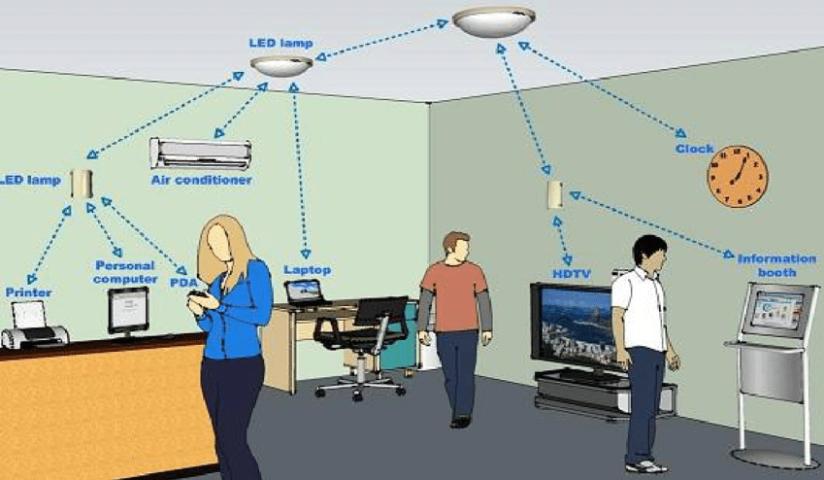
Integration of VLC into smart lighting systems enables IoT devices to communicate efficiently within homes and commercial buildings. VLC facilitates energy-efficient, high-capacity wireless networks supporting automated control of appliances, security sensors, and environmental monitoring. The dual function of LED lighting as both illumination and communication medium economizes infrastructure costs and enhances sustainability.
Vehicular Communication and Intelligent Transport Systems
Visible light communication is integral to vehicle-to-vehicle (V2V) and vehicle-to-infrastructure (V2I) communication networks, enabling low-latency, interference-resistant real-time data links. Streetlights and vehicle headlights equipped with VLC transmit critical safety data to reduce collisions, manage traffic flow, and improve autonomous driving capabilities.
Public Safety and Military Applications
The line-of-sight nature and high security of VLC make it ideal for sensitive communication in law enforcement, defense, and government sectors. VLC networks operate free from RF jamming and eavesdropping risks, ensuring uncompromised mission-critical communications. The technology also supports data transfer in confined and EMI-prone environments such as power plants and chemical factories.
Global Leaders and Country-Wise Updates
Osram Opto Semiconductors (Germany)
A pioneer in LED technologies, Osram focuses on commercial VLC modules for high-speed indoor and vehicular communication. Their innovations in high-efficiency white LEDs and photodetector integration contribute to enhanced VLC system performance.
PureLiFi (United Kingdom)
PureLiFi is a global forerunner in Li-Fi technology based on VLC principles, offering commercial solutions for enterprise wireless networking. The company develops secure, high-speed VLC networks tailored for enterprise, healthcare, and governmental use.
Vlux (USA)
Vlux specializes in developing VLC-enabled lighting systems and IoT connectivity solutions across commercial real estate and smart city projects. Their technology seamlessly integrates illumination and communication for smart building applications.
Philips Lighting (Netherlands)
Philips designs smart lighting systems supporting VLC capabilities to improve wireless connectivity in indoor environments. Their solutions aid in building automation, energy management, and space utilization optimization.
Asia-Pacific Focus
Countries including Japan, China, South Korea, and India are aggressively investing in VLC R&D and commercialization. Government initiatives promoting smart cities and digital infrastructure are catalysts for VLC deployments. Chinese firms dominate LED production and VLC component manufacturing, enhancing Asia-Pacific’s leadership in VLC innovation.
Recent Industry Developments and Strategic Initiatives
-
A study published in early 2025 confirmed VLC’s capability to transmit data up to 16.3 meters using multiple LED arrays, with optimized photodiodes achieving high data rates suitable for indoor and vehicular applications.
-
The integration of VLC into 5G and nascent 6G frameworks is underway, with VLC proposed to alleviate RF spectrum congestion and provide ultra-high-speed data backhaul solutions.
-
Healthcare VLC applications expanded, with hospitals globally deploying infrastructure supporting secure wireless communication free from RF interference.
-
Several smart city projects initiated VLC-enabled street lighting networks facilitating V2I communication, real-time traffic management, and public safety enhancements.
-
Progress in AI-optimized VLC system design and LED driver circuitry is increasing data throughput, coverage, and energy efficiency.
-
Standardization efforts, including IEEE 802.15.7 updates, support interoperability and ease of adoption in commercial VLC products.
Challenges and Future Outlook
Although VLC presents compelling benefits, challenges remain. The requirement for direct line-of-sight communication limits VLC’s utility in certain scenarios. Ambient light interference and integration with existing wireless infrastructure require ongoing innovation. However, continuous advances in modulation techniques, LED/photodetector design, and hybrid communication architectures promise to enhance VLC’s versatility and robustness.
Looking ahead, visible light communication is expected to seamlessly integrate with RF and other optical systems, forming heterogeneous networks that maximize capacity and security. Entrepreneurship and investment in VLC-enabled IoT, automotive, and healthcare sectors will underpin the technology’s rapid commercialization and global adoption.
Conclusion
Visible light communication stands poised to revolutionize wireless connectivity by leveraging the ubiquitous presence of LED lighting. With unmatched speed, security, and interference immunity, VLC offers a robust alternative and complement to traditional RF communications in a multitude of applications. As research progresses and deployments expand in 2025 and beyond, VLC will illuminate a new era of innovative, high-performance communication networks.