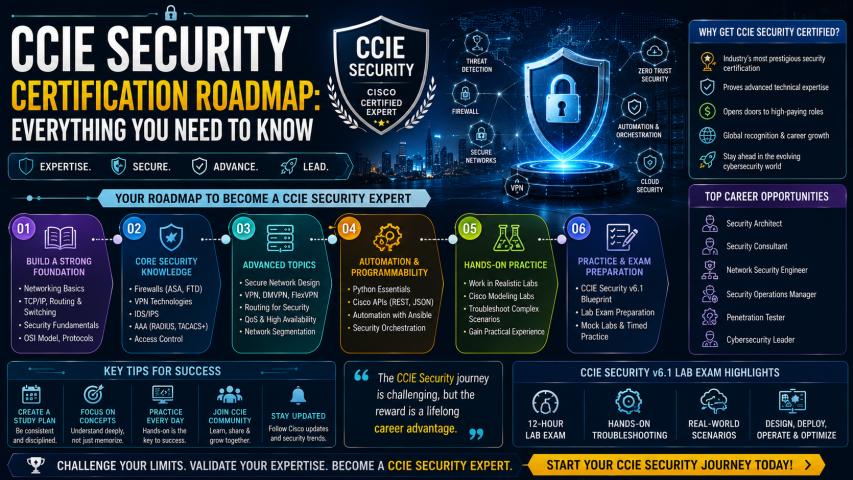
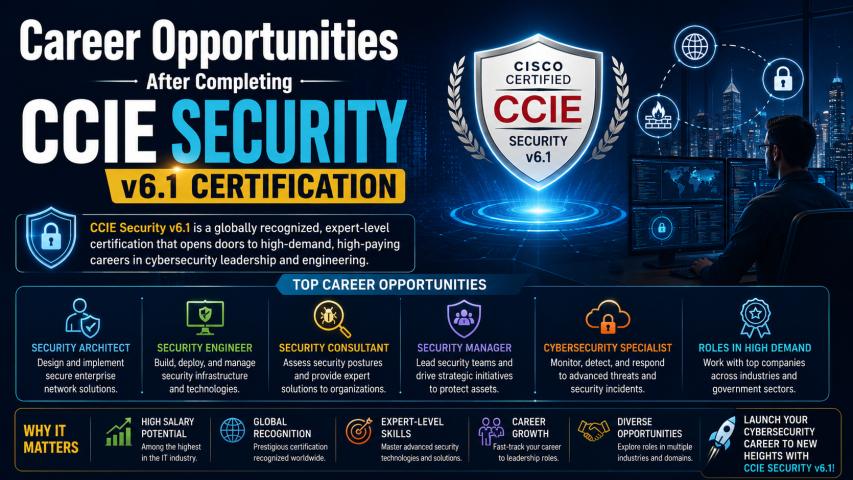
Preparing for the CCIE Security Lab Exam can be one of the most demanding yet rewarding experiences for networking professionals. As the exam date approaches, the final few weeks become crucial for reinforcing knowledge, sharpening practical skills, and building confidence. This is not a time to learn everything from scratch, but rather to refine what you already know and focus on strategy. Candidates who have invested in structured learning, such as CCIE Security training in Bangalore, often find that the right last-mile preparation makes all the difference in achieving success.
Understanding the Final Weeks of Preparation
The weeks leading up to the lab exam are unique. Unlike earlier stages of study where you might focus on broad topics, the last few weeks demand focus, precision, and time management. At this stage, it’s less about gathering new knowledge and more about reinforcing concepts, troubleshooting efficiently, and building stamina for the long exam duration.
Key goals during this period include:
Strengthening core hands-on skills.
Identifying and addressing weak areas.
Practicing real-world troubleshooting scenarios.
Simulating exam conditions to improve speed and accuracy.
Focus Areas for the CCIE Security Lab Exam
The CCIE Security Lab Exam evaluates your ability to design, implement, and troubleshoot complex security solutions. Below are the critical areas you should emphasize in the final weeks:
1. Cisco Identity Services Engine (ISE)
ISE plays a major role in the CCIE Security lab. Practice configurations for:
Authentication and authorization policies.
Device administration with TACACS+ and RADIUS.
Integrating ISE with switches, wireless controllers, and firewalls.
2. Firewalls (Cisco ASA & Firepower Threat Defense)
Ensure you are confident with:
Policy configurations and NAT.
Site-to-site and remote access VPNs.
Advanced inspection and troubleshooting tools.
3. Secure VPN Technologies
Revisit concepts of FlexVPN, DMVPN, and GETVPN. Hands-on practice with IPsec and SSL VPNs is essential since VPN technologies form a significant portion of real-world deployments.
4. Secure Routing and Switching
Don’t overlook the security aspects of routing protocols such as OSPF and BGP. Practice implementing authentication, route filtering, and infrastructure protection.
5. Advanced Threat Protection
Cisco Secure Workload, AMP, and Stealthwatch may appear as part of the exam. Review how to configure and monitor them in a practical environment.
Strategies for the Final Weeks
1. Time-Bound Practice Sessions
The lab exam is an 8-hour challenge. Dedicate at least a few sessions per week to practicing full-scale scenarios under timed conditions. This builds endurance and prepares you mentally for the actual exam.
2. Troubleshooting First
Spend extra time practicing troubleshooting scenarios. This skill often differentiates successful candidates from those who struggle, as the lab exam includes complex problem-solving tasks.
3. Strengthen Weak Areas
Analyze your mock lab results or personal practice logs. Identify recurring mistakes—whether in syntax, logical configuration, or troubleshooting steps—and focus on improving them.
4. Document and Review
Maintain a personal “error log” or “lessons learned” document. Reviewing it daily in the final weeks ensures you don’t repeat the same mistakes.
5. Stay Updated
Cisco frequently updates its technologies, so ensure that your practice aligns with the current lab blueprint. Reviewing Cisco’s official documentation is highly recommended.
Mental and Physical Readiness
Technical preparation is essential, but so is mental and physical readiness. The lab exam is long and mentally exhausting. Here are some tips:
Sleep Well: Avoid sacrificing rest for extra study. A fresh mind performs far better than an exhausted one.
Healthy Routine: Eat well, stay hydrated, and manage stress through light exercise or meditation.
Positive Mindset: Visualize success. Confidence can greatly impact performance under pressure.
Common Mistakes to Avoid
Overloading with New Material: The last weeks are not the right time to start entirely new topics. Stick to reinforcement.
Ignoring Mock Labs: Failing to simulate exam conditions often results in time mismanagement during the actual test.
Neglecting Documentation: Many candidates underestimate how helpful Cisco’s official documentation can be during the exam.
Final Week Checklist
Review all core technologies (ISE, ASA/FTD, VPNs, routing security).
Attempt at least 2–3 full-length mock labs.
Revisit your notes and personal error log daily.
Ensure familiarity with the exam interface and tools.
Prepare mentally and logistically for exam day (travel, documents, etc.).
Conclusion
The final weeks before the CCIE Security Lab Exam are about polishing your skills, not learning everything anew. With structured practice, effective troubleshooting, and a balanced mindset, you can approach the exam with confidence. Candidates who combine technical mastery with smart strategies have the highest success rates. If you are serious about advancing in this field, investing in a ccie security training course in Bangalore can provide the right foundation and support system, ensuring you are well-prepared for this career-defining milestone.