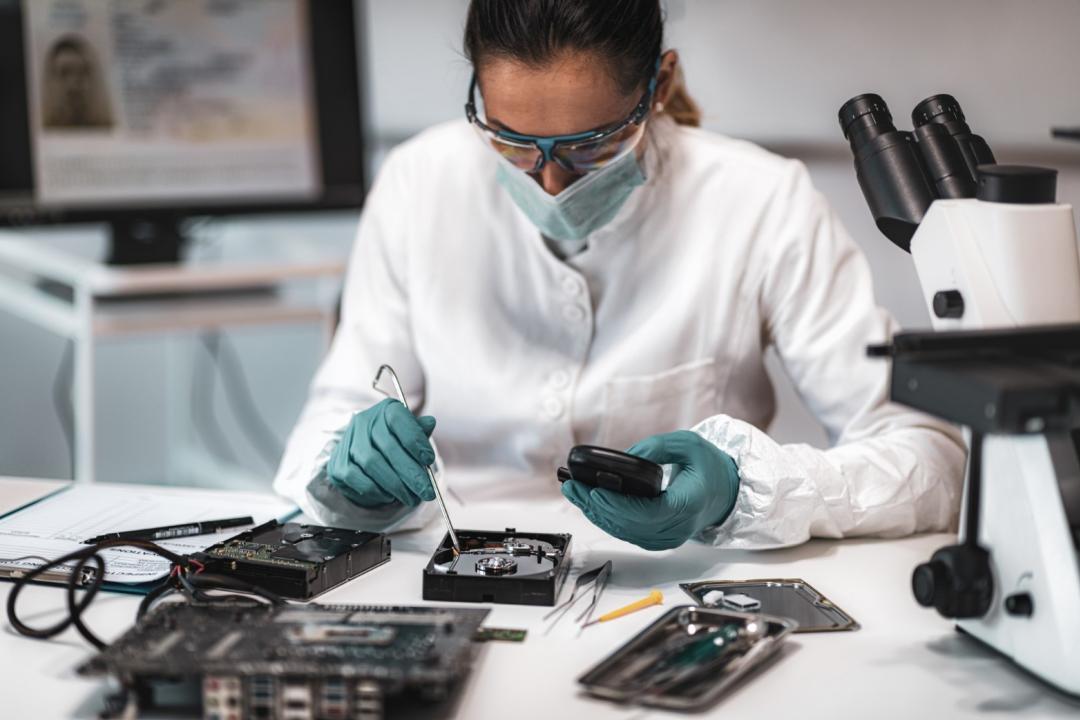
The image of a detective with a magnifying glass is a relic of the past. Today's investigations are fought in the digital realm and the microscopic world, powered by an arsenal of advanced forensic technology. From extracting data from a smartwatch to sequencing a DNA sample from a single cell, this field is undergoing a radical transformation, making it harder for criminals to hide and easier for justice to be served.
The scale of this transformation is immense. According to Straits Research, the global forensic technology landscape was valued at USD 20.92 billion in 2024 and it is projected to reach from USD 23.49 billion in 2025 to USD 59.33 billion by 2033, registering a CAGR of 12.28% during the forecast period (2025-2033). This explosive growth is driven by a surge in cybercrime, the increasing complexity of cases, and a global demand for more efficient and accurate law enforcement capabilities.
Key Players and Strategic Shifts
The field is a dynamic mix of established giants and agile specialists. Thermo Fisher Scientific (USA) remains a dominant force in chemical analysis and genetic sequencing, continuously enhancing its instrumentation for faster, more sensitive drug and toxicology testing. Their recent updates focus on automating laboratory workflows, reducing human error and accelerating turnaround times for critical evidence.
In the digital sphere, Cellebrite (Israel) and OpenText (Canada, through its Guidance Software division) are locked in a fierce competition to unlock the ever-evolving world of digital devices. Cellebrite recently made headlines with its advanced Physical Analyzer tool, now capable of parsing data from a wider array of IoT devices, from cloud storage to vehicle infotainment systems. Meanwhile, MSAB (Sweden) is gaining significant traction in Europe and beyond with its XAMN software, praised for its intuitive visualization of complex digital evidence timelines.
Global Trends: AI and Rapid DNA
The most powerful trend is the integration of Artificial Intelligence. AI algorithms are now used to sift through terabytes of digital evidence—emails, photos, financial records—to identify patterns and connections invisible to the human eye. In biometrics, facial recognition software, powered by AI, is becoming standard for identifying suspects from blurry CCTV footage.
Another revolutionary trend is the deployment of Rapid DNA technology. Portable devices, like those from ANDE Corporation (USA), can process a DNA sample and deliver a profile in under two hours, compared to weeks in a traditional lab. This is revolutionizing forensic operations at borders for kinship verification and at crime scenes for immediate suspect identification.
Regional Developments and Recent News
Recent global activity highlights the strategic importance of this sector. In a major move, Oxygen Forensic® (USA) announced the expansion of its European operations, opening a new training and support center in Germany to better serve the data protection-conscious EU region.
From Japan, NEC Corporation has achieved a breakthrough in its facial recognition technology, boasting near-perfect accuracy even with partial facial obstructions, a tool now being adopted by airports and metropolitan police forces across Asia. In the UK, a national initiative has seen the government partner with Eurofins Forensic Services to overhaul and digitize forensic evidence management across multiple constabularies, creating a more integrated national system.
Summary
Forensic technology is revolutionizing justice through AI-powered digital analysis and rapid DNA testing, creating an unprecedented ability to solve crimes. Global leaders and specialized firms are driving innovation in biometrics, cybersecurity, and genetic sequencing to meet evolving challenges. This rapid advancement is creating a more powerful and efficient global framework for law enforcement and security.