
In the grand theater of artificial intelligence and big data analytics, the flashy algorithms and elegant dashboards get all the applause. But behind every successful AI model and every insightful business report lies an unglamorous, yet Herculean task: data preparation. This process of cleaning, enriching, and transforming raw, chaotic data into a structured, analysis-ready asset is the foundation of all data-driven decision-making. Historically a manual, time-consuming burden for data scientists, it is now being revolutionized by a new class of intelligent tools that automate the grunt work, accelerating time-to-insight and finally allowing businesses to harness the true value of their data.
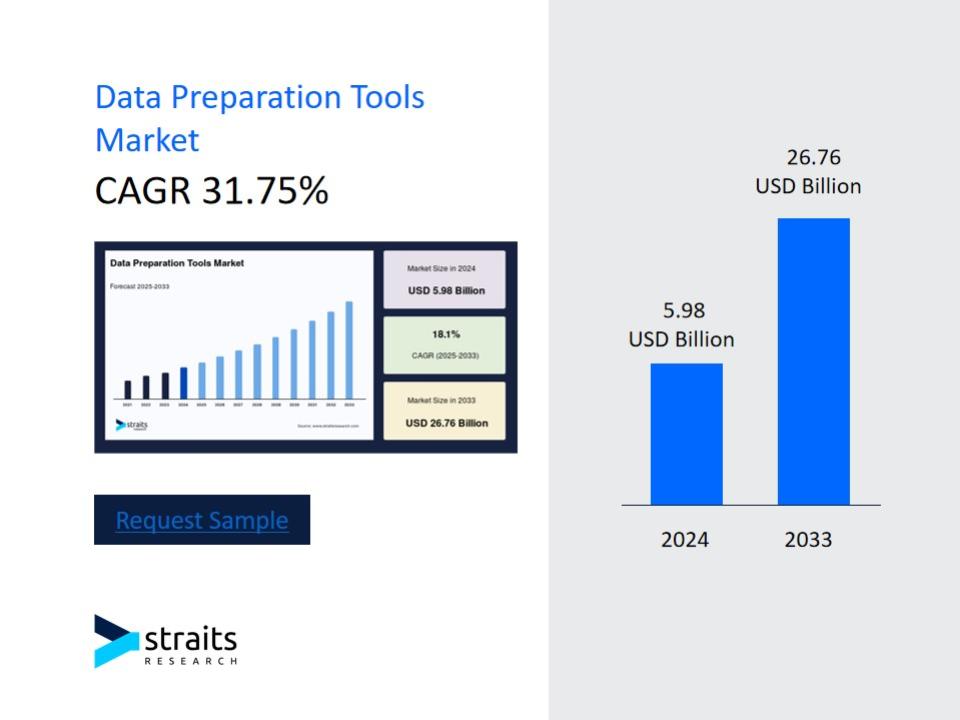
The strategic importance of this capability is reflected in its rapid adoption and investment. According to Straits Research, the global data preparation tools was valued at USD 5.98 billion in 2024 and is estimated to grow from USD 7.07 billion in 2025 to reach USD 26.76 billion by 2033, growing at a CAGR of 18.1% during the forecast period (2025-2033). This growth is directly tied to the soaring failure rates of AI projects, often attributed to poor data quality, pushing organizations to seek robust solutions that ensure their data is accurate, consistent, and reliable before it ever reaches a model.
Key Players and Strategic Evolution: From Standalone Tools to Embedded Intelligence
The competitive field features a blend of specialized pure-play innovators and major platform vendors embedding these capabilities directly into their ecosystems.
-
Alteryx (United States): A pioneer in the "self-service" data preparation space, Alteryx has long empowered data analysts with a user-friendly, code-free interface for building complex data workflows. Recently, the company has aggressively integrated AI and machine learning into its Alteryx Analytics Cloud Platform. A key 2024 update, "Alteryx Auto Insights," uses machine learning to automatically profile data, suggest transformations, and detect anomalies, significantly reducing the manual effort for users.
-
Tableau (a Salesforce company) (United States): The business intelligence leader has made data prep a core feature, not an afterthought. Its Tableau Prep product is designed for seamless integration with its visualization tools, promoting a fluid workflow from data cleaning to discovery. Their recent strategy emphasizes "Einstein-powered" data preparation within the Salesforce ecosystem, automatically harmonizing customer data from Sales, Service, and Marketing clouds to provide a single, clean view of the customer.
-
Trifacta (United States): Acquired by global giant Alteryx in 2022, Trifacta was renowned for its advanced machine learning-driven data wrangling capabilities. Its technology continues to be a cornerstone of modern data preparation, using predictive transformation to learn from user actions and recommend next steps. Post-acquisition, its integration into the broader Alteryx platform has created a formidable end-to-end analytics offering.
-
Talend (a Qlik company) (United States/France): Now under the ownership of Qlik, Talend provides a robust suite for data integration and integrity. Their recent updates have focused on cloud-native services within the Talend Data Fabric platform. A significant 2024 launch was an enhanced "Trust Score" that automatically assesses the quality and reliability of a dataset before it's used, giving business users confidence in their underlying data.
-
Microsoft (United States): The tech behemoth is embedding powerful data preparation features across its product suite. Within its Power Platform, "Power Query" is a ubiquitous tool used by millions in Excel and Power BI to shape data. Recent advancements have integrated these capabilities directly into the Fabric platform, allowing for large-scale data transformation and preparation that leverages the same intuitive interface, bridging the gap between business users and enterprise data engineering.
Emerging Trends: Automation, Collaboration, and Governance
The evolution of data preparation is being shaped by several transformative trends. The most powerful is the rise of AI-powered automation. Tools now go beyond suggesting transforms; they can automatically infer schemas, identify and fix data quality issues, and even generate metadata, moving towards a "self-driving" data preparation experience.
Secondly, there is a growing emphasis on collaboration and data governance. Modern platforms are incorporating features that allow teams to collaboratively build and comment on data pipelines, maintain a catalog of prepared datasets, and track data lineage. This ensures that prepared data is not just clean but also trustworthy, auditable, and compliant with regulations like GDPR and CCPA.
Finally, the concept of DataOps is influencing tool design. Data preparation is no longer a standalone project but a continuous, orchestrated process integrated into the entire data lifecycle, from ingestion to analytics, enabling faster and more reliable delivery of data products.
Recent News and Global Updates
The sector is dynamic with continued consolidation and innovation. A recent notable development was IBM's announcement of new AI-powered data matching and cleansing capabilities within its Cloud Pak for Data platform, aimed at large enterprises in the banking and regulated industries. In the Asia-Pacific region, local players are gaining traction; for example, Singapore-based Dathena focuses on AI-driven data classification and preparation specifically for privacy and security compliance, addressing a key regional need.
In Europe, the stringent enforcement of GDPR continues to drive investment in tools that can automatically find, classify, and mask personal identifiable information (PII) during the preparation phase. This has led to increased demand for vendors like Talend and Informatica, which have strong data governance features.
The message is clear: the era of spending 80% of a project's time on data preparation is ending. These advanced tools are democratizing access to clean data, enabling data scientists to focus on modeling and business analysts to generate insights independently. They are the essential plumbing that makes the modern data-driven enterprise possible.
In summary, data preparation has evolved from a manual technical chore into a strategic, intelligent, and automated process. By ensuring data is accurate and reliable, these tools are the critical first step in unlocking the true potential of analytics and AI, building a foundation of trust in an organization's most valuable asset: its data.