Why Is the Dussehra Kurta Pajama Treated Differently from Navratri Outfits?
Navratri builds momentum through color and rhythm, but Dussehra is the culmination. The mood shifts from vibrant nine-day cycles to a finale steeped in both reverence and closure. This is why the dussehra kurta pajama is never an afterthought; it holds its own space distinct from the navratri kurta pajama worn earlier.
Symbolism drives this separation. During Navratri, garments mirror daily goddess manifestations, Yellow for vitality, Red for devotion, Green for renewal. On Dussehra, however, the attire must reflect triumph and restraint simultaneously. The kurta for Dussehra is expected to be dignified, often in White, Red, or Black, acknowledging the victory of good over evil without diluting cultural gravity.
Consumer behavior validates this divide. Men who may rotate multiple kurta pajama for Navratri across the nine days often reserve one specific, carefully chosen set for Vijayadashami. It is the garment in which they attend temple rituals, join family ceremonies, and sometimes participate in Ravan Dahan events. The best kurta for Navratri can be versatile, but the dussehra kurta pajama must be definitive, symbolic closure, not continuation.
What Defines the Best Kurta for Dussehra in 2025?
Defining the best kurta for Dussehra requires more than aesthetic preference. It must balance elegance with humility, formality with wearability. In 2025, three qualities dominate: fabric integrity, color resonance, and tailoring sharpness. Without these, even the most expensive garment risks looking unaligned with the spirit of the day.
Fabric comes first. Silk or art-silk blends give ceremonial sheen suited to temple gatherings, while cotton-linen combinations remain practical for extended rituals. Unlike a cotton Navratri kurta for men, which may prioritize dance comfort, the dussehra kurta pajama often demands structure, clean collars, crisp cuffs, defined seams. The body must look composed, not casual.
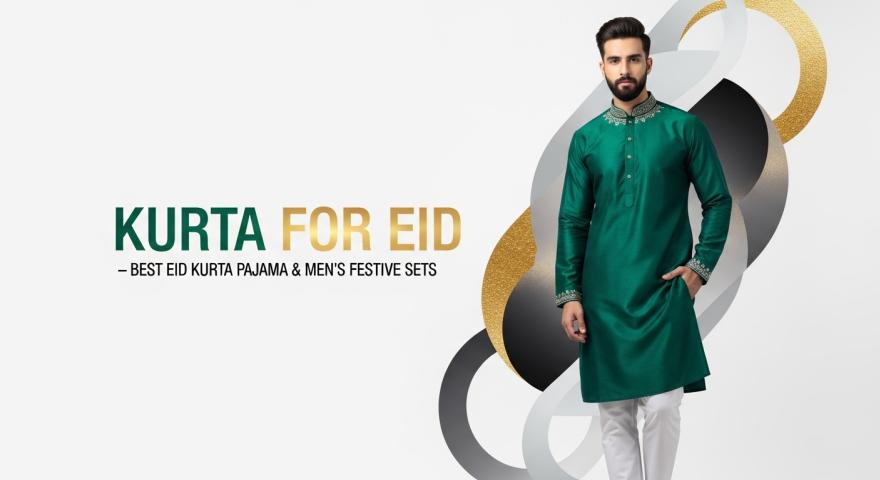
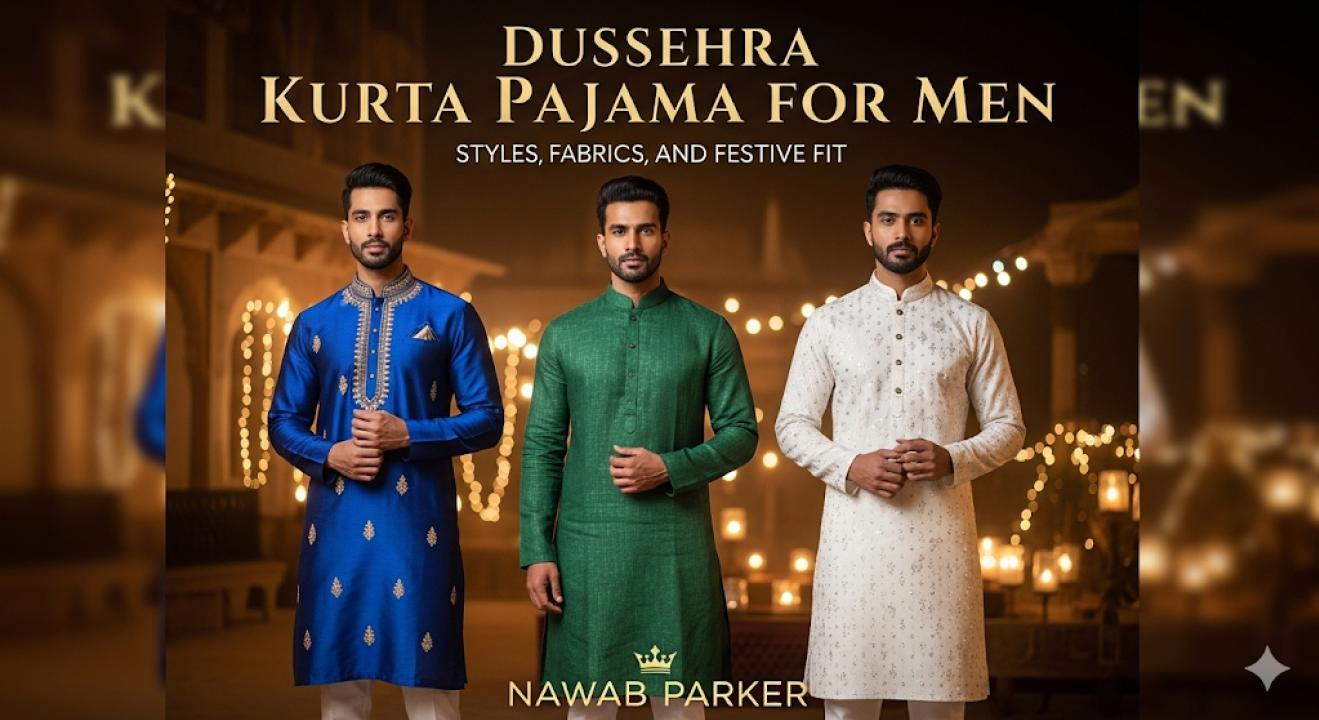
Color follows with equal weight. White signals purity, Red denotes power, Black suggests finality. These shades dominate Nawab Parker’s Dussehra line not by accident but by cultural expectation. A kurta for Dussehra that leans toward neon or pastel may seem festive, but it risks losing alignment with ritual tone. Nawab Parker therefore integrates subtle embroidery into solids, creating garments that look regal but avoid excess.
Tailoring completes the definition. The best kurta for Navratri might tolerate looser fits for movement, yet the dussehra kurta requires precision. The kurta pajama should frame the body in symmetry, allowing the wearer to stand in line for blessings, sit cross-legged during rituals, or walk through processions without discomfort. Festivity, after all, is measured by how well clothing sustains form across hours of ceremony.
Should Men Choose Silk, Cotton, or Blends for a Dussehra Kurta Pajama?
The conversation around fabric is not trivial. On Vijayadashami, men may spend long hours in temple spaces, outdoors for Ravan Dahan, and then continue into family gatherings. The dussehra kurta pajama therefore requires endurance as much as elegance.
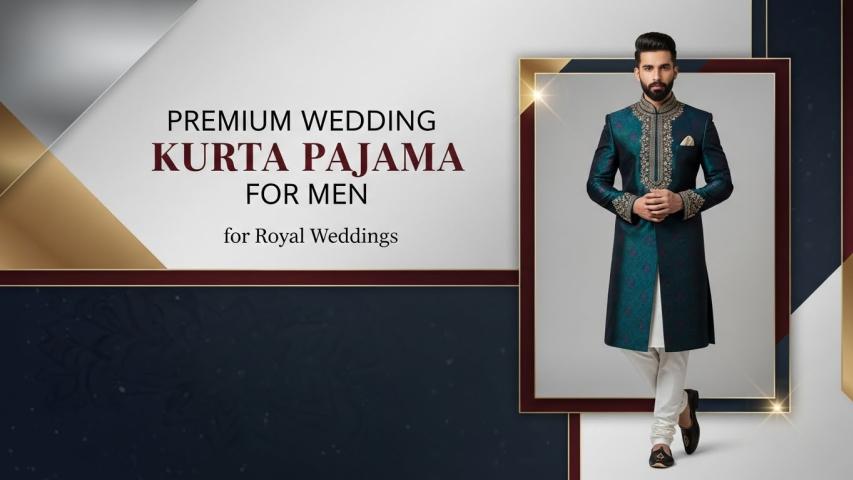
Silk offers sheen, gravitas, and formality. A kurta for Dussehra in raw silk or art silk photographs beautifully under daylight and artificial lighting alike, but it restricts airflow. Cotton, on the other hand, guarantees comfort but risks looking underdressed for ceremonial closure if not cut sharply. This is where blends, cotton-silk, linen-silk, jacquards, create balance. They sustain brightness, breathe adequately, and hold their structure through extended wear.
Unlike a cotton Navratri kurta for men, which often prioritizes dance flexibility, the best kurta for Dussehra must communicate poise. Nawab Parker designs reflect this necessity: cotton-silk blends tailored with clean lines, or structured cotton-linen sets in darker tones for evening rituals. The decision is not “comfort versus elegance.” It is “how much comfort can be engineered without compromising ritual dignity.”
How Do Color Choices for a Kurta Pajama on Dussehra Reflect Tradition?
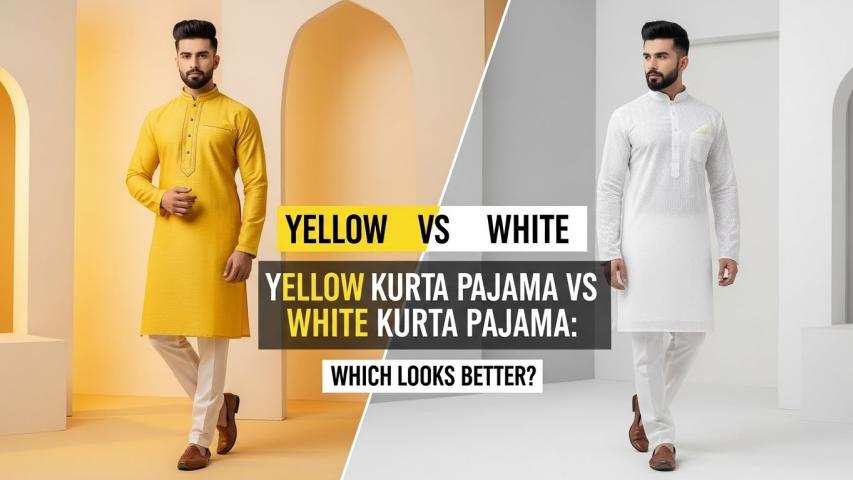
Color on Vijayadashami is symbolic memory, not personal whim. White is associated with purity, devotion, and peace; Red signifies victory and divine energy; Black embodies closure and solemnity. Each shade holds its own authority, and selecting the right kurta pajama for Navratri’s finale is as much about cultural resonance as aesthetic.
White kurtas are common for temple visits. The kurta for Dussehra in White linen or cotton conveys serenity, but it must be >dussehra kurta pajama in crimson silk with embroidered collars achieves impact without overwhelming the ritual tone.
The debate surrounds Black. Traditionally avoided, yet increasingly embraced, the black kurta for men Navratri and for Dussehra has found acceptance among younger generations in metros. Its symbolism has shifted from inauspiciousness to gravitas. Nawab Parker’s curated black kurta for Dussehra demonstrates this shift: clean silhouettes, subtle detailing, and neutral pairings. The result is not defiance of tradition but reinterpretation within cultural boundaries.
Ultimately, color choice signals alignment with collective sentiment. The best kurta for Navratri may rotate through multiple hues, but the dussehra kurta pajama condenses that cycle into a single, decisive shade that reflects triumph, devotion, and closure in one ensemble.
Can a Black Kurta for Dussehra Be Styled Without Misinterpretation?
The black kurta has always been contentious. Some families associate it with inauspiciousness, while modern celebrants in cities recognize its elegance. The key is not whether a black kurta for Dussehra can be worn, but how it is >
Black absorbs light, creating a solemn impression that can feel dignified when handled correctly. A dussehra kurta pajama in black raw silk with ivory pajama projects balance, while pairing with a muted waistcoat adds refinement. The mistake lies in over-embellishment, heavy sequins, bright contrasts, or glittering embroidery convert gravitas into spectacle. Nawab Parker avoids this by crafting black kurta for men Navratri and Dussehra lines with precision: subtle embroidery, structured tailoring, and restrained accessories.
When integrated carefully, the black kurta no longer challenges tradition but reframes it. For younger professionals and urban celebrants, a kurta for Dussehra in black signals discipline, authority, and closure. It is not rebellion but reinterpretation, and in 2025, this reinterpretation has gained cultural legitimacy.
Why Do Men Prefer Separate Outfits for Pooja, Social Visits, and Evening Gatherings?
The Vijayadashami schedule is layered. Morning temple rituals, midday social visits, and evening Ravan Dahan events each carry different expectations. A single garment cannot adapt seamlessly across these transitions, which is why men increasingly select multiple dussehra kurta pajama options.
For pooja, White or cream cotton sets represent purity and humility. For family and social visits, Red or Maroon silk blends provide festive impact. For evening gatherings, darker solids, Gray or Black kurta for Dussehra, offer gravitas under artificial light. Nawab Parker responds with capsule curation: two to three kurtas that cover all functions without forcing compromise.
This approach mirrors what we already see in Navratri wardrobes. Just as a kurta pajama for Navratri shifts between cotton for garba and silk for aarti, so too must the Dussehra wardrobe divide tasks. Practicality is not extravagance, it is acknowledgment of how rituals, social obligations, and public appearances overlap in one day.
What Are the Most Popular Dussehra Kurta Pajama Trends in 2025?
The landscape of festive wear in 2025 demonstrates continuity with Navratri but filtered through a lens of solemnity. Men prefer solid shades with minimal embroidery rather than maximalist prints. The best kurta for Navratri may experiment with daily colors, but the dussehra kurta pajama trends toward restraint.
Three patterns dominate:
Structured Silhouettes – Kurtas with stiff collars and crisp cuffs that maintain form during long ceremonies.
Subtle Embroidery – Tone-on-tone threadwork on collars or cuffs, not across the body.
Hybrid Cuts – Indo-Western variations such as asymmetric hems or short kurtas with churidars, appealing to younger buyers who want continuity between ethnic and contemporary wardrobes.
Nawab Parker’s 2025 line integrates all three. Their kurta for Dussehra range balances tradition with trend: Red jacquard kurtas with minimal gold embroidery, Black silk kurtas paired with ivory churidars, and White cotton-linen blends designed for all-day wear. These trends reinforce one principle, Dussehra attire is not about extravagance, but refinement that closes the festive cycle with authority.
How to Select the Right Size & Fit in a Dussehra Kurta Pajama?
Fit determines whether a garment communicates dignity or distraction. A dussehra kurta pajama that is too loose appears borrowed; one that is overly tight restricts ritual postures and movement during gatherings. The challenge is compounded online, where sizing charts differ across brands and fabrics.
Common mistakes include ignoring shoulder width, misjudging sleeve fall, and assuming that kurta sizing aligns with western shirt sizes. This results in ill-fitted attire precisely when precision matters most. Nawab Parker addresses this risk through size guides tailored to Indian proportions, extended ranges up to 5XL, and advisory services that recommend fits based on both body type and fabric choice.
Material influences sizing strategy as well. A cotton Navratri kurta for men benefits from half an inch of allowance, because cotton lacks the drape of silk. In contrast, a kurta for Dussehra in art silk should fit closer to the body so its sheen holds shape. The best kurta for Navratri may accommodate looser cuts for dance, but the dussehra kurta pajama demands sharpness. Precision in fit ensures poise through temple rituals, processions, and formal family photographs.
Can a Navratri Kurta Pajama Transition into a Dussehra Look?
The desire for efficiency is natural: if a kurta pajama for Navratri is already purchased, can it serve as a dussehra kurta pajama too? The answer is conditional. Certain neutral sets, White, Ivory, Maroon, transition smoothly, particularly if >
Practical continuity exists in fabrics. A structured cotton-silk blend used for Navratri evenings can reappear on Dussehra with a stole or waistcoat in a darker shade. This approach avoids waste and extends utility, aligning with the modern preference for capsule wardrobes. Yet buyers must remember that Dussehra requires visual finality: a kurta for Dussehra is symbolic closure, not repetition.
Nawab Parker recognizes this tension and designs navratri kurta pajama collections with foresight. Some pieces are deliberately versatile, while others are reserved exclusively for Vijayadashami. The guidance is straightforward: invest in at least one dedicated dussehra kurta pajama, even if some Navratri sets are reused. It secures the symbolic arc of the festival and communicates respect for its conclusion.
Why Buying a Dussehra Kurta Pajama from Nawab Parker Is a Smart Festive Decision
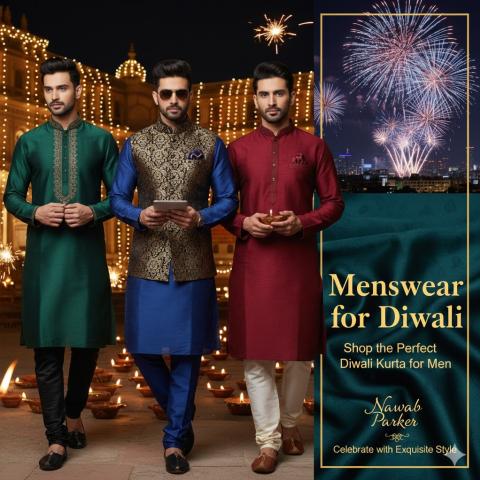
The market is crowded with promises, but very few brands align cultural nuance with tailoring precision. Nawab Parker positions itself differently. Each dussehra kurta pajama is not a generic ethnic set, it is a made-for-occasion garment designed to sustain ritual, adapt to social visits, and conclude the festival with dignity.
Local tailoring expertise anchors this reliability. Sizes extend from S to 5XL, fit guides reflect Indian proportions, and adjustments are done with awareness of ceremonial posture. Early delivery schedules ensure buyers receive their garments before the rush of Vijayadashami. Exclusive festive offers reinforce accessibility, while store visits in Patna allow personal trial and consultation.
The best kurta for Navratri may be versatile across nine days, but the kurta for Dussehra has to be definitive. Nawab Parker ensures that definition, measured embroidery, fabric blends engineered for endurance, and silhouettes that remain crisp from temple to evening gathering. To purchase here is not indulgence; it is preparedness, assurance, and cultural fidelity woven into every seam.
Shop our Kurta for Navratri & Dussehra 2025 Collection here
Frequently Asked Questions (FAQs)
Q1. What colors are best for a Dussehra kurta pajama?
White, Red, and Black dominate Vijayadashami attire. White signals purity, Red reflects power, and Black represents closure. Nawab Parker curates each kurta for Dussehra with these shades in focus.
Q2. Can a black kurta be worn for Dussehra?
Yes, provided it is >black kurta for Dussehra paired with ivory pajama and subtle embroidery communicates gravitas without breaking tradition.
Q3. Which fabric is ideal for a Dussehra kurta pajama?
Cotton-silk and linen blends offer the best balance of comfort and ceremonial sheen. A dussehra kurta pajama in pure cotton works for daytime rituals, while silk or jacquard blends suit evening gatherings.
Q4. Can I reuse my Navratri kurta pajama for Dussehra?
Certain versatile shades such as White or Maroon can transition. However, it is advisable to keep at least one dedicated dussehra kurta pajama that marks the festival’s conclusion with dignity.
Q5. Why choose Nawab Parker for festive kurtas?
Because Nawab Parker integrates cultural knowledge, fabric science, and tailoring precision. Their navratri kurta pajama lines are planned to transition seamlessly, while their dussehra kurta pajama range is designed specifically for Vijayadashami’s symbolic finality.
Learn More: