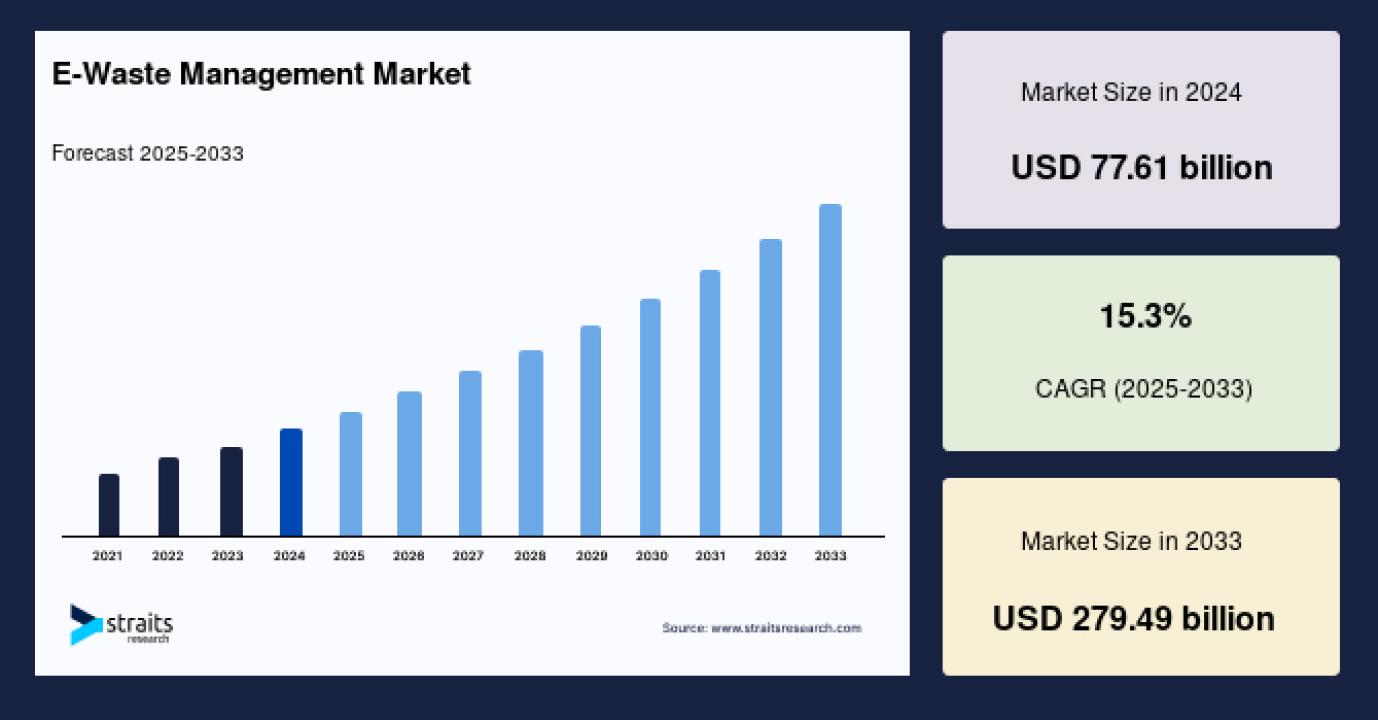
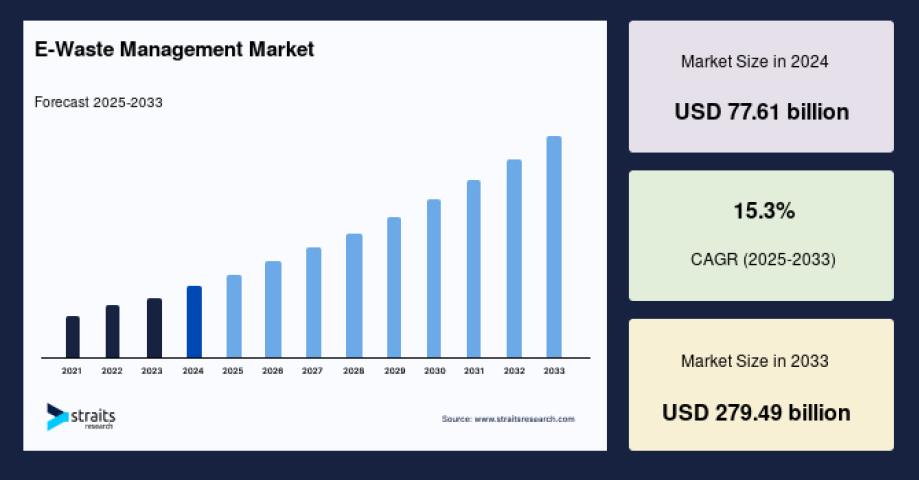
The global E-waste management market is growing rapidly as the generation of electronic waste surges worldwide due to fast technological advancements, shorter electronic product lifecycles, and rising consumer demand for upgrades. Electronic waste, or e-waste, comprises discarded electrical or electronic devices such as computers, smartphones, refrigerators, and other consumer electronics. Proper management of this waste through recycling, refurbishment, reuse, and disposal is essential to mitigate environmental damage and health risks while recovering valuable materials for reuse.
Market Size 2024 – USD 77.61 billion
Market Size 2025 – USD 89.48 billion
Market Size 2033 – USD 279.49 billion
CAGR (2025-2033) – 15.3%
For detailed market insights and a free sample, download here: Request Sample – https://straitsresearch.com/report/e-waste-management-market/request-sample
Market Drivers
The increasing need to update and replace electronic equipment is one of the primary growth drivers behind the burgeoning e-waste stream. Rapid innovation and product launches shorten product lifespans to roughly 3–4 years, pushing consumers and businesses to discard older devices regularly. Government regulations worldwide are forcing responsible disposal and recycling, with initiatives to create e-waste collection zones and reduce hazardous waste from landfills.
Rising environmental awareness and stricter rules around electronic waste handling promote the development of streamlined recycling processes and enhanced collection networks. Precious and rare metals such as gold, silver, palladium, platinum, indium, and gallium found in e-waste have increasing economic value due to their scarcity and rising demand, driving growth in sophisticated recovery technologies.
Market participants are also expanding processing facilities and geographic coverage to tap into growing e-waste from developing nations, where electronic consumption is climbing rapidly. Awareness campaigns and government mandates further support recycling, refurbishment, and reuse, improving the market outlook.
Market Challenges
Key challenges faced include the lack of widespread collection infrastructure globally, especially in developing countries, where e-waste is often improperly disposed of or stockpiled. The high cost and complexity of advanced e-waste recycling technologies, such as chemical and thermal processing, limit adoption by smaller players, thereby constraining market growth.
Public unawareness and inadequate regulations in some regions result in e-waste being burned or dumped illegally, creating pollution and health hazards due to toxic substances such as lead and mercury. These factors raise the urgency of establishing better collection systems and increasing the cost efficiency of recycling facilities.
Market Segmentation
By Material Type
Metal: Holds the largest market share with a CAGR of 14.58%. Metals recovered from e-waste include valuable and rare metals required by electronics manufacturers. Advanced mechanical recycling and thermo-chemical processing techniques like pyrolysis and bio-metallurgy support this segment.
Plastic: The second-largest segment, challenged by complex polymer blends and flame retardants making recycling difficult. Growth is supported by increasing e-waste and technological advances in plastic recycling.
Glass: Includes displays and other electronic glass; recycling technological advancement and increased e-waste generation support market growth.
Others: Additional materials found in e-waste such as circuit boards, ceramics, and wiring.
By Product Type
Household Appliances & Industrial Electronics: Largest segment, driven by frequent replacement of refrigerators, microwaves, lighting, and small appliances due to rising incomes and growing population.
Consumer Electronics: Includes computers, mobile phones, printers, and communication tools, fueling rapid growth due to technology updates and increased sales.
Others: Covers other electronic devices contributing to e-waste streams.
By Treatment Type
Trashed: The larger share, marked by disposal in landfills or incineration, mainly in developing countries lacking efficient recycling. Growing environmental concerns, however, limit this segment's growth.
Recycled: Accounts for significant growth with processes such as shredding, detoxification, and metal recovery. Supports circular economy initiatives by reducing pollution and recovering valuable materials.
By Region
Asia-Pacific: Largest and fastest growing market with a CAGR of 11.57%. Increasing electronics consumption, rising incomes, and frequent product upgrades contribute to growing e-waste volumes.
Europe: Fastest-growing region at a CAGR of 14.66%, with stringent regulations, advanced recycling infrastructure, and limited landfill space driving recycling activities and market expansion.
North America: Mature market with regulations focusing on responsible e-waste disposal and resource recovery.
To purchase the full report, visit: Buy Now this report – https://straitsresearch.com/buy-now/e-waste-management-market
Top Players Analysis
The e-waste management market features a mix of specialized recyclers, technology providers, and integrated waste management firms. Leading companies investing heavily in collection and recycling technologies include:
Veolia Environment S.A.
Sims Lifecycle Services
Umicore
Stena Recycling AB
TES-AMM
ALBA Group
Waste Management Inc.
Recupyl
Aurubis AG
RBRC (Rechargeable Battery Recycling Corporation)
These players focus on expanding geographically, adopting advanced recycling technologies, and forming partnerships with electronics manufacturers and governments to enhance e-waste collection and processing.
Conclusion and About Us
Rapid technological developments, rising electronic consumption, and increasing regulatory enforcement are fueling strong growth in the e-waste management market. While infrastructure and cost remain challenges, ongoing innovations in recovery processes and increasing global awareness will drive sustainable growth and resource efficiency.
Straits Research is a market intelligence company providing global business information reports and services. Our exclusive blend of quantitative forecasting and trends analysis provides forward-looking insight for thousands of decision-makers. Straits Research Pvt. Ltd. delivers actionable market research data designed for strategic decision making and ROI.
FAQs
What is the e-waste management market size in 2024?
USD 77.61 billion.
What is the projected market size by 2033?
Expected to reach USD 279.49 billion.
What is the CAGR during the forecast period?
15.3% from 2025 to 2033.
Which region leads the e-waste management market?
Asia-Pacific leads in market size, while Europe is the fastest growing.
What drives the growth of e-waste management?
Increasing electronics consumption, government regulations, and value recovery of precious metals.
What are the main challenges in e-waste management?
Lack of collection infrastructure and high recycling costs.