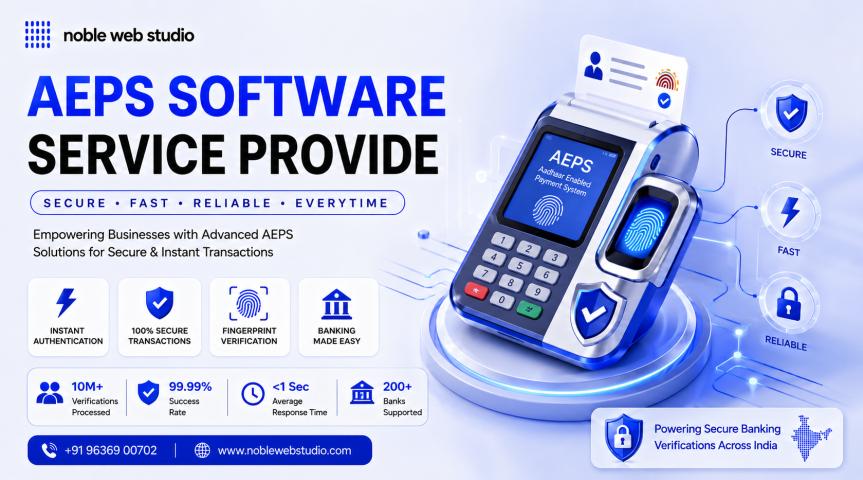
AEPS Software Solutions in 2025 are playing a major role in transforming India’s banking and payment system, especially for people living in rural and semi-urban areas. AEPS, also known as Aadhaar Enabled Payment System, allows customers to access basic banking services like cash withdrawal, balance inquiry, and money transfer using their Aadhaar number and biometric authentication. With the support of AEPS Software Solutions, banking has become easier, safer, and more accessible to millions of Indians who previously had little or no access to formal financial services. In 2025, these solutions are not only improving financial inclusion but also expanding the reach of digital banking across every corner of the country.
One of the biggest benefits of AEPS Software Solutions is that they remove the need for traditional bank branches. Many rural areas in India do not have physical bank offices, which makes it difficult for people to access financial services. Through AEPS, local agents and retailers can act as mini-banking points where customers can perform transactions. This brings banking services closer to villages and small towns, ensuring that financial access is no longer limited to urban areas.
AEPS also helps in building trust among first-time users of digital payments. Since transactions are done using biometric authentication, customers feel confident that their money is safe and secure. Unlike PIN codes or passwords that can be stolen, biometric authentication ensures that only the account holder can authorize a transaction. This is particularly useful in rural regions where people are still learning about the benefits of digital banking and need assurance that their savings will not be misused.
In 2025, the role of AEPS Software Solutions has become even more important because of the rising demand for cashless payments and digital services. With the government promoting digital transactions, AEPS provides a simple and cost-effective way to connect people to the banking network. Customers no longer need smartphones, debit cards, or internet banking accounts to use AEPS services. A simple Aadhaar card and biometric verification are enough to withdraw cash, check balances, or send money to family members.
AEPS also supports the growth of small businesses and local shopkeepers. Retailers who integrate AEPS services into their shops can earn extra income by acting as agents. For customers, this is highly convenient because they do not need to travel far to find an ATM or bank. For shopkeepers, it is an additional opportunity to attract more customers while also contributing to the growth of financial inclusion in their community.
Technology is another key factor driving the success of AEPS Software Solutions in 2025. Modern AEPS platforms are designed with advanced features like real-time transaction tracking, secure data encryption, instant settlement, and multi-banking integration. These improvements make the system faster and more reliable, which builds confidence among both agents and customers. With user-friendly dashboards and mobile compatibility, agents can easily manage their services and provide quick support to customers.
AEPS Software Solutions are also closely linked with government welfare programs. Many subsidies, pensions, and direct benefit transfers are distributed through Aadhaar-linked accounts. With AEPS, beneficiaries can easily withdraw their money from the nearest agent without facing the challenges of long queues at banks. This has improved the efficiency of welfare distribution and reduced leakages, ensuring that funds directly reach the right people.
Another important aspect is how AEPS helps reduce dependency on cash. While rural India still uses a large amount of cash for transactions, AEPS is slowly changing this trend by providing a secure digital alternative. People are becoming more comfortable using AEPS for services like money transfers, utility bill payments, and micro-transactions. Over time, this will strengthen the digital economy and reduce the challenges related to handling physical cash.
AEPS Software Solutions also benefit banks and financial institutions. By extending their services through agents, banks can reach customers in remote areas without investing heavily in building branches. This reduces operational costs and allows banks to serve millions of new customers efficiently. At the same time, it increases financial literacy among people, as they become more familiar with banking services and digital transactions.
In addition, AEPS has made it easier to integrate with other financial services such as micro ATMs, mobile recharge, bill payment systems, and insurance premium payments. By combining these services, agents can become one-stop digital financial centers for their communities. This integrated approach ensures that financial inclusion is not limited to basic banking but also extends to other important digital payment services.
Looking ahead, the growth of AEPS Software Solutions in 2025 is expected to continue strongly. With more investment in technology, better connectivity in rural areas, and rising awareness about digital banking, AEPS will cover even larger sections of the population. Innovations such as AI-powered fraud detection, faster biometric verification, and multilingual support will further enhance user experience.
In conclusion, AEPS Software Solutions are expanding digital banking for every Indian by breaking barriers of distance, technology, and trust. They are helping millions of people in rural and semi-urban areas access safe and reliable financial services, supporting small businesses, and strengthening the government’s vision of a cashless economy. By offering secure, simple, and affordable solutions, AEPS has become a vital tool for financial inclusion. For individuals, retailers, banks, and the overall economy, the impact of AEPS in 2025 is clear—it is empowering every citizen with access to banking and digital payments. Choosing the best AEPS Software Solution will be the key for businesses and service providers who want to contribute to and benefit from India’s ongoing digital transformation.