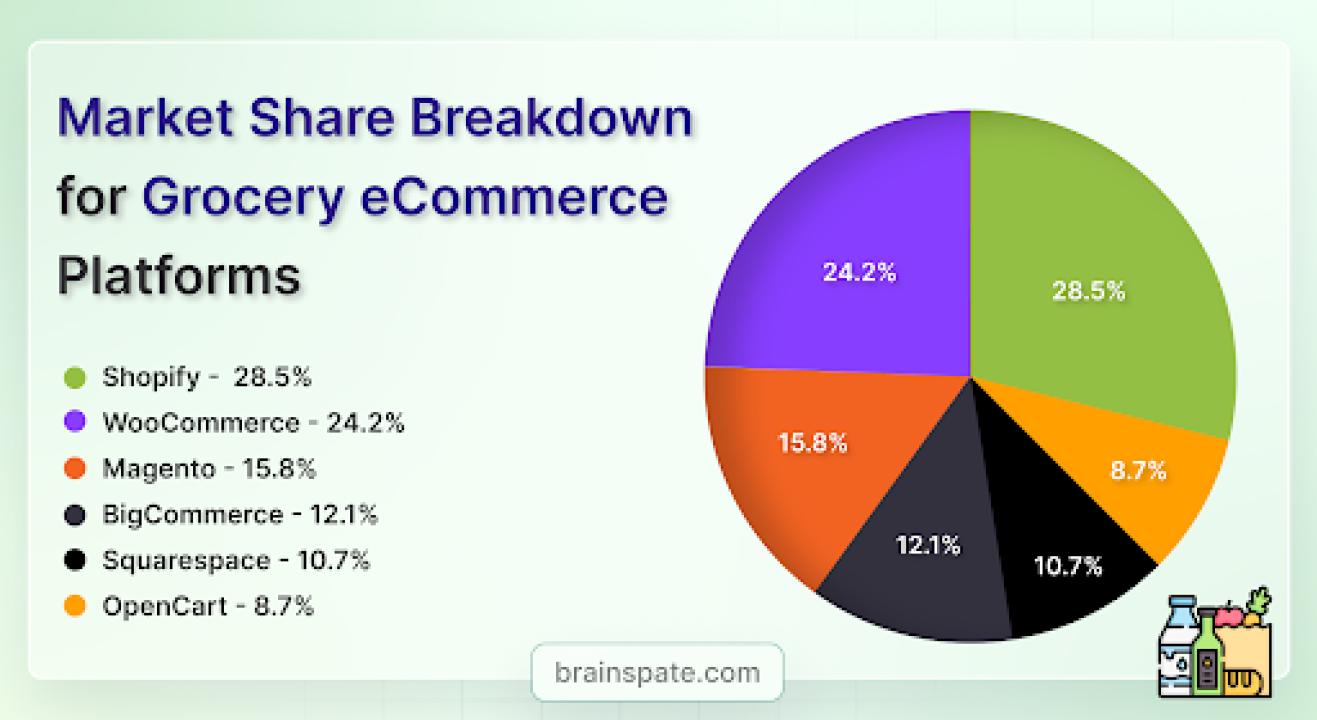
Running a grocery business online is very different from managing a regular store. Customers expect fast delivery, clear product categories, and smooth checkout experiences. Choosing from the Best Grocery eCommerce Platforms can make all the difference. The right platform not only helps you showcase products but also manages inventory, orders, and payments easily. In 2025, there are several platforms that can help grocery businesses of all sizes go online quickly and efficiently.
Popular eCommerce Platforms to Build a Grocery Store
Selecting the right platform depends on your business goals, budget, and technical knowledge. Here are some of the Best Grocery eCommerce Platforms that grocery businesses rely on in 2025.
Shopify: Simple and Fast for Grocery Stores
Shopify is one of the easiest platforms to get started with. It works well for small and medium-sized grocery stores.
User-Friendly Interface: You don’t need coding skills to build your store.
App Marketplace: Add features like subscription services, delivery scheduling, and loyalty programs.
Secure Payments: Shopify handles payments safely, which is critical for online stores.
Mobile-Friendly: Customers can easily order groceries from their phones.
Many small grocery stores prefer Shopify because it allows them to launch quickly without worrying about technical issues.
WooCommerce: Flexible and Affordable
WooCommerce is a plugin for WordPress and is highly customizable. It works well if you already have a WordPress website or want full control over your store.
Low Cost: The plugin itself is free, and you only pay for hosting and extra features.
Customizable Design: You can change themes and layouts to match your brand.
Wide Range of Extensions: Add features for delivery, payment gateways, and product management.
SEO-Friendly: Great for grocery stores that want to appear in local searches.
WooCommerce is ideal for store owners who want flexibility and are comfortable handling some technical setup.
BigCommerce: Growing With Your Grocery Store
BigCommerce is designed to help businesses scale easily. It works well for medium to large grocery stores.
Built-In Features: Advanced SEO, multi-channel selling, and inventory management.
No Transaction Fees: Unlike some platforms, BigCommerce does not take a cut from your sales.
Integration Options: Connect with delivery services, accounting software, and marketplaces.
Security and Reliability: High uptime ensures customers can always access your store.
BigCommerce is perfect for grocery businesses planning to expand their online reach in 2025.
Magento: Best for Large Grocery Stores
Magento is a more advanced platform, suitable for large grocery stores or chains.
Highly Customizable: You can build complex stores with multiple categories and thousands of products.
Strong Inventory Management: Handles large volumes of products and orders efficiently.
Enterprise Features: Supports multiple languages, currencies, and large-scale integrations.
Scalable: Can handle high traffic during peak shopping seasons.
Magento is ideal if you have a bigger budget and need a professional, enterprise-level solution.
Squarespace and Wix: Quick Setup for Small Stores
If you want to launch a small grocery store fast, Squarespace or Wix can be great options.
Simple Drag-and-Drop Builders: Easy to create attractive store pages.
Built-In Hosting: No need to worry about separate hosting services.
Good Templates: Pre-made templates suitable for food and grocery stores.
Basic eCommerce Tools: Payment processing, product listings, and order tracking.
These platforms work best for local grocery shops or niche stores that focus on convenience and aesthetics.
How to Choose the Right Platform
Choosing the right eCommerce platform for your grocery store depends on a few key factors:
Business Size: Small stores might prefer Shopify or Wix, while large stores benefit from Magento or BigCommerce.
Budget: Platforms like WooCommerce and Wix are more cost-effective for startups.
Technical Skills: Shopify and Squarespace are easy for beginners, while Magento requires technical knowledge.
Features Needed: Consider delivery scheduling, subscription services, and inventory management.
Growth Plans: Think about where you want your store in the next few years and choose a platform that can grow with you.
Selecting the Best Grocery eCommerce Platforms involves weighing these factors carefully to ensure long-term success.
Top Grocery Stores Using These Platforms in 2025
Several grocery stores have already made their mark using these platforms:
Shopify: Many small local stores offering subscription boxes and home delivery.
WooCommerce: Stores focusing on organic products with strong blogging and SEO.
BigCommerce: Regional grocery chains selling online with delivery and pick-up options.
Magento: Large supermarket chains managing thousands of products and multiple locations.
Squarespace/Wix: Specialty stores focusing on aesthetics and niche products like gourmet foods or fresh juices.
Studying these examples can help you understand which of the Best Grocery eCommerce Platforms fits your business model and goals.
Key Features to Look For in a Grocery eCommerce Platform
When selecting a platform, keep these features in mind:
Inventory Management: Track products in real-time.
Delivery Options: Schedule, same-day delivery, or local pick-up.
Payment Gateways: Secure, fast, and multiple payment options.
Mobile Compatibility: Most users shop on smartphones.
Customer Support: Ensure the platform offers reliable support when needed.
Having these features ensures your grocery store runs smoothly and keeps customers happy.
Conclusion
Choosing the right eCommerce platform is a crucial step for your grocery business in 2025. Whether you are a small local store or a large supermarket chain, the Best Grocery eCommerce Platforms are designed to meet different needs. Shopify and Squarespace work well for small businesses looking for speed and simplicity. WooCommerce offers flexibility for growing stores. BigCommerce and Magento are ideal for scaling and large operations. Evaluate your budget, technical skills, and growth plans to make the right choice. With the right platform, your grocery store can offer a smooth online shopping experience and thrive in the competitive 2025 market.