In an increasingly digital economy, e-commerce development has become a central component of sustainable business growth. A professional online store is not simply a digital catalog — it is a fully integrated sales channel that enhances visibility, improves customer engagement, and generates measurable revenue. From startups to established enterprises, investing in e-commerce infrastructure is now essential for long-term competitiveness.
The Evolution of Online Commerce
The global retail landscape has shifted toward digital-first experiences. Convenience, transparency, and personalization have transformed the way consumers research and purchase products.
Recent studies show that over 70% of internet users in Greece shop online regularly, with e-commerce revenues exceeding €18 billion annually.
These trends underline the importance of strategic e-commerce development as a driver of growth and customer acquisition.
Strategic Advantages of Launching an Online Store
Building a professional e-shop provides multiple strategic and operational benefits that extend far beyond basic online presence.
1. Access to a Borderless Market
An online store enables businesses to reach new customers without geographical limitations, expanding brand presence to national and international markets.
2. Continuous Operation
Unlike a physical retail outlet, an e-shop operates 24/7, generating sales and inquiries even outside of standard business hours.
3. Cost Efficiency and Scalability
Digital commerce significantly reduces operational expenses related to staffing, rent, and logistics. Moreover, it allows for scalable growth without the constraints of physical space.
4. Strengthened Brand Credibility
A professionally developed e-shop reflects a trustworthy and modern brand image. Customers are more likely to engage with businesses that provide secure payments, intuitive navigation, and a consistent user experience.
5. Centralized Management and Automation
Through platforms such as WooCommerce, Shopify, or Magento, companies can automate inventory control, order processing, and customer communication — streamlining operations and minimizing manual errors.
6. Business Intelligence and Performance Analytics
Data-driven decision-making is a key differentiator in modern commerce. Advanced analytics tools allow businesses to track performance metrics, identify trends, and continuously optimize their strategies.
The Eshop Development Lifecycle
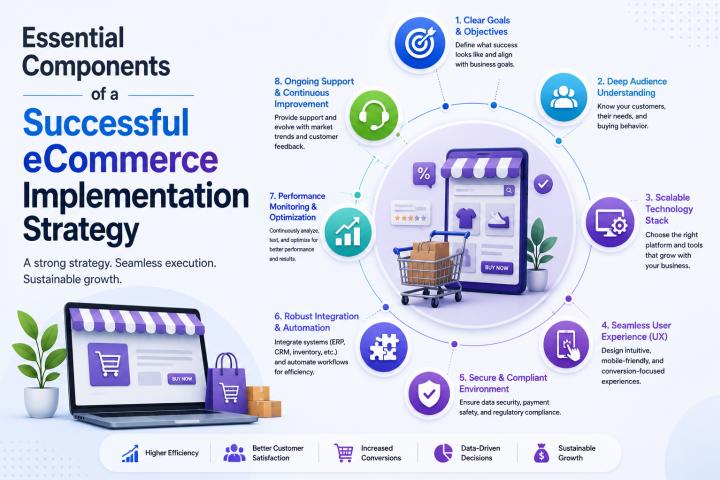
Creating a successful e-commerce platform requires a structured process that combines business strategy, technology, and user experience.
1. Business Analysis and Planning
The process begins with a detailed needs assessment — analyzing target audiences, product categories, and market positioning to define clear goals and success indicators.
2. User Experience (UX) and Interface Design (UI)
The goal of design is not only visual appeal but also conversion optimization. A well-structured layout, fast navigation, and intuitive shopping flow enhance user satisfaction and drive repeat business.
3. Technology and Platform Selection
Choosing the right platform depends on your business scale and objectives:
- WooCommerce for flexibility and open-source customization
- Shopify for fast deployment and ease of use
- Magento for advanced functionality and scalability
- Virtuemart for flexibility and open-source customization
- Custom-built solutions for specialized industries or complex product structures
4. Implementation and Quality Assurance
This stage involves technical integration, security setup, and performance optimization. Comprehensive testing ensures cross-device compatibility and reliability before launch.
5. Training and Ongoing Support
Post-launch, the focus shifts to training, maintenance, and continuous optimization — ensuring that your online store remains efficient, secure, and aligned with market developments.
E-Commerce Marketing and SEO Optimization
The success of an online store depends on visibility. Search Engine Optimization (SEO) and digital marketing are fundamental components of an effective growth strategy.
- Comprehensive keyword analysis and content optimization
- Technical SEO (site speed, indexing, and structured data)
- Integration with Google Analytics and Meta Pixel
- Paid advertising and remarketing campaigns
- Email automation and content marketing strategies
A holistic marketing approach ensures consistent customer acquisition and sustainable sales growth.
Common Eshop Development Pitfalls
Despite the growing demand for digital commerce, many businesses face challenges during implementation. The most frequent issues include:
- Overemphasis on design without strategic functionality
- Lack of SEO optimization from the early stages
- Inefficient checkout processes leading to cart abandonment
- Poor mobile responsiveness
- Insufficient post-launch maintenance and support
Partnering with an experienced development team helps mitigate these risks and ensures a stable, high-performing solution.
The Future of Digital Commerce
E-commerce continues to evolve with emerging technologies such as artificial intelligence, voice commerce, and advanced personalization engines. Businesses that invest early in digital transformation gain a competitive edge, improving operational efficiency and customer loyalty.
Developing a professional eshop is not merely a technological decision — it’s a strategic investment in your brand’s future.
A well-executed e-commerce solution enhances sales performance, strengthens customer relationships, and positions your business for long-term growth in an increasingly digital marketplace.
Eshop Development by Art On Web
Empowering businesses with scalable, data-driven e-commerce solutions that deliver results.