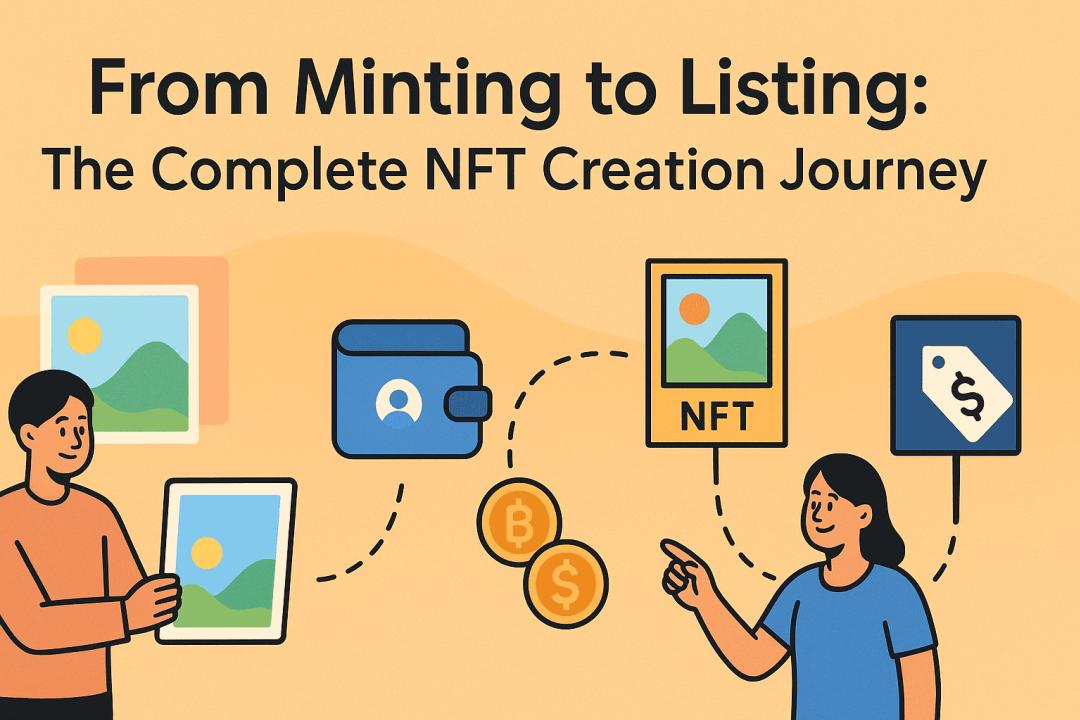
Each NFT begins with a creative spark, whether it is a sketch, a song, a digital photograph, or even a small animation that feels like it belongs to you. It is their magic that makes NFTs so exciting. You are not merely uploading a file to the internet; on the contrary, you are providing your digital creation with an identity, which can be owned, traded, and admired.
You may be an artist, a musician, and/or a collector with a discerning eye on the digital treasures of the world; you have begun your NFT journey with the same question: What story does your creation tell?
The Digital Masterpiece of Preparation
Having decided what you want, you are now ready to make it shine. Consider this step a final polish of your artwork before it is placed in a gallery. Ensure that your file is both of good quality and well-formatted, and is, in fact, original - in the NFT environment, it is all about originality.
It should also be assigned a name and a brief description of its meaning. A well-packaged work will not only appeal to people to buy it but also make them relate to your work emotionally.
How to set up your digital wallet
You will need a digital wallet before you can mint your NFT, your one-stop shopping bag in the NFT world. That's where your NFTs will be kept, and where you get to get any crypto sales earnings.
MetaMask, Trust Wallet, and Coinbase Wallet are some of the most popular wallets in which one can start without any difficulty. All you need to do is imagine them as your online safes, where private keys are used rather than conventional passwords. As soon as you attach your wallet to an NFT platform, you are now literally set up to enter the world of blockchain.
Minting: Where Blockchain Meets Art
The most thrilling phase now is to mint the NFT. At this point, the digital file gets a confirmed collectible on the blockchain - in other words, it gets a digital birth certificate for your artwork, which cannot be changed or copied.
When you put your file into an NFT system, the minting process logs you onto the blockchain, and the system gives your file a unique identity and ownership. Now you have no image on the screen anymore, but a unique digital object of your own, bearing your name eternally.
The majority of marketplaces will require you to provide a small amount of information at the time of minting, like title, description, and royalty percentage. The most thrilling are the royalty payments, as they allow you to receive a little percentage each time your NFT is further resold in the future.
Listing Your NFT for Sale
After minting your NFT, it is time to sell it off and make the world see it. It is the intersection point of creativity and strategy.
You have the option of a fixed price listing (price it and wait until a buyer buys it) or auction auction-based sale, so bidders offer to pay one another. There are advantages to both approaches: set pricing has the benefit of predictability, and auctions create suspense.
Include a significant story of your NFT - why you produced it, what it is, or what inspired you. Keep in mind that people purchase tales just as much as they purchase pieces of art.
Choosing Your Work for the World
Your NFT has gone live, and it is time to promote it. The NFT industry is community-driven and about narratives. Share your work on the various social sites - The popular platforms to discuss NFT are Twitter (X), Instagram, Reddit, and Discord.
Interact with other artists, make associations in NFTs, and allow individuals to learn about the personality behind the art. The closer your voice is to the real one, the more attention will come to your NFT.
There is no reason to be shy about discussing your creative experience; people are always interested in hearing about the backstory behind the art.
How to Steer Clear of Obvious Traps
Even in the creative frenzy, one can easily commit minor mistakes. A lot of amateurs overprice their NFTs, do not write meaningful descriptions, or forget to advertise their work after selling.
Some disregard royalties, as they forego future earnings. It is all about balance, fair price, telling a story, and being involved in the community. Nothing can make you successful in a single day, but consistency always pays off.
Your Creative Journey Doesn’t End Here
The smartest thing that you can do is to mint and list your first NFT, but that is not the end of the story of your digital creator. The fourth step is to see the big picture, how exactly NFT marketplaces operate under the hood, how business is transacted, and why some platforms are successful when others fail.
If you’re curious to dive deeper into that world, explore our detailed guide:
What is an NFT Marketplace? How It Works
It’s your next step toward mastering the NFT ecosystem — and who knows, it might inspire you to build a marketplace of your own someday.