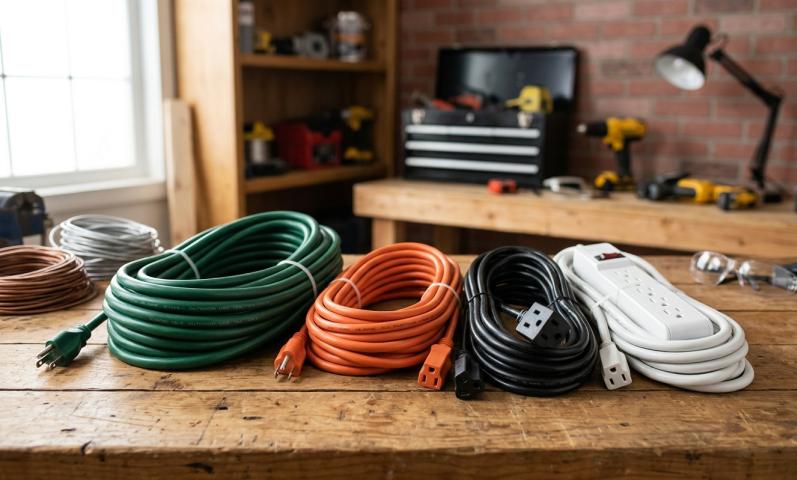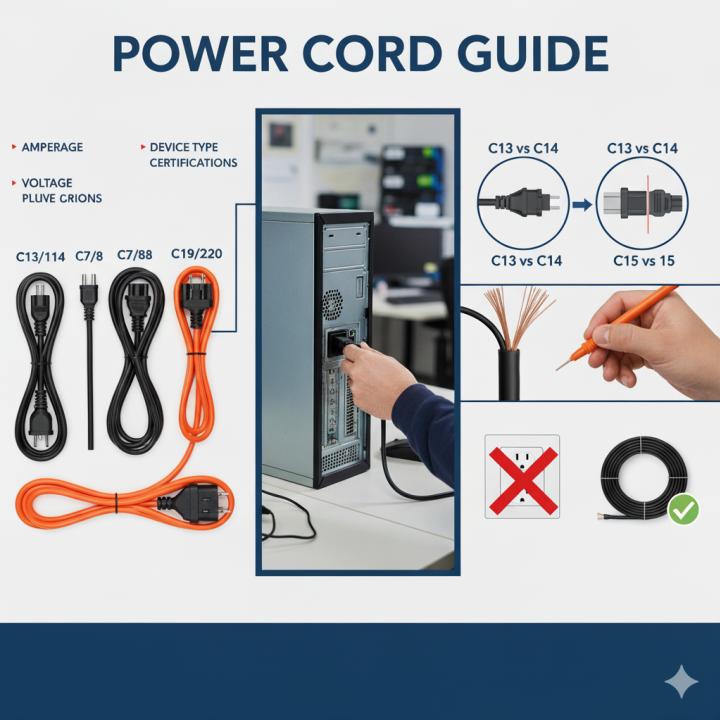
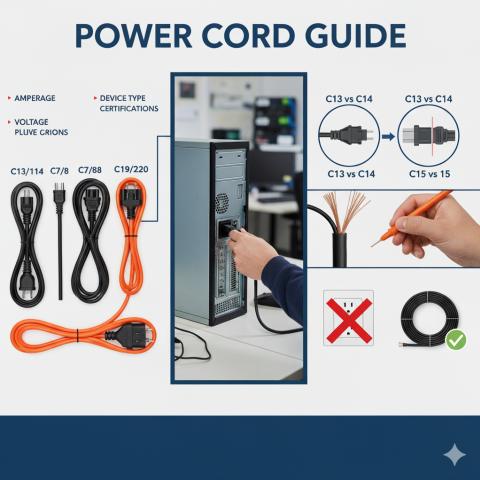
If you've ever looked at the back of your laptop, printer, or other electronic device, you've probably seen different types of power cords. Two of the most common ones are C7 and C8 power cords. While they might look similar at first glance, they have important differences that matter when you need to replace a cord or buy a new one.
Let's break down everything you need to know about these computer cords in simple terms.
What Are Power Cord Connectors?
Before we dive into the differences, it helps to understand what we're talking about. Power cords have two ends. One end plugs into your wall outlet, and the other end connects to your device. The end that connects to your device is called the connector or inlet. This is where the C7 and C8 designations come from.
These names come from the IEC (International Electrotechnical Commission) standards. The IEC created a system to name different types of power connectors so everyone around the world uses the same terms. This makes it much easier when you need to find the right cord.
What is a C7 Power Cord?
A C7 connector is often called a "figure-8" connector. If you look at it head-on, you'll see why. It has two round holes that sit next to each other, creating a shape that looks like the number 8. This design is simple but effective.
C7 power cords are non-polarized. This means you can plug them in either way, and they'll work just fine. You don't need to worry about which side goes up or down.
These computer cords typically handle up to 2.5 amps of current and are rated for 250 volts. This makes them suitable for smaller electronic devices that don't need much power.
Common Devices That Use C7 Cords
You'll find C7 power cords on many everyday devices:
- Laptop power adapters
- Radio alarm clocks
- Small portable speakers
- DVD and Blu-ray players
- Gaming consoles (some models)
- Portable printers
The C7 cord is popular because it's compact and lightweight. This makes it perfect for devices you might move around or travel with.
What is a C8 Power Cord?
A C8 connector is also called a "figure-8" connector, but it has an important difference. While it still has that distinctive figure-8 shape, it's polarized. This means it has a specific way it must be plugged in.
If you look closely at a C8 connector, you'll notice that one side has a rounded edge while the other has a squared or angled edge. This design ensures you can only plug it in one way. The device inlet will only accept the connector in the correct orientation.
Like the C7, C8 cords also handle up to 2.5 amps and are rated for 250 volts. The electrical capacity is the same, but the polarized design adds a safety feature.
Common Devices That Use C8 Cords
C8 power cords are found on devices that need polarized connections:
- Desktop computer monitors
- Audio equipment and amplifiers
- Video game consoles
- Projectors
- Some laser printers
- Professional video equipment
These computer cords are standard in equipment where the manufacturer wants to ensure the electrical connection is consistent every time.
Key Differences Between C7 and C8 Power Cords
Now that we understand each type, let's look at the main differences:
Shape and Design
Both have the figure-8 appearance, but the C8 has notches or angles on one side. The C7 is completely symmetrical with two identical rounded openings. This physical difference is the easiest way to tell them apart.
Polarization
The C7 is non-polarized, so orientation doesn't matter. The C8 is polarized, meaning it only fits one way. This is the most important functional difference.
Safety Features
The polarized design of the C8 provides an extra layer of safety. It ensures that the hot and neutral wires connect to the correct terminals inside your device every time. For some sensitive electronics, this consistency matters.
Interchangeability
You cannot use these computer cords interchangeably. A C7 cord won't properly fit into a C8 inlet because of the polarized design. Even though they look similar, trying to force the wrong cord into a device can damage the connector or create a poor connection.
Why Does Polarization Matter?
You might wonder why some devices need polarized cords while others don't. The answer comes down to how the device is designed internally.
Some electronic equipment has circuits that depend on which wire is hot and which is neutral. Using a polarized C8 cord ensures these circuits always connect correctly. This can prevent electrical issues and improve the safety and reliability of the device.
For simpler devices that don't have this requirement, the non-polarized C7 works perfectly fine and costs slightly less to manufacture.
How to Choose the Right Cord
When you need to replace a power cord, here's what you should do:
First, check your device. Look at the inlet where the cord plugs in. If it's symmetrical, you need a C7. If it has a notch or angular shape on one side, you need a C8.
Second, never force a cord into a device. If it doesn't slide in easily, you probably have the wrong type.
Third, check the power requirements. While both C7 and C8 cords typically handle 2.5 amps, some devices might need more current. Always verify that the replacement cord meets your device's power needs.
Voltage and Safety Considerations
Both C7 and C8 power cords are rated for the same voltage and amperage in most cases. However, you should always buy cords that are certified for safety. Look for certifications like UL (Underwriters Laboratories) or CE marking.
Using uncertified computer cords can be dangerous. They might not have proper insulation or might fail under normal use, creating fire hazards or damaging your devices.
Where to Buy Replacement Cords
You can find C7 and C8 power cords at electronics stores, computer shops, and online retailers. They're inexpensive and widely available. Just make sure you're buying the correct type.
When ordering online, double-check the product description. Some sellers list both C7 and C8 cords together, so read carefully to ensure you're getting what you need.
Conclusion
Understanding the difference between C7 and C8 power cords doesn't require a degree in electrical engineering. The main thing to remember is that C7 cords are non-polarized with a symmetrical figure-8 shape, while C8 cords are polarized with notches that ensure correct orientation.
Both types of computer cords serve important roles in powering our everyday electronics. They're both safe and effective when used correctly. The key is using the right cord for your specific device.
Next time you need to replace a power cord, take a moment to identify which type you have. This simple check will save you time and ensure your devices work safely and reliably. Whether it's for your laptop, monitor, or any other electronic device, knowing your computer cords makes life easier.
Sources: https://ibrandstudio.com/articles/top-power-cord-choices-for-industrial-commercial-equipment
https://sfcable.hashnode.dev/is-it-okay-to-use-a-higher-amp-adapter