
Outsourcing 3D cuboid annotation can boost efficiency and scalability. Learn best practices to maintain high-quality results while leveraging external annotation expertise.
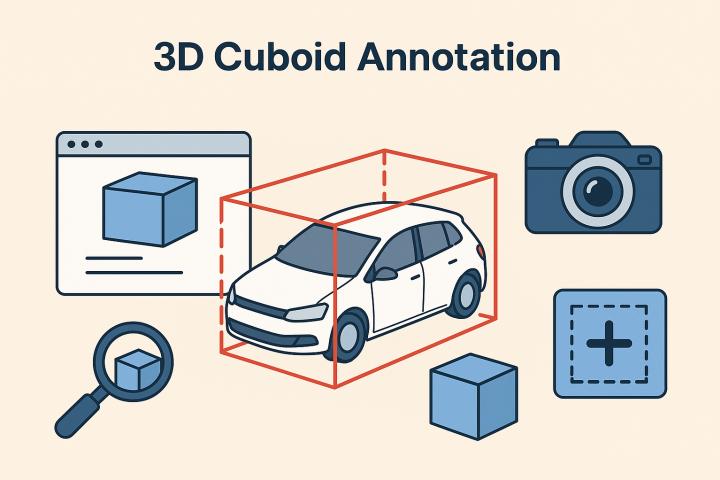
3D cuboid annotation is a crucial part of training AI models
that understand objects in three-dimensional space think self-driving cars,
robotics, and augmented reality. But the process is complex, time-consuming,
and requires precision.
That’s why many companies choose to outsource their 3D
cuboid annotation tasks. Outsourcing can save time, cut costs, and scale
annotation projects quickly. However, handing over your valuable data to an
external team raises a big question: how do you ensure you don’t lose quality
in the process?
This article dives into best practices that help you outsource 3D cuboid annotation effectively, ensuring you get accurate, consistent, and reliable annotations without compromise.
Why Outsource 3D Cuboid Annotation?
Before we get into best practices, let’s touch on why outsourcing is a smart move:
- Scalability: Annotation needs often spike with new data or projects; outsourcing helps quickly meet demand.
- Cost-efficiency: Hiring and training an in-house team can be expensive and slow.
- Access to expertise: Specialized annotation firms have experienced annotators skilled in 3D data.
- Focus on core business: Outsourcing frees your team to concentrate on AI model development and other priorities.
But outsourcing doesn’t come without risks, especially around data quality and communication. Let’s explore how to manage those risks.
Best Practices for Outsourcing 3D Cuboid Annotation Without Losing Quality
10 Best Practices for Outsourcing 3D Cuboid
Annotation (Visual)
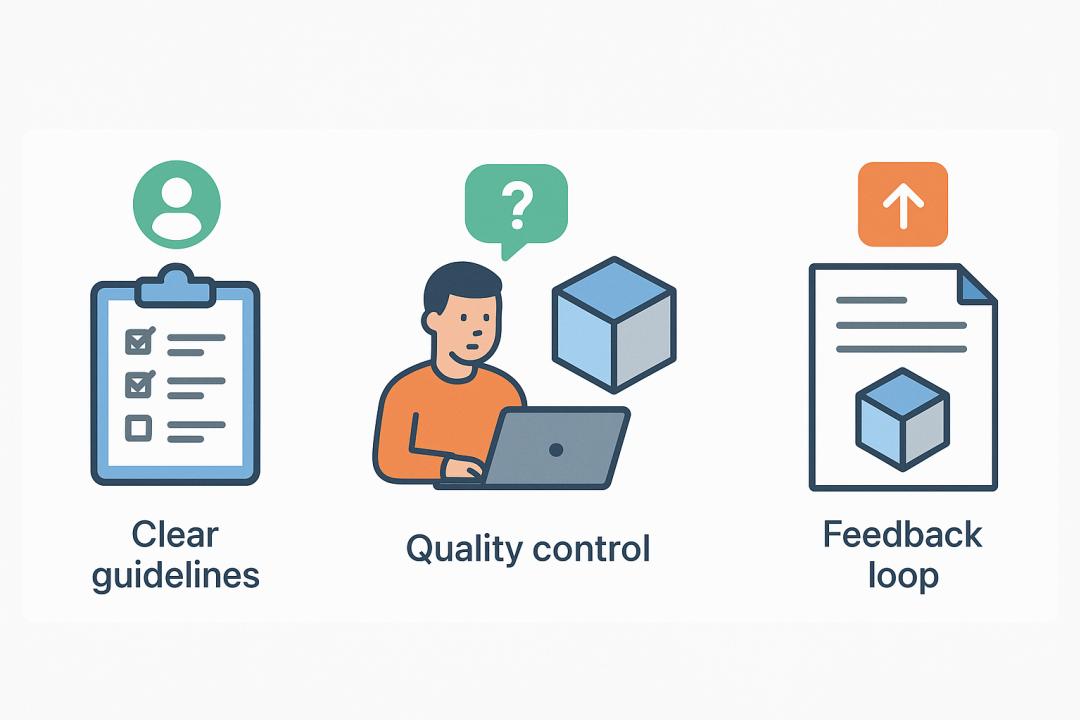
- Set Clear Annotation Guidelines
- Work with Domain Experts
- Run a Pilot Project First
- Communicate Regularly
- Enforce Quality Control
- Share Project Context
- Share Project Context
- Plan for Scalability
- Build Long-Term Partnerships
- Track Performance and Improve
1. Define Clear Annotation Guidelines and Standards
The foundation of any quality annotation project lies in clear,
detailed guidelines.
- Outline exactly what needs to be annotated:
object types, sizes, occlusion handling, and edge cases.
- Specify how precise cuboids should be, including
rotation and scale standards.
- Include visual examples to demonstrate ideal
annotations and common mistakes.
Providing comprehensive guidelines helps external teams understand your expectations and reduces guesswork.
2. Choose Partners with Domain Expertise
3D cuboid annotation isn’t like drawing rectangles on
images. It requires understanding of 3D geometry and spatial relationships.
- Partner with firms or teams that specialize in
3D data annotation.
- Verify their experience with your industry
autonomous vehicles, robotics, AR, etc.
- Ask for sample work or pilot projects to
evaluate their capabilities.
Expertise directly correlates with annotation accuracy and
efficiency.
3. Start with a Pilot Project
Jumping straight into full-scale annotation can be risky.
- Begin with a smaller, well-defined pilot
project.
- Review the quality, turnaround times, and
communication responsiveness.
- Use this phase to refine guidelines and
workflows.
A pilot helps establish trust and ironing out issues early
prevents costly mistakes later.
4. Maintain Open and Frequent Communication
Successful outsourcing depends heavily on communication.
- Set up regular check-ins to discuss progress and
challenges.
- Use feedback loops where the annotation team can
ask clarifying questions.
- Share model feedback or quality reports to guide
improvements.
Clear communication ensures alignment and continuous quality
improvement.
5. Implement Rigorous Quality Control Processes
Quality assurance can’t be an afterthought.
- Establish multi-tier quality checks such as peer
reviews, audits, and spot checks.
- Use clearly defined metrics to measure
annotation accuracy and consistency.
- Request detailed quality reports from your
partner for track performance.
Consistent QA keeps errors in check and maintains your
dataset’s integrity.
6. Provide Annotators with Context and Domain Knowledge
Annotators often perform better when they understand the
real-world context behind the data.
- Share use cases, typical scenarios, and
application goals.
- Explain the importance of accurate 3D
annotations for safety or functionality.
- Offer training sessions or documentation focused
on domain-specific challenges.
This helps annotators make informed decisions when encountering
ambiguous cases.
7. Secure Your Data and Intellectual Property
Data security is paramount, especially when outsourcing
sensitive information.
- Ensure contracts specify strict confidentiality
and data protection measures.
- Use secure data transfer protocols and access
controls.
- Verify compliance with relevant data privacy
regulations.
A secure environment protects your assets and builds trust.
8. Plan for Scalability and Flexibility
As your data grows, your annotation needs will too.
- Partner with teams that can scale resources
quickly without sacrificing quality.
- Build flexibility into contracts to adjust
volumes or priorities as needed.
- Use phased rollout plans to accommodate evolving
project requirements.
Scalability ensures you meet deadlines and adapt to changing
demands.
9. Foster Long-Term Relationships
Outsourcing works best when viewed as a partnership, not
just a transaction.
- Invest time in building rapport and mutual
understanding.
- Share strategic goals to align efforts better.
- Encourage continuous feedback and collaboration.
Long-term relationships create efficiency and trust,
boosting overall project success.
10. Monitor Results and Iterate
Finally, outsourcing is an ongoing process.
- Track key performance indicators (KPIs)
like annotation accuracy, turnaround time, and error rates.
- Regularly review results and update
guidelines or workflows as needed.
- Keep communication channels open for
ongoing improvements.
Constant monitoring ensures sustained quality and responsiveness.
Conclusion
Outsourcing 3D cuboid annotation offers
tremendous benefits, but it requires a thoughtful approach to preserve data
quality. By setting clear expectations, choosing expert partners, maintaining
strong communication, and implementing rigorous quality controls, you can
confidently delegate this complex task without compromise.
Whether your goal is to scale quickly or tap into specialized expertise, following these best practices will help you achieve accurate, reliable 3D annotations that power the next generation of intelligent AI applications.